SSS, PhilHealth & Pag-IBIG Contributions – Philippines

If you’re running payroll in the Philippines, three statutory contributions sit at the heart of every payslip – SSS, PhilHealth, and Pag-IBIG. Think of them as the Philippines’ social safety net: together, they cover an employee’s retirement, healthcare, and housing needs. Every employer is legally required to deduct these contributions from employee wages and remit both the employee and employer shares to the respective government agencies.

Missing a contribution deadline or getting the numbers wrong isn’t just an admin headache – it can result in penalties, surcharges, and legal exposure. Understanding how each fund works is step one to getting Philippine payroll right.

Mercans offers fully managed payroll solutions for the Philippines, handling SSS, PhilHealth, and Pag-IBIG compliance end to end so your team can focus on what matters.

SSS – Social Security System

The Social Security System (SSS) is a government-mandated insurance program for private-sector employees, self-employed individuals, and overseas Filipino workers. It provides members with benefits covering sickness, maternity, disability, retirement, and death.

How SSS Contributions Are Calculated

SSS contributions are based on the employee’s Monthly Salary Credit (MSC), which is determined by a contribution table updated periodically by the SSS. Contributions are shared between the employer and employee:

  • Employer share: 9.5% of the MSC
  • Employee share: 4.5% of the MSC
  • Total contribution: 14% of the MSC

The MSC ranges from a minimum floor to a maximum ceiling, meaning very low and very high earners are pegged to fixed contribution brackets rather than their exact salary.

Key SSS Benefits for Members

  • Sickness benefit (daily cash allowance)
  • Maternity benefit (for female members)
  • Disability benefit (partial or total)
  • Retirement benefit (monthly pension or lump sum)
  • Death and funeral benefit

Employer Obligations Under SSS

  • Register the business and all employees with SSS
  • Deduct the employee share from each payroll run
  • Remit both employer and employee shares by the prescribed deadlines
  • Issue R-5 contribution payment receipts and maintain records

PhilHealth – Philippine Health Insurance Corporation

PhilHealth (Philippine Health Insurance Corporation) administers the National Health Insurance Program (NHIP). It provides employees and their dependents with inpatient and outpatient coverage, reducing the financial burden of medical care.

How PhilHealth Contributions Are Calculated

PhilHealth contributions are computed as a percentage of the employee’s basic monthly salary:

  • Contribution rate: 5% of basic monthly salary (as of 2024 onward)
  • Employee share: 2.5%
  • Employer share: 2.5%
  • Minimum monthly contribution: PHP 500 (PHP 250 each)
  • Maximum monthly contribution: PHP 5,000 (PHP 2,500 each)

Salaries below the minimum floor are pegged at the floor rate; salaries above the ceiling are capped accordingly.

Coverage Highlights

  • Inpatient hospital care
  • Outpatient surgical procedures
  • Maternity care packages
  • Z Benefits for catastrophic illnesses (e.g., cancer, leukemia)
  • Coverage extends to qualified dependents (spouse, children, parents)

Employer Obligations Under PhilHealth

  • Register the company as an employer with PhilHealth
  • Deduct the employee share from salary each payroll period
  • Remit both shares using the RF-1 form by the due date
  • Update employee records when personal circumstances change

Pag-IBIG – Home Development Mutual Fund (HDMF)

Pag-IBIG Fund (officially the Home Development Mutual Fund or HDMF) is a government savings program that helps members access affordable housing loans, multi-purpose loans, and savings benefits. Membership is mandatory for all employees covered by the SSS and PhilHealth.

How Pag-IBIG Contributions Are Calculated

Pag-IBIG contributions are straightforward:

  • Employees earning PHP 1,500 or below: Employee contributes 1%, employer contributes 2%
  • Employees earning above PHP 1,500: Employee contributes 2%, employer contributes 2%
  • Maximum monthly contribution: PHP 100 per employee share (based on a PHP 5,000 monthly compensation ceiling), though members may opt to contribute more voluntarily

Key Benefits of Pag-IBIG Membership

  • Access to affordable housing loans (up to PHP 6 million)
  • Multi-purpose loans for personal needs
  • Calamity loans during national emergencies
  • Provident savings returned with dividends upon retirement or separation

Employer Obligations Under Pag-IBIG

  • Register the business with Pag-IBIG Fund
  • Collect and remit contributions monthly
  • Submit the MCRF (Membership Contribution Remittance Form)
  • Remit contributions by the end of the month following the applicable period

Contribution Deadlines at a Glance

Agency Remittance Deadline
SSS Based on last digit of employer SSS number (10th–15th of following month)
PhilHealth Last day of the month following applicable period
Pag-IBIG Last day of the month following applicable period

Late remittances attract penalties – SSS charges 2% per month, PhilHealth and Pag-IBIG impose similar surcharges on unpaid amounts.

How Mercans Helps with Philippine Payroll Compliance

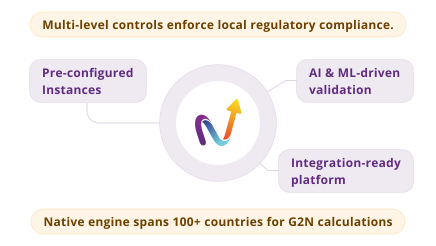
Managing three separate government agencies, each with its own rates, deadlines, and forms, adds significant complexity to Philippine payroll. Mercans’ Philippines payroll services automate contribution calculations, generate the required remittance reports, and ensure timely filing – keeping your business fully compliant without the manual effort.

From onboarding to monthly remittances and year-end reporting, Mercans handles the full payroll lifecycle for Philippine employers, whether you have 10 employees or 10,000.

Frequently Asked Questions

Are SSS, PhilHealth, and Pag-IBIG contributions mandatory for all employees?

Yes. All private-sector employees in the Philippines – regardless of employment status, whether regular, probationary, or contractual – are required to be enrolled in all three programs. Employers who fail to register employees or remit contributions face legal penalties, including potential criminal liability under the respective agency laws.

What happens if an employer misses a contribution remittance deadline?

Late or missed remittances attract penalties and surcharges. SSS imposes a 2% monthly penalty on unpaid contributions. PhilHealth and Pag-IBIG apply similar surcharge structures. Beyond financial penalties, persistent non-compliance can result in legal action against the employer. Employers should maintain consistent payroll schedules to avoid these consequences.

Can employees contribute more than the mandatory Pag-IBIG amount?

Yes. Pag-IBIG allows members to make voluntary contributions above the mandatory ceiling. Higher contributions increase the member’s provident savings and may enhance loan eligibility. Employers can facilitate these additional deductions through payroll, though only the mandatory employer counterpart is required – employers are not obligated to match voluntary contributions.

How do contribution rates change over time?

All three agencies periodically update their contribution rates and salary brackets through government circulars and resolutions. For example, PhilHealth has progressively increased its contribution rate in line with the Universal Health Care Act. Employers must monitor these updates and adjust payroll calculations accordingly. Mercans keeps its payroll engine current with all regulatory changes, ensuring clients are never caught off-guard by a rate adjustment.

Do the rules apply to foreign nationals employed in the Philippines?

Generally, yes. Foreign nationals working in the Philippines under a valid employment arrangement are subject to the same mandatory contribution requirements as Filipino employees, with some exceptions under specific bilateral agreements. Employers should verify the status of each foreign worker at onboarding. Mercans’ global employer of record services provide specialist support for hiring and managing international employees in the Philippines.