Global Payroll Data Lineage: Meaning, Importance, and Best Practices

Global payroll depends on information moving across multiple systems, teams, and jurisdictions. Employee records may originate in HR platforms, time and attendance systems, benefits applications, and financial software before being transformed into payroll calculations, payslips, accounting entries, and statutory reports.

When a payroll discrepancy occurs, identifying the final incorrect figure is only part of the problem. Payroll teams also need to understand where the information originated, which transformations were applied, and which downstream records were affected.

This is where global payroll data lineage becomes essential.

As organizations expand across borders and adopt increasingly interconnected HR technology, tracking the journey of payroll data helps establish greater transparency, improve troubleshooting, and support reliable payroll governance. It also provides a foundation for investigating discrepancies and demonstrating how reported figures were produced.

What Is Global Payroll Data Lineage?

Global payroll data lineage is the ability to trace payroll information from its original source through the systems, transformations, calculations, and processes that produce final payroll outputs.

It establishes a documented relationship between source data and the results generated from it. This may include employee compensation records, working hours, tax information, statutory deductions, employer contributions, currency conversions, and payroll journal entries.

For example, an employee’s salary may originate in an HR information system, pass through a payroll platform, undergo country-specific tax calculations, and ultimately appear in a payslip and financial ledger. Data lineage helps payroll teams understand how that original salary information contributed to the final amounts.

In multinational organizations, this visibility becomes particularly valuable because payroll data may pass through different local providers, applications, reporting formats, and regulatory processes.

In simple terms, payroll data lineage answers three critical questions: Where did the data come from? What happened to it? Where was it used?

How Does Global Payroll Data Lineage Work?

Payroll data lineage connects the stages of the payroll data lifecycle so that organizations can investigate information rather than relying solely on final reports.

1. Source Data Identification

The process begins by identifying where payroll information originates. Sources may include HR systems, employee timesheets, benefits platforms, expense applications, and approved compensation records.

Recording source systems and relevant timestamps helps establish which information was available when payroll processing began.

2. Data Transformation Tracking

Before payroll calculations can be completed, information may need to be standardized, validated, converted, or mapped to a local payroll format.

For example, compensation data might be converted into a reporting currency, while employee working hours are mapped to locally applicable payroll rules. Documenting these transformations makes it easier to identify where discrepancies entered the process.

3. Payroll Calculation Traceability

Payroll calculations combine employee data with applicable tax rules, contribution rates, benefits, and deductions.

A well-designed lineage framework connects calculation outputs to their underlying inputs and relevant rule versions. This helps payroll specialists investigate unexpected net pay, deduction, or employer contribution amounts.

4. Downstream Reporting and Reconciliation

Payroll results frequently feed into payslips, general ledger entries, bank payment files, statutory reports, and management dashboards.

Lineage helps establish which outputs depend on a particular source record or calculation. If an upstream error is discovered, teams can identify potentially affected downstream records and determine whether corrections are necessary.

5. Monitoring and Audit Documentation

A mature payroll data lineage process maintains appropriate records of data movement, transformations, exceptions, and corrections.

Depending on the systems involved, this information may be supported by automated logs, metadata repositories, reconciliation records, and controlled change histories.

The objective is not simply to collect more data. It is to make payroll information explainable, traceable, and easier to verify.

Why Global Payroll Data Lineage Matters

Improved Payroll Accuracy

Payroll discrepancies can originate long before the final calculation. An outdated salary record, incorrect working hours, incomplete employee data, or faulty system mapping can affect multiple payroll outputs.

Data lineage helps teams investigate the source of these issues instead of repeatedly correcting the same symptoms at the end of each payroll cycle.

Greater Audit Readiness

Auditors and internal control teams may need to understand how payroll figures were calculated and whether supporting records are available.

Traceable data flows make it easier to connect payroll outputs with source information, calculation logic, approvals, and correction records. This supports audit preparation, although lineage alone does not guarantee compliance or satisfy every audit requirement.

Stronger Global Payroll Governance

Multinational payroll environments often combine centralized reporting with country-specific processing requirements. Data lineage helps organizations understand how information moves between these environments and where local variations are introduced.

This visibility can support consistent governance while preserving the distinctions required by individual jurisdictions.

Faster Root-Cause Analysis

When a payroll discrepancy affects multiple employees or countries, manually tracing every system and spreadsheet can consume considerable time.

Lineage documentation can narrow the investigation by identifying the relevant source, transformation, calculation, or integration. Teams can then assess the scope of the issue and coordinate appropriate corrections.

Better Data Quality Management

Data lineage can reveal recurring weaknesses, including incomplete employee records, inconsistent identifiers, duplicate entries, and unreliable integrations.

Over time, these findings help organizations improve upstream data collection and validation rather than depending entirely on downstream payroll checks.

Global Payroll Data Lineage in Practice

Imagine a multinational organization operating in several countries discovers that employer contribution figures in its consolidated payroll report do not match the amounts recorded in local payroll results.

Without adequate lineage, the finance team may need to compare spreadsheets, request information from local providers, and manually reconstruct the reporting process.

With an established lineage framework, the team can trace the consolidated figure to its source records, identify the transformation applied during consolidation, and determine whether the discrepancy originated in local payroll data, currency conversion, data mapping, or reporting logic.

The organization can then correct the relevant issue, assess its impact, and document the resolution.

This illustrates the practical value of data lineage: it turns payroll investigation from a process of searching for errors into a structured examination of how information was produced.

The Role of Technology in Payroll Data Lineage

Modern payroll environments can use several complementary technologies to improve traceability.

  • Metadata management: Documents data sources, fields, relationships, and transformations.
  • Integration monitoring: Tracks information exchanged between HR, payroll, finance, and reporting platforms.
  • Data validation controls: Identifies missing values, inconsistent records, and unexpected changes before processing.
  • Reconciliation tools: Compare payroll outputs against source records, payment files, and financial reports.
  • Audit logs: Record relevant system activities, approvals, and changes.
  • Data observability: Helps detect unusual patterns, processing failures, and unexpected changes in data quality.

Automation can strengthen these capabilities, but technology selection should reflect the organization’s actual system architecture. Not every payroll platform automatically provides end-to-end lineage across all connected applications and external providers.

Challenges in Establishing Global Payroll Data Lineage

Despite its advantages, establishing consistent payroll data lineage can be difficult.

  • Fragmented systems: Different countries may use separate payroll platforms, local providers, and data formats, making end-to-end tracing more complicated.
  • Inconsistent data definitions: The same field may be represented differently across systems, particularly when employee identifiers, compensation components, or reporting categories are not standardized.
  • Limited historical records: Organizations may lack sufficient documentation of previous transformations, configuration changes, or payroll adjustments.
  • Cross-border data protection: Payroll information often includes personal and financial details. Tracking systems must respect applicable privacy, security, retention, and access requirements.
  • Complex payroll rules: Local taxes, statutory contributions, and employment requirements can change over time. Reliable lineage should help identify which rules or configurations were applied to a particular payroll result.

Addressing these challenges requires coordinated data governance, documented ownership, controlled system changes, and collaboration between payroll, finance, IT, and compliance teams.

Best Practices for Implementing Payroll Data Lineage

Organizations can improve payroll traceability by treating lineage as an ongoing operational capability rather than a one-time documentation exercise.

  • Start with critical payroll data. Prioritize salary, working hours, tax deductions, employer contributions, and other fields that materially affect payroll results.
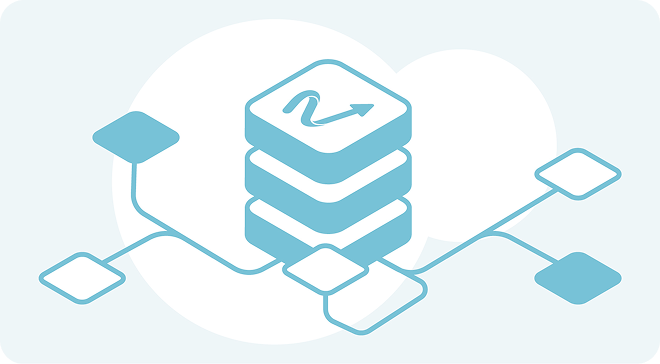
  • Map the end-to-end data journey. Document how information moves from its original source through integrations, calculations, validation procedures, and reporting outputs.
  • Standardize data definitions. Establish consistent definitions, identifiers, and mapping rules wherever practical, while retaining necessary country-specific distinctions.
  • Document transformations and rule changes. Record material adjustments, calculation configurations, exchange-rate applications, and relevant effective dates.
  • Assign data ownership. Define who is responsible for source accuracy, integration quality, payroll validation, and resolving identified discrepancies.
  • Build lineage into reconciliation procedures. Use traceability to investigate variances, identify affected outputs, and document corrective actions.
  • Protect sensitive information. Apply role-based access, secure logging, data minimization, and appropriate retention controls.
  • Review lineage regularly. Update documentation whenever payroll systems, interfaces, local providers, or calculation processes change.

These practices help make payroll data easier to investigate, validate, and govern across international operations.

How Mercans Supports Global Payroll Operations

Reliable global payroll depends on more than calculating employee compensation. Organizations also need structured processes, dependable data exchange, country-specific payroll expertise, and visibility across international operations.

Mercans provides global payroll solutions designed to help businesses manage payroll across multiple jurisdictions. For organizations seeking a more coordinated approach to international payroll, a structured global payroll operating model can help support consistent processes and clearer oversight across countries.

Businesses evaluating their payroll data governance should assess how source records, payroll calculations, reconciliations, and reporting outputs can be connected and verified within their existing technology environment.

Mercans can be considered as part of this broader global payroll strategy. Organizations should confirm the specific data lineage, audit logging, integration, and reporting capabilities available within the proposed service and technology configuration before implementation.

The long-term objective is to establish payroll operations in which data is not only processed efficiently but can also be traced, explained, and validated when questions arise.

Frequently Asked Questions

1. What is global payroll data lineage?

Global payroll data lineage is the process of tracing payroll information from its source through integrations, transformations, calculations, and final outputs. It helps organizations understand how payroll figures were produced and investigate discrepancies.

2. How does data lineage improve payroll accuracy?

Data lineage helps payroll teams identify where incorrect, incomplete, or inconsistent information entered a process. By tracing errors back to their source, organizations can address underlying data quality issues and reduce recurring discrepancies.

3. Is payroll data lineage important for compliance?

Yes. Traceability can support audits, internal controls, and investigations by connecting payroll outputs to source records and documented processing steps. However, organizations must also meet applicable legal requirements, maintain appropriate records, and implement other necessary controls.

4. What is the difference between payroll data lineage and data integration?

Data integration moves information between systems and may transform it into a usable format. Data lineage documents where that information originated, how it changed, and where it was used. Integration enables data movement, while lineage improves traceability.

5. Can payroll data lineage work across multiple countries?

Yes. A global framework can connect data flows across centralized HR systems, local payroll platforms, external providers, and consolidated reporting environments. Its effectiveness depends on system connectivity, consistent documentation, and the ability to account for country-specific processing rules.

6. How can organizations implement payroll data lineage?

Organizations should map critical payroll data flows, document transformations, standardize definitions, assign data ownership, maintain appropriate logs, and incorporate traceability into reconciliation and audit procedures. Implementation can begin with high-risk payroll fields and expand gradually.

7. Does payroll data lineage require specialized software?

Not always. Smaller organizations may begin with documented data flows, controlled spreadsheets, integration logs, and reconciliation records. More complex multinational environments may benefit from dedicated metadata management, data observability, and lineage tools integrated with their broader data architecture.

Conclusion

Global payroll data lineage provides the visibility organizations need to understand how payroll information travels, changes, and contributes to final results. It supports more effective error investigation, stronger data governance, and better preparation for audits and reconciliations.

As international payroll environments become increasingly interconnected, the ability to trace information across systems and jurisdictions becomes an important part of operational control. By combining documented data flows, reliable technology, and clear accountability, organizations can build payroll processes that are easier to verify and manage at scale.