Agentic AI in Human Resources: Definition, Use Cases, Benefits, and Challenges

Agentic AI in human resources is an emerging approach to HR automation that enables artificial intelligence systems to plan tasks, use digital tools, coordinate workflows, and take actions toward defined objectives with varying levels of human supervision. Unlike traditional HR automation, which follows predefined rules, agentic AI can adapt its approach to changing inputs, evaluate available information, and determine the next steps required to complete a task.

As organizations adopt AI-powered HR technology, agentic AI is gaining attention for its potential to streamline recruitment, employee onboarding, workforce administration, payroll coordination, and employee support. It can help HR teams move beyond isolated automated tasks toward connected workflows that operate across multiple systems.

However, effective implementation requires more than deploying AI agents. Organizations must establish clear permissions, protect employee data, maintain regulatory compliance, and ensure that people remain accountable for consequential employment decisions.

What Is Agentic AI in Human Resources?

Agentic AI in human resources refers to the use of AI agents that can interpret objectives, plan and execute multistep tasks, interact with connected systems, and respond to results within defined operational boundaries.

For example, an HR AI agent could coordinate an employee onboarding workflow by checking whether required documents have been submitted, identifying outstanding information, sending reminders, and updating the relevant workflow status. Actions involving employment eligibility, contractual approval, or other high-impact decisions should remain subject to appropriate human review.

Agentic AI combines several technologies, including large language models (LLMs), machine learning, natural language processing, workflow orchestration, and system integrations. Together, these capabilities can help HR departments manage repetitive administrative work while allowing HR professionals to focus on employee relations, strategic workforce planning, and complex decisions.

The central distinction is that agentic AI can coordinate and execute multiple steps toward a goal, rather than simply generating an answer or performing one predefined action. Its level of autonomy depends on the system’s design, available tools, permissions, and governance controls.

How Does Agentic AI Work in HR?

Agentic AI systems generally follow a structured process to complete HR-related tasks.

  • Goal identification: The AI agent receives an objective, such as coordinating employee onboarding or resolving a routine HR service request.
  • Context gathering: It retrieves relevant information from authorized HR systems, internal policies, employee records, or knowledge bases.
  • Planning and task execution: The agent determines the steps required to achieve the objective and uses approved tools or integrations to perform them.
  • Progress evaluation: It reviews the results of each action, identifies missing information, and adjusts subsequent steps when necessary.
  • Escalation and human review: If the task involves uncertainty, sensitive employee information, a policy exception, or a high-impact decision, the agent escalates the case according to predefined rules.
  • Monitoring and documentation: The system records relevant actions, tracks completion, and supports auditing and performance evaluation.

These stages may operate iteratively rather than as a strictly linear sequence. Reliable implementations also require access controls, data validation, monitoring, and mechanisms to stop or reverse inappropriate actions where possible.

Key Use Cases of Agentic AI in Human Resources

1. AI-Powered Recruitment and Talent Acquisition

Agentic AI can support recruitment teams by coordinating multiple stages of the hiring process. Depending on system capabilities and permissions, an AI agent may help prepare job descriptions, organize applications, schedule interviews, communicate with candidates, and maintain recruitment workflow records.

AI-powered recruitment automation can reduce administrative workload and improve coordination between recruiters and hiring managers.

However, candidate ranking, screening, and selection can introduce discrimination and bias risks. Employers should validate assessment methods, monitor outcomes, and retain meaningful human oversight of hiring decisions.

2. Automated Employee Onboarding

Employee onboarding involves several connected activities, including document collection, account provisioning, training assignments, policy acknowledgements, and communication with relevant departments.

Agentic AI can coordinate these activities by tracking outstanding requirements, triggering reminders, and identifying delays. It can also help employees find answers to routine questions about workplace policies and onboarding procedures.

For organizations hiring across multiple jurisdictions, onboarding workflows may need to account for different documentation requirements, employment contracts, and local regulations.

3. Intelligent Employee Self-Service

AI agents can improve HR self-service by interpreting employee requests and helping resolve routine queries about leave policies, benefits, payslips, company procedures, and employment documentation.

Rather than providing a generic response, a connected agent may retrieve approved policy information, initiate a permitted workflow, or direct an employee to the appropriate HR team.

Organizations should ensure that responses are grounded in current policies and that access to personal information is restricted to authorized users.

4. Payroll Workflow Coordination

Payroll is a particularly sensitive area because errors can affect employee compensation, statutory deductions, tax reporting, and regulatory compliance.

Agentic AI can potentially support payroll teams by gathering information, identifying missing inputs, coordinating approvals, flagging anomalies, and routing exceptions for investigation. For example, an agent could identify an incomplete payroll submission and notify the responsible team before a processing deadline.

These capabilities can complement existing payroll automation and global payroll operations. However, payroll calculations, statutory filings, payment authorization, and other consequential actions require validated systems, appropriate controls, and human oversight proportionate to the risk.

Explore AI-Driven Payroll Automation to understand how AI and automation can improve payroll operations.

5. Workforce Planning and Skills Intelligence

Agentic AI can help HR teams gather workforce information, identify emerging skills gaps, summarize staffing requirements, and coordinate workforce planning activities.

When connected to reliable data sources, AI agents may assist with scenario analysis, learning recommendations, and internal mobility workflows. These insights can help organizations assess future workforce requirements and identify areas where employee development may be needed.

Human decision-makers should validate recommendations, particularly when they affect promotion, compensation, performance evaluation, or employment opportunities.

6. HR Compliance and Policy Monitoring

Organizations operating across multiple countries must manage different employment laws, payroll requirements, reporting obligations, and statutory deadlines.

Agentic AI can assist with compliance workflows by monitoring approved information sources, identifying potential policy gaps, organizing documentation, and routing issues to compliance specialists.

Such systems should distinguish between verified regulatory requirements and AI-generated interpretations. Local experts must validate legal obligations before organizations implement changes to payroll or employment processes.

Benefits of Agentic AI in Human Resources

When appropriately implemented, agentic AI can provide several operational benefits.

  • Greater HR productivity: Automates or coordinates repetitive, multistep administrative activities.
  • Faster workflow completion: Reduces delays caused by manual follow-ups and disconnected processes.
  • Improved employee experience: Supports timely responses to routine employee questions and requests.
  • More consistent processes: Applies approved procedures and predefined controls across recurring workflows.
  • Better operational visibility: Helps identify incomplete tasks, bottlenecks, and exceptions requiring attention.
  • Scalable HR operations: Supports growing employee populations without requiring every administrative task to be handled manually.
  • More strategic HR capacity: Allows HR professionals to devote more time to workforce development, employee relations, and business priorities.

The actual benefits depend on data quality, system integration, process design, implementation costs, and the effectiveness of human oversight. Organizations should measure outcomes instead of assuming that greater AI autonomy automatically produces better results.

Agentic AI vs. Traditional HR Automation

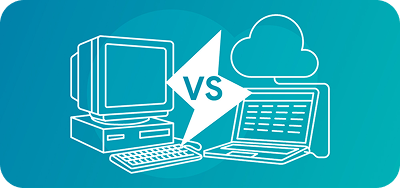
Traditional HR automation typically executes predefined rules and workflows. Generative AI primarily produces or interprets content in response to instructions, while agentic AI can use AI reasoning capabilities and connected tools to coordinate multiple actions toward an objective.

For example, a traditional automated workflow may send a reminder when an onboarding document is missing. A generative AI assistant may explain which document is required. An agentic AI system may identify the missing document, send an approved reminder, track the response, and escalate the case if the deadline passes.

These approaches can overlap and work together. Agentic AI does not replace every existing HR system or eliminate the need for predefined rules. In practice, reliable HR operations often combine conventional automation, generative AI, integrated enterprise software, and human decision-making.

Challenges and Risks of Agentic AI in HR

Despite its potential, agentic AI introduces operational and governance challenges that HR leaders must address.

  • Employee data privacy: HR systems contain sensitive personal, compensation, performance, and employment information. AI agents must operate under appropriate data protection policies and access restrictions.
  • Algorithmic bias: AI-driven recruitment, performance, and workforce recommendations may reproduce bias present in historical data or system design. Regular testing and documented human review are essential.
  • Limited explainability: Organizations need to understand why an agent recommended an action, which information it used, and how the outcome can be challenged.
  • Unauthorized actions: Excessive system permissions can allow agents to modify records, disclose information, or initiate actions beyond their intended scope.
  • Regulatory compliance: AI-supported employment decisions may be subject to applicable privacy, employment, anti-discrimination, and AI regulations.
  • Integration complexity: Agents may struggle when HR platforms contain inconsistent records, outdated policies, or incompatible systems.
  • Accountability: Organizations must define who is responsible for reviewing AI outputs, approving sensitive actions, resolving exceptions, and responding to errors.

A responsible implementation should include role-based permissions, audit logs, clear escalation procedures, human approval thresholds, regular testing, and ongoing monitoring.

Best Practices for Implementing Agentic AI in HR

Organizations should begin with well-defined use cases rather than granting AI agents broad access to HR operations.

  • Start with low-risk workflows: Prioritize activities such as scheduling, routine reminders, and policy-based information retrieval.
  • Define agent permissions: Specify which records an agent can access, which actions it can perform, and which activities require approval.
  • Establish human oversight: Keep qualified people involved in sensitive employment decisions, exceptions, and high-impact actions.
  • Strengthen data governance: Maintain accurate employee records and enforce data minimization, privacy, and retention policies.
  • Integrate trusted systems: Connect agents to approved HR platforms and authoritative sources rather than relying on unverified information.
  • Measure performance: Track completion rates, processing time, error rates, employee satisfaction, and escalation frequency.
  • Review and improve continuously: Test system outputs, investigate failures, update policies, and reassess permissions as workflows evolve.

HR leaders should also communicate clearly with employees about how AI is used, what information it can access, and how people can request human assistance or challenge an outcome.

How Mercans Supports Modern Global HR and Payroll Operations

For multinational organizations, adopting AI in HR requires a reliable operational foundation across payroll, employment administration, and country-specific compliance. AI agents can only coordinate these processes effectively when they work with accurate data, well-defined workflows, and appropriate controls.

Mercans provides global payroll and employer-of-record services that help organizations manage international workforce operations and navigate country-specific employment and payroll requirements.

Businesses can explore Mercans Global Payroll solutions to learn about managing payroll operations across multiple jurisdictions. Organizations expanding internationally can also explore Mercans Employer of Record services for support with international employment.

By establishing consistent payroll processes, dependable data flows, and structured compliance procedures, organizations can create a stronger foundation for evaluating and implementing AI-enabled HR workflows.

Agentic AI should complement these operational capabilities rather than replace professional payroll expertise, local compliance knowledge, or accountable human decision-making. Organizations considering AI integration should assess the capabilities of their chosen technology and confirm which features are available within their existing systems and service arrangements.

Frequently Asked Questions About Agentic AI in Human Resources

1. What is agentic AI in HR?

Agentic AI in HR refers to AI systems that can plan, coordinate, and execute multistep human resources tasks using connected tools and authorized data. Depending on their configuration, they can support recruitment, onboarding, employee self-service, payroll coordination, and workforce administration.

2. How is agentic AI different from generative AI in HR?

Generative AI primarily creates or interprets content, such as answering policy questions or drafting job descriptions. Agentic AI can use AI-generated reasoning and connected tools to perform a sequence of actions toward a defined objective, subject to its permissions and oversight requirements.

3. Can agentic AI automate payroll processing?

Agentic AI can potentially coordinate payroll-related workflows, identify missing information, flag anomalies, and route exceptions for review. However, accurate payroll calculations and statutory compliance depend on validated payroll systems, reliable data, and appropriate approval controls.

4. What are the main benefits of agentic AI for HR teams?

Key benefits may include reduced administrative workload, faster HR workflows, improved employee self-service, better coordination across systems, and increased operational visibility. Results depend on the use case, implementation quality, and governance framework.

5. Is agentic AI safe to use for employee management?

Agentic AI can be used more responsibly when organizations implement strict access controls, data protection measures, bias testing, audit trails, and human oversight. Sensitive decisions involving hiring, compensation, performance, or termination require particular care and compliance with applicable laws.

6. How can companies prepare for agentic AI adoption in HR?

Companies should identify suitable use cases, assess HR data quality, review system integrations, define agent permissions, establish human approval requirements, and measure performance through controlled pilots. Payroll and employment workflows should also be evaluated for jurisdiction-specific compliance risks.

7. How does agentic AI relate to global payroll and international employment?

Agentic AI can help coordinate cross-border HR activities, organize payroll inputs, flag missing documentation, and route compliance exceptions. Organizations still need reliable country-specific payroll processes and qualified specialists to validate statutory requirements and consequential decisions.

Conclusion

Agentic AI in human resources represents a shift from isolated AI assistance toward more coordinated, goal-oriented HR workflows. By connecting AI capabilities with enterprise systems and clearly defined operational rules, organizations can improve administrative efficiency and employee support while strengthening workflow visibility.

Successful adoption depends on responsible governance, reliable data, secure integrations, and appropriate human oversight. For organizations managing international workforces, combining dependable global payroll and employment operations with carefully evaluated AI capabilities can support a more scalable and resilient HR function.