Employer of Record

Employer of Record (EOR) Bulgaria

Hire compliantly, pay accurately, expand confidently.

Global Payroll Team
Written by Global Payroll Team
Published on August 26, 2026
Last updated August 26, 2026
Expert Reviewed

An Employer of Record (EOR) in Bulgaria acts as the official employer for workers, often referred to as a Global Professional Employer Organization (Global PEO). This role encompasses a broad range of employment functions, ensuring full compliance with local labor laws and regulations, managing payroll, administering taxes, providing legally required benefits, and handling employment contracts.

Key Responsibilities of an Employer of Record (EOR) in Bulgaria:
  • Ensuring employment terms are fully compliant with Bulgarian labor laws.
  • Overseeing and processing local payroll in Euro (EUR), Bulgaria’s official currency since 1 January 2026.
  • Managing the filing of employment-related taxes and National Social Security Institute (NSSI) contributions.
  • Issuing compliant payslips to employees.
  • Disbursing salary payments in accordance with Bulgarian standards.

With our Employer of Record (EOR) services, expanding your business into Bulgaria becomes easier and more efficient. Our solution eliminates the need for setting up a local entity, providing a seamless path to establish a legal presence in Bulgaria. We ensure full legal compliance, manage payroll, protect your intellectual property, and handle work permits, so you can focus on growing your business and building your workforce in the European Union.

Things you need to know before hiring in Bulgaria

Bulgaria’s Euro Adoption (2026)

Bulgaria adopted the Euro as its official currency on 1 January 2026, replacing the Bulgarian Lev at the fixed, irrevocable conversion rate of 1 EUR = 1.95583 BGN. Existing salaries, contracts, bank accounts, and benefits were automatically converted at this rate, with no contract amendments required. Both currencies circulated as cash for one month during the transition, and businesses were required to display prices in both Lev and Euro for a transitional period. For employers, this means payroll in Bulgaria is now run in Euro, simplifying multi-country payroll consolidation for companies already paying elsewhere in the Eurozone.

Employment Contracts in Bulgaria

Bulgarian labor relations are governed by the Labour Code (Kodeks na truda). An indefinite-term contract is the default and standard form of employment, while a fixed-term contract is treated as the exception.

Indefinite-Term Contracts

The standard, presumed form of employment in Bulgaria. Every employment contract must be in writing, and the employer must notify the National Revenue Agency (NRA) within 3 days of the contract’s conclusion — the employee may only start work once this registration is confirmed.

Fixed-Term Contracts

Permitted only where objectively justified, such as for temporary work, seasonal work, or covering an absent employee. If the employee continues working after expiry without employer objection, the contract is generally treated as converted to indefinite-term.

Probation Period

Up to 6 months, which may be agreed in favor of the employer, the employee, or both. The party benefiting from the probation clause may terminate the contract without notice during this period. For fixed-term contracts of under 1 year, probation cannot exceed 1 month.

Mandatory Contract Terms

Employment contracts must specify the parties’ identities, place of work, job title, start date and duration, annual leave entitlement, notice periods, basic and supplementary remuneration, and working hours, among other required terms.

Working Hours

The standard legal working week in Bulgaria is 40 hours, structured as 8 hours per day. The minimum daily rest period is 12 consecutive hours, and the minimum weekly rest period is 48 consecutive hours, normally including Sunday.

13th Month Salary & Length-of-Service Bonus

There is no legal requirement in Bulgaria for a 13th-month salary, though many employers pay a discretionary year-end bonus as a matter of practice. Bulgarian law does, however, require a mandatory length-of-service and professional-experience bonus of at least 0.6% of basic gross monthly salary for each year of recognized service, which can carry over between employers in a similar role.

Key Points on Overtime

Overtime Caps
Overtime is capped at 6 hours per week for day work (4 hours for night work), 30 hours per month for day work, and an absolute maximum of 150 hours per calendar year, which cannot be exceeded even with employee consent. A collective agreement may extend the annual cap to up to 300 hours.
Overtime Premiums
Overtime is compensated at a minimum 50% premium on a normal working day, 75% on the employee’s day off, and 100% on a public holiday or a day that should have been annual leave.
Night Work
Night work (10pm–6am) carries a premium above the standard hourly rate, and employees working more than 4 hours of night work are entitled to reduced daily and weekly hours.

Termination and Severance Pay

Termination in Bulgaria generally requires a lawful ground, appropriate notice, and any severance payment tied to the reason for termination and the employee’s length of service.

Notice of Termination

The minimum notice period is 30 days, which can be extended by agreement up to 3 months; notice periods must be equal for both parties under the contract. If notice is not given or worked, the terminating party must generally compensate the other party for the un-worked notice period.

Severance Pay

Severance for redundancy or downsizing is generally 1 month’s gross salary. Severance of up to 2 months’ gross salary may apply in certain cases of illness or incapacity. Employees with at least 10 years of service with the same employer (or its corporate group) within the last 20 years are entitled to 6 months’ gross salary in specified circumstances, such as retirement.

Protected Categories

Certain categories of employees — including pregnant employees, mothers of children under 3, employees on approved leave, and elected employee representatives — generally require prior Labour Inspectorate permission before dismissal, which is granted only on narrow grounds.

Compensation for Unused Leave

Any accrued but unused annual leave must be paid out on termination.

Employees vs Independent Contractors

Bulgarian law distinguishes between a labor contract, governed by the Labour Code, and a civil contract for services or a defined work product, governed by the Obligations and Contracts Act. A labor contract involves a hierarchical, subordinate relationship where the employer sets working hours and location and supplies tools and equipment; a civil contract involves parties on formally equal footing, where the contractor controls their own hours and methods and is engaged to deliver a defined result.

Bulgarian labor inspectors actively scrutinize “hidden employment” — civil contracts that in practice function as employment relationships. Where a contractor is given fixed hours, employer-supplied equipment, and day-to-day integration into the team, the relationship can be reclassified as employment, exposing the engaging company to back taxes, back social security contributions, and penalties.

Comparison Table: Employee vs Independent Contractor

Factor Employee Independent Contractor
Governing Law Labour Code Obligations and Contracts Act
Control & Subordination Works under the employer’s direction, schedule, and supervision Controls own working hours and methods
Registration Registered by the employer with the National Revenue Agency Not registered as an employment contract
Payment Structure Fixed monthly salary via payroll Paid per project, milestone, or deliverable
Statutory Benefits Entitled to paid leave, sick pay, and social insurance coverage No statutory employment benefits
Misclassification Risk Not applicable High risk if the relationship shows subordination; labor inspectors actively pursue “hidden employment” cases

Understanding these differences is essential for ensuring compliance and correctly determining entitlements such as leave, severance, and social insurance contributions.

Social Security and Health Insurance in Bulgaria

Bulgaria’s social insurance system, administered by the National Social Security Institute (NSSI), covers pension, general sickness and maternity, unemployment, and accident-at-work insurance, alongside health insurance administered separately by the National Health Insurance Fund (NHIF). Combined employer and employee contributions total approximately 32.7% to 33.4% of gross salary, calculated between a minimum insurable income (tied to the minimum wage) and a maximum insurable income threshold.

Contribution Employer Employee
Pension Fund ~14.12% ~8.78%
General Sickness & Maternity Included above ~1.4%
Unemployment Included above ~0.4%
Health Insurance (NHIF) ~4% ~4%
Accident at Work Fund 0.4% – 1.1% (by sector) —
Supplementary Mandatory Pension (2nd Pillar) 2.8% 2.2%

The minimum monthly insurable income is tied to the national minimum wage. The maximum monthly insurable income is subject to periodic legislative adjustment — Mercans confirms the current threshold for each engagement, since Bulgaria’s 2026 social insurance budget legislation was still being finalized in the Bulgarian parliament as of mid-2026.

Payroll in Bulgaria

Minimum Wages

Bulgaria’s national minimum wage is EUR 620.20 per month, effective 1 January 2026 — a 12.6% increase on the prior year, and the first minimum wage set in Euro following Bulgaria’s currency changeover.

Payroll Cycle

Salaries in Bulgaria are paid monthly, typically on the last working day of the month, now in Euro. Employers must provide employees with an itemized payslip showing gross pay, all statutory deductions, and net pay. Social security and tax remittances, along with the corresponding NRA declaration, are generally due by the 25th of the month following the payroll month.

Overtime Pay

Overtime pay is provided when an employee works beyond the standard 40-hour week, subject to strict daily, monthly, and annual caps.

Overtime Premiums

Overtime is paid at a minimum 50% premium on ordinary working days, 75% on the employee’s day off, and 100% on public holidays.

Annual Overtime Cap

Overtime is capped at 150 hours per calendar year by default, an absolute statutory limit that cannot be exceeded even with the employee’s consent, though a collective agreement may extend this to up to 300 hours.

Overtime rules can vary depending on the applicable collective bargaining agreement.

Mercans’ payroll capabilities

Payroll Cycle Management in Bulgaria
Mercans delivers efficient, seamless payroll cycle management tailored to Bulgarian requirements, including the transition to Euro-denominated payroll. We ensure that both employees and contractors are paid accurately and on time, providing a smooth and compliant payroll experience aligned with Bulgarian standards.
Payroll Setup, Processing, and Administration
Mercans offers a complete range of payroll services from start to finish. Whether it’s setting up your payroll system, processing payments, or managing ongoing administration, we take care of every detail, ensuring accuracy, compliance, and efficiency so you can focus on running your business.
Statutory Filings and Payments
Navigating Bulgaria’s regulatory framework can be complex, particularly during the ongoing Euro transition, but with Mercans, you’re in safe hands. We manage all statutory filings and payments, ensuring your business remains fully compliant with Bulgarian tax laws and employment regulations.

Personal Income Tax in Bulgaria

Bulgaria applies a flat personal income tax rate of 10% on employment income — one of the lowest flat rates in the European Union, unchanged since its introduction in 2008. There is no personal allowance or progressive bracket structure. As part of the 2026 budget, the separate tax on dividend income was reportedly increased from 5% to 10%, relevant primarily to company owners and directors rather than standard payroll.

Bulgaria Employee Hiring Cost

When hiring an employee in Bulgaria, employers must budget for gross salary plus mandatory employer social insurance and health insurance contributions of approximately 19% to 20% of gross salary.

Salary Details Amount (EUR)
Gross Monthly Salary 2,000
Employer Social Insurance & Health Contributions (~19%) ~380
Estimated Total Monthly Cost ~2,380

Employee Benefits in Bulgaria

Bulgarian employees are entitled to a combination of mandatory statutory benefits and, increasingly, supplementary benefits offered at the employer’s discretion.

  • Annual Leave: A minimum of 20 working days per year, which must be scheduled by the employer (with written notice of entitlement by 31 January each year) and generally expires 2 years after the year it accrued if unused.
  • Public Holidays: Bulgaria observes national holidays including New Year’s Day, Liberation Day, Labour Day, St. George’s Day, Unification Day, Independence Day, and Christmas, alongside moveable Orthodox Easter holidays.
  • Sick Leave: The employer pays the first 3 days at 70% of average daily gross remuneration; from day 4, the National Social Security Institute pays 80% (or up to 90% for work-related injury or occupational disease).
  • Maternity Leave: 410 days total, of which 45 days must be taken before the due date, paid at 90% of average income, with the option to transfer part of the leave to the father or another family member after the child turns 6 months.
  • Paternity Leave: 15 days of paid leave from the day of childbirth.
  • Additional Childcare Leave: Following the 410-day maternity period, additional leave is available until the child turns 2 years old, usable by either parent and paid at a statutory rate set by the NSSI.
  • Length-of-Service Bonus: A mandatory pay supplement of at least 0.6% of base salary per year of recognized professional experience, described above.
  • Supplementary Health Insurance: Common in professional roles, offered in addition to the mandatory NHIF coverage.
  • Meal & Transport Allowances: Common non-mandatory benefits provided by many employers.
  • Workplace Wellness Programs: Companies are enhancing the workplace experience with wellness initiatives, including mental health support.
  • Flexible Work Options: Employers are increasingly offering flexible or hybrid working arrangements where operationally feasible.
  • Team-Building Activities: Employers are introducing more team-building and employee engagement activities.
  • Discount Programs: Some companies offer group discounts on shopping, travel, and leisure activities.

Essential Benefits for Employees in Bulgaria
  • Annual Leave: A minimum of 20 working days per year, which must be scheduled by the employer (with written notice of entitlement by 31 January each year) and generally expires 2 years after the year it accrued if unused.
  • Public Holidays: Bulgaria observes national holidays including New Year’s Day, Liberation Day, Labour Day, St. George’s Day, Unification Day, Independence Day, and Christmas, alongside moveable Orthodox Easter holidays.
  • Sick Leave: The employer pays the first 3 days at 70% of average daily gross remuneration; from day 4, the National Social Security Institute pays 80% (or up to 90% for work-related injury or occupational disease).
  • Maternity Leave: 410 days total, of which 45 days must be taken before the due date, paid at 90% of average income, with the option to transfer part of the leave to the father or another family member after the child turns 6 months.
  • Paternity Leave: 15 days of paid leave from the day of childbirth.

Additional Employee Benefits
  • Additional Childcare Leave: Following the 410-day maternity period, additional leave is available until the child turns 2 years old, usable by either parent and paid at a statutory rate set by the NSSI.
  • Length-of-Service Bonus: A mandatory pay supplement of at least 0.6% of base salary per year of recognized professional experience, described above.
  • Supplementary Health Insurance: Common in professional roles, offered in addition to the mandatory NHIF coverage.
  • Meal & Transport Allowances: Common non-mandatory benefits provided by many employers.

Perks & Wellness Initiatives
  • Workplace Wellness Programs: Companies are enhancing the workplace experience with wellness initiatives, including mental health support.
  • Flexible Work Options: Employers are increasingly offering flexible or hybrid working arrangements where operationally feasible.
  • Team-Building Activities: Employers are introducing more team-building and employee engagement activities.
  • Discount Programs: Some companies offer group discounts on shopping, travel, and leisure activities.

Work Permit in Bulgaria

Work authorization requirements in Bulgaria depend on the foreign national’s nationality.

EU, EEA, and Swiss Nationals

Nationals of EU, EEA, and Swiss member states benefit from free movement rights and do not require a work permit — only local residence registration is required for stays beyond 3 months.

Third-Country Nationals — Single Permit

Nationals from outside the EU/EEA/Switzerland generally require a Single Permit, a combined work-and-residence authorization requiring employer sponsorship. This route requires a labour market test — the vacancy must generally be posted for 15 days with no suitable EU/EEA/Bulgarian candidate found before the employer can proceed with hiring the foreign national.

EU Blue Card

Highly qualified third-country nationals may instead qualify for an EU Blue Card, which does not require a labour market test, offering a faster pathway for skilled talent. The Blue Card is generally valid for up to 5 years, subject to a minimum salary threshold and minimum contract duration.

Important Considerations for Employers

Employer Sponsorship

A registered legal entity in Bulgaria is required to sponsor a foreign employee’s Single Permit or Blue Card application — an EOR partner such as Mercans allows companies without a local entity to still hire and sponsor talent compliantly.

EU Talent Mobility

Businesses hiring across the European Union can take advantage of free movement rights for EU, EEA, and Swiss nationals into Bulgaria.
Understanding these pathways can streamline the hiring process, allowing employers to bring skilled talent into their Bulgaria-based operations effectively.

EOR Solutions in Bulgaria

EOR Solutions for Prospective Employees in Bulgaria
Mercans provides efficient Employer of Record (EOR) services for businesses that have already identified their ideal candidates in Bulgaria. Our comprehensive services cover the entire employee lifecycle, ensuring full compliance with Bulgarian labor laws, tax regulations, and employment standards, so you can focus on your business growth without the administrative burden.
EOR + Recruitment: Streamlined Talent Acquisition
For businesses seeking assistance with talent acquisition, our EOR and recruitment solutions offer a complete, end-to-end service, helping you find, hire, and retain top talent in Bulgaria while ensuring all recruitment and compliance requirements are met.
Visa Sponsorship and Global Mobility Solutions
Navigating the complexities of expatriate employment becomes straightforward with our visa sponsorship and global mobility services. Mercans ensures a smooth relocation process for your international workforce, handling all aspects of Bulgarian immigration and employment laws to guarantee compliance.
AOR Services for Contractor Payments
For businesses managing contractor payments in Bulgaria, Mercans offers Agent of Record (AOR) services, handling the complexities of independent contractor payments to ensure accurate, timely, and fully compliant payments while managing misclassification risk.
Converting Freelancers to Employees in Bulgaria
Mercans supports businesses transitioning freelancers and contractors to full-time employees in Bulgaria, ensuring a smooth, legally compliant conversion process.
HCM Integration for Enhanced Workforce Management
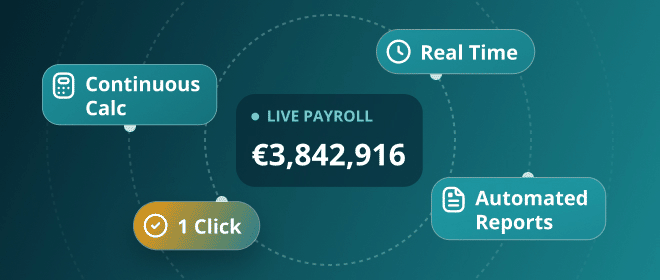
Integrate Mercans’ EOR services with your Human Capital Management (HCM) system for a unified, real-time approach to data exchange, compliance tracking, and payroll management in Bulgaria.

Best Employer of Record Bulgaria

Mercans stands out as a leading Employer of Record (EOR) provider in Bulgaria for several key reasons:

  • Full Compliance with Bulgarian Labor Laws: Mercans ensures strict compliance with Bulgaria’s employment regulations, including the transition to Euro-denominated payroll, keeping your business aligned with local labor law and protecting you from potential legal risk.
  • Independent Operations: As a fully independent entity, Mercans operates without external affiliations, delivering reliable, customized employment services tailored to your business requirements in Bulgaria.
  • Supports All Employment Types: Whether you’re hiring employees, contractors, or expatriates, Mercans offers flexible solutions across a variety of workforce models.
  • Designed for Large Enterprises: Our scalable solutions meet the demands of enterprise-level organizations, integrating with your broader global business goals.
  • Multi-Currency Payroll Management: Mercans handles multi-currency payroll, simplifying salary management across multiple countries alongside Bulgaria.
  • Global Network and Multi-Country Payroll Expertise: With a robust global presence, Mercans manages multi-country payroll seamlessly across the European Union and beyond, handling local tax regulations and compliance requirements wherever your teams are based.
  • Certified Data Protection and Security Standards: Mercans adheres to stringent data protection protocols, including GDPR certification and SOC 1 & SOC 2 compliance.
  • ISO-Certified Service Quality and Security: Mercans holds ISO 20000 and ISO 27001 certifications, reflecting our commitment to excellence in IT service management and information security.
  • OWASP ASVS 3.0 Compliant: We adhere to OWASP ASVS 3.0 standards, protecting your business through secure software development and management practices.
  • Mercans HRBlizz: Our proprietary global payroll and talent management SaaS platform simplifies payroll while ensuring full compliance with local labor laws in Bulgaria, backed by a team of in-country specialists.
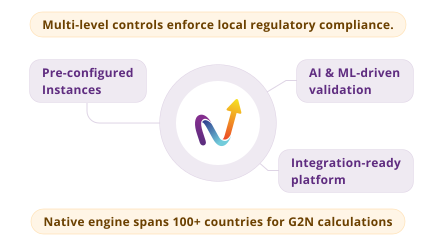
  • G2N Nova: Our advanced gross-to-net payroll engine, available in over 100 countries, integrates with major HCM and Workforce Management systems for a unified global payroll process.

Conclusion

Mercans provides comprehensive Employer of Record (EOR) services in Bulgaria, ensuring accuracy, compliance, and efficiency in managing your workforce through its transition to the Euro. Our end-to-end solutions simplify payroll and employment processes, making us a trusted partner for businesses navigating the complexities of the Bulgarian labor market. With Mercans by your side, your expansion into Bulgaria will be smooth, compliant, and successful, allowing you to focus on growing your business with confidence.

This document was prepared for informational purposes only. As local laws & regulations keeps on changing. Please consult your tax & legal advisors as well.
Contact Sales
Let's get this conversation started. Tell us a bit about your requirement, and we'll get in touch a soon as we can.

    Sample message

    1. We want to expand in $country

    2. We want you to employ 'X' number of employees on our behalf

    3. Contract duration – 3/6/9/12/18/24 months

    4. Number of legal entities (if any exist today)

    5. Employment type: EOR employee or contractor?

    6. Any benefits requirement or “standard statutory only”?

    FAQs

    What is an Employer of Record (EOR) in Bulgaria?

    An Employer of Record (EOR) in Bulgaria is a third-party organization that legally employs workers on behalf of another company, handling payroll, NSSI social insurance contributions, income tax, employment contracts, and compliance with Bulgarian labor law, so the client company does not need to set up its own local entity.

    Can a foreign company hire employees in Bulgaria without a local entity?

    Yes. By partnering with an EOR such as Mercans, a foreign company can hire employees in Bulgaria without registering a local branch or subsidiary. The EOR acts as the legal employer of record while the client company directs the employee’s day-to-day work.

    Is payroll in Bulgaria now run in Euro?

    Yes. Bulgaria adopted the Euro as its official currency on 1 January 2026, replacing the Bulgarian Lev at a fixed conversion rate of 1 EUR = 1.95583 BGN. Salaries, contracts, and benefits were automatically converted, and payroll is now processed in Euro.

    What compliance, payroll, and HR services does an EOR manage in Bulgaria?

    An EOR manages drafting and executing compliant employment contracts, monthly payroll processing in Euro, National Revenue Agency registration, NSSI and NHIF contributions, income tax withholding, statutory leave and benefits administration, and lawful termination procedures including severance calculations.

    How much does an EOR service cost in Bulgaria?

    EOR pricing varies by provider and the scope of services required, and is typically charged as a flat monthly fee per employee or a percentage of payroll. Contact Mercans for a tailored quote based on your specific hiring needs in Bulgaria.

    Is EOR suitable for expanding into Bulgaria?

    Yes. EOR is well suited to companies testing the Bulgarian market, hiring a small number of employees, or needing to move quickly without the time and cost of incorporating a local entity, while remaining fully compliant with Bulgarian labor and tax law.

    Ready to hire in Bulgaria?

    No local entity needed. Our experts handle payroll, compliance, and onboarding.

    Talk to an expert
    Proven expertise in global payroll.