Déclaration Sociale Nominative (DSN)

The Déclaration Sociale Nominative (DSN), often translated as the “Nominative Social Declaration,” is the cornerstone of France’s payroll and social security reporting framework. Unlike traditional year-end tax certificates issued in countries such as the United States or the United Kingdom, the DSN is a monthly, dematerialised declaration that consolidates dozens of previously separate social filings into a single, unified electronic submission generated directly from an employer’s payroll software.

Mandatory for all private-sector employers since 1 January 2017 under Decree No. 2016-611 of 18 May 2016, and now extended to most public-sector entities, the DSN allows employers to transmit complete payroll, employment, and social protection data for every employee to a network of French institutions including URSSAF, AGIRC-ARRCO, CPAM, France Travail, MSA, the Direction Générale des Finances Publiques (DGFiP), and supplementary health and pension funds.

For multinational organizations operating in France, DSN compliance is one of the most technically demanding payroll obligations in Europe. With over 3,000 articles in the French Labour Code, more than 600 collective bargaining agreements (Conventions Collectives), and employer social charges averaging 40 to 45 percent of gross salary, French payroll demands deep local expertise. That is why global businesses turn to Mercans, a global leader in payroll technology and Employer of Record (EOR) services, to manage end-to-end DSN reporting and French statutory compliance.

What Is the Déclaration Sociale Nominative?

The DSN is a unified monthly declaration produced from an employer’s payroll software (logiciel de paie) and transmitted electronically to French social and tax authorities through the Net-entreprises.fr portal or via the MSA portal for agricultural employers. It captures the full social and fiscal reality of each employee in real time, replacing a patchwork of older periodic and event-based declarations.

Core purposes of the DSN include:

  • Reporting monthly salary, social contributions, and employment data for every employee.
  • Transmitting unified data to all relevant social security and pension organizations through a single channel.
  • Managing the Prélèvement à la Source (PAS), France’s pay-as-you-earn income tax withholding system.
  • Communicating events affecting employee rights such as sickness, maternity, paternity, work accidents, or contract terminations.
  • Calculating the Montant Net Social (MNS), mandatory since January 2024, used to determine social benefits like RSA and prime d’activité.
  • Feeding data into the Compte Personnel de Formation (CPF) and Compte Professionnel de Prévention (C2P).
  • Providing the basis for unemployment insurance bonus-malus rate calculations.

The DSN follows a structured XML format under Norme P24V01, the current technical standard published by GIP-MDS (Modernisation des Déclarations Sociales). Employers must use DSN-compatible payroll software or partner with a chartered accountant (expert-comptable) to generate compliant files.

Who Must File the DSN?

DSN compliance is universal across the French private sector and applies progressively to public sector employers. As of 2025, virtually every employer paying wages in France must file the DSN every month.

Employers required to file the DSN:

  • All private-sector companies, from sole proprietors to multinational corporations, regardless of sector or workforce size.
  • Public-sector entities, ministries, local authorities, and hospitals (rolling integration).
  • Foreign companies (entreprises étrangères) employing staff under the French social security system, even without a French establishment.
  • Agricultural employers, who file via the MSA portal under the same DSN framework.
  • Associations and non-profits employing salaried staff.

Employers exempt or using simplified schemes:

  • Particuliers employeurs (private individuals employing domestic workers) who use schemes like CESU or Pajemploi.
  • Employers using the TESE (Titre Emploi Service Entreprise) or TESA (Titre Emploi Simplifié Agricole) simplification systems, where the scheme operator handles the DSN.
  • Employers in specific French overseas collectivities such as Saint-Pierre-et-Miquelon, New Caledonia, and French Polynesia, which operate independent social systems.

For international companies hiring talent in Paris, Lyon, Toulouse, or any French region, Mercans’ France Employer of Record and payroll services handle the entire DSN lifecycle, from payroll computation to URSSAF filing, without the need to set up a French legal entity.

What the DSN Replaces: A Single Declaration for Many Filings

One of the DSN’s most powerful features is its consolidation of social declarations that previously required separate submissions to different agencies on different schedules. The DSN replaces over 30 prior declarations, dramatically reducing administrative burden when implemented correctly.

Declarations integrated into the DSN include:

  • DUCS (Déclaration Unifiée de Cotisations Sociales) for URSSAF contributions.
  • DADS-U (Déclaration Automatisée des Données Sociales Unifiée), the former annual data return.
  • DOETH (Déclaration Obligatoire d’Emploi des Travailleurs Handicapés) for disabled worker quotas.
  • Attestation employeur (AER) for unemployment claims with France Travail.
  • DSIJ (Déclaration de Salaire pour Indemnités Journalières) for sick leave reimbursements via CPAM.
  • AGIRC-ARRCO supplementary pension contributions and reporting.
  • Bordereau Récapitulatif des Cotisations (BRC) for URSSAF.
  • Declarations to organismes complémentaires for health insurance (mutuelle) and prévoyance.
  • Caisses de congés payés declarations for industries with paid leave funds (construction, transport, etc.).
  • TEC (Travailleur en Emploi Cohérent) tracking for employment statistics with DARES.

This unified architecture means a single monthly DSN file feeds the entire French social protection ecosystem, ensuring consistent data across all institutions.

Recipients of DSN Data: A Cross-Institutional Network

When an employer submits the monthly DSN, the data is automatically routed to multiple French organizations responsible for different aspects of social protection. Understanding this distribution is critical for employers seeking to ensure data accuracy across agencies.

Primary recipients of DSN data:

  • URSSAF (Unions de Recouvrement des Cotisations de Sécurité Sociale et d’Allocations Familiales) for general social security contributions, family allowances, and unemployment insurance contributions.
  • CPAM (Caisse Primaire d’Assurance Maladie) for sickness, maternity, paternity, and work accident benefits.
  • AGIRC-ARRCO for mandatory supplementary pension contributions for managers and non-managers.
  • France Travail (formerly Pôle Emploi) for unemployment insurance and end-of-contract certifications.
  • DGFiP (Direction Générale des Finances Publiques) for the Prélèvement à la Source income tax.
  • MSA (Mutualité Sociale Agricole) for agricultural workers’ social protection.
  • Caisses de retraite des régimes spéciaux for special pension regimes (rail workers, miners, etc.).
  • Organismes complémentaires managing employer-sponsored health (mutuelle) and prevention (prévoyance) coverage.
  • Caisses de congés payés for paid leave funds in specific industries.
  • DARES (Direction de l’Animation de la Recherche, des Études et des Statistiques) for labour market statistics.

Two Types of DSN: Monthly and Event-Based

The DSN framework operates on two complementary flows that together create a complete, real-time social record for each employee.

DSN Mensuelle (Monthly DSN)

The monthly DSN is the primary recurring declaration, filed every month based on payroll data for the previous calendar month (mois principal déclaré, MPD). It captures:

  • Identification of the company, establishment, and each employee.
  • Employment contract details and any contract amendments.
  • Gross and net salary, allowances, bonuses, and benefits in kind.
  • Social security and supplementary pension contributions (employee and employer share).
  • Income tax withheld at source via the PAS mechanism.
  • Working time, overtime, and exemption thresholds.
  • The Montant Net Social (MNS) for each employee.

DSN Signalement d’Événement (Event-Based DSN)

Event-based DSNs are submitted “au fil de l’eau” (continuously) within five days of specific employee events to ensure uninterrupted social protection. Common events include:

  • Arrêt de travail for sick leave, maternity leave, paternity leave, or work accident (AT/MP).
  • Reprise anticipée de travail when an employee returns to work earlier than scheduled.
  • Fin de contrat de travail for any contract termination including resignation, dismissal, or end of fixed-term contract (CDD).
  • Signalement d’amorçage des données variables (SADV) for transmitting variable data affecting PAS calculations or social rights.
  • Congé de deuil (bereavement leave) with specific motif code 19, mandatory since 2025.

Failure to submit event-based DSNs within the five-day window can disrupt employees’ access to sickness benefits, unemployment payments, or pension rights.

DSN Filing Deadlines

The DSN follows strict monthly deadlines that vary based on company size and salary payment timing. Missing these deadlines triggers penalties and can compromise employees’ social rights.

Monthly DSN deadlines:

  • 5th of M+1 by noon (12:00): For companies with 50 or more employees that pay salaries within the same calendar month.
  • 15th of M+1 by noon (12:00): For all other employers, including those with fewer than 50 employees and those paying salaries in the month following the work period.
  • “Annule et remplace” (cancel and replace) corrections: Accepted only until midnight the day before the official deadline.

Event-based DSN deadlines:

  • Within 5 days of the qualifying event (sick leave, contract termination, etc.).
  • Modifications affecting employee rights: Must be re-issued via a “Fin de contrat de travail annule et remplace” signalement.

Social contribution payment deadlines:

  • The actual payment of contributions to URSSAF aligns with the DSN filing date, typically the 5th or 15th of M+1, depending on company size and remittance frequency.
  • Smaller employers (below 11 employees) may opt for quarterly payment while still filing monthly DSNs.

If an error is detected after the deadline, France’s “droit à l’erreur” provision allows employers to correct figures in the following month’s DSN without penalty, provided they pay any complementary contributions due.

Key Data Blocks in the DSN Structure

The DSN file is structured into hierarchical groups (blocs) and subgroups (rubriques), each carrying specific data. While the cahier technique published by GIP-MDS contains the full schema, the most operationally critical blocks include:

  • S20.G00.05 for declaration metadata (sender, software version, declaration type).
  • S21.G00.06 for company identification including SIREN and APE codes.
  • S21.G00.11 for establishment-level data including SIRET and workforce.
  • S21.G00.30 for employee identification (NIR/social security number, name, DOB, address).
  • S21.G00.40 for the employment contract (start date, type, working hours, collective bargaining agreement).
  • S21.G00.50 for monthly remuneration aggregates.
  • S21.G00.51 for the breakdown of remuneration by type (base salary, overtime, bonuses).
  • S21.G00.58 for elements calculated in net, including the Montant Net Social and exempt overtime.
  • S21.G00.78 for the Prélèvement à la Source income tax base and withholding.
  • S21.G00.81 for individual social contributions per employee.

Errors in these blocks generate Comptes Rendus Métiers (CRM), automated feedback messages from the receiving institution that the employer must address in subsequent declarations.

Major DSN Updates for 2025 and 2026

The DSN evolves continuously to reflect new social legislation. Several significant updates affect employers in 2025 and 2026:

  • Norme P24V01 remains the active technical standard, governing all 2025 declarations.
  • Montant Net Social (MNS) declaration in block S21.G00.58 is now fully mandatory, with the previous declaration via type 027 of block S21.G00.51 abolished from 2025.
  • Annual workforce declaration (effectifs annuels) is no longer required in the DSN; URSSAF now calculates this automatically from monthly data.
  • Exempt overtime hours must now be declared in block S21.G00.58 instead of block S21.G00.51.
  • Bereavement leave (congé de deuil) requires a specific signalement under motif 19 for each fraction of leave.
  • CSP refusal motif (Contrat de Sécurisation Professionnelle) added as motif code 117 to avoid unjustified penalties.
  • PAS adjustment for partial therapeutic time off (temps partiel thérapeutique) now includes 50 percent of IJSS daily indemnities in the income tax base.
  • CRM de rappel annuel introduced from March 2025, allowing URSSAF to flag uncorrected anomalies.
  • DSN de substitution mechanism activated, enabling URSSAF to correct anomalies and recover contributions where employers fail to act.
  • Intermittents du spectacle progressively integrated into end-of-contract signalements through 2026.

For real-time French statutory updates, Mercans publishes regular regulatory alerts covering URSSAF rate changes, AGIRC-ARRCO updates, PAS adjustments, and CBA evolutions.

Why DSN Compliance Matters Beyond Reporting

The DSN is far more than an administrative obligation. Its accuracy directly affects employees’ social rights, tax positions, and access to benefits, while the employer’s reputation and legal exposure depend on flawless execution.

Real-world impacts of DSN compliance:

  • Employees receive accurate sick pay, maternity pay, and unemployment benefits based on DSN data submitted by the employer.
  • Income tax withheld via the PAS is reconciled by DGFiP using DSN figures, preventing under or over-payment.
  • Pension contributions to AGIRC-ARRCO build the employee’s future retirement entitlement based on declared salary.
  • Disabled worker quota (OETH) compliance is calculated automatically from DSN data, triggering AGEFIPH contributions if quotas are unmet.
  • Bonus-malus unemployment insurance rates are derived from DSN-reported contract terminations.
  • Bank loans, mortgages, and rental applications increasingly rely on DSN-validated employer attestations.

A single recurring DSN error can compromise an employee’s right to sickness benefits, distort their tax assessment, or reduce their future pension. Conversely, accurate DSN reporting strengthens the employer-employee relationship and reduces administrative disputes.

Penalties for DSN Non-Compliance

URSSAF and other social institutions impose graduated penalties for late, incomplete, or incorrect DSNs. For 2025 and 2026, the penalty framework includes:

  • Late filing of the monthly DSN: 1.5 percent of the monthly social contributions ceiling per employee (Plafond Mensuel de la Sécurité Sociale, PMSS), capped per occurrence.
  • Repeated late filings: Penalty doubles for repeat offences within 12 months.
  • Failure to declare an employee: Up to 50 percent of the PMSS per missing employee per month.
  • Inaccurate data triggering CRM anomalies: Penalty risk if anomalies remain uncorrected after the annual CRM rappel.
  • DSN de substitution invocation: URSSAF may unilaterally rectify and recover contributions, with associated administrative fees.
  • Failure to submit signalement d’événement within 5 days: Penalty equal to 1.5 percent of the PMSS per missing signalement.
  • Negative gross base (assiette brute) declaration: Non-compliant under the Code de la Sécurité Sociale; must be reset to zero by the employer.

Beyond financial penalties, persistent non-compliance can trigger URSSAF inspections (contrôles), interest on late payments, and reputational risk with French tax and social authorities.

Common DSN Mistakes Employers Should Avoid

Even seasoned French payroll teams encounter recurring DSN errors. The most frequent issues include:

  • Mismatched NIR (social security number) between the employee record and France’s national database.
  • Incorrect or outdated SIRET codes for company establishments.
  • Wrong collective bargaining agreement (IDCC code) applied to employees.
  • Failure to update PAS rates received from DGFiP after each monthly filing.
  • Missing or incorrect Montant Net Social declarations in block S21.G00.58.
  • Late submission of signalements d’événement, particularly contract terminations.
  • Forgetting to file an “annule et remplace” before the deadline when correcting an erroneous DSN.
  • Declaring negative gross bases when a salary correction is required.
  • Confusing PMSS thresholds and contribution ceilings across multiple employer regimes.
  • Failing to integrate sick leave indemnities (IJSS) properly into PAS calculations.
  • Ignoring CRM feedback messages from URSSAF, AGIRC-ARRCO, or France Travail.

How Mercans Simplifies DSN and French Payroll Compliance

Running payroll in France ranks among the most complex compliance challenges in Europe. Beyond the DSN itself, employers must master URSSAF contributions averaging 40 to 45 percent of gross salary, more than 600 collective bargaining agreements, mandatory mutuelle health insurance with at least 50 percent employer contribution, the 35-hour working week, complex termination procedures, and a constantly evolving regulatory environment. For multinationals expanding into France, this terrain demands deep local payroll expertise paired with reliable technology.

Mercans delivers a complete French payroll and HR solution built for global employers:

  • Native French payroll processing with full compliance under the Code du Travail and Code de la Sécurité Sociale.
  • End-to-end DSN management including monthly DSN production, signalements d’événement, and CRM resolution.
  • Direct Net-entreprises.fr and MSA integration through API DSN connectivity for automated submission and return retrieval.
  • Employer of Record (EOR) services allowing global businesses to hire French employees without setting up a French SAS, SARL, or SA.
  • Collective bargaining agreement (CBA) management across all major French industry sectors.
  • Prélèvement à la Source (PAS) automation with monthly rate updates from DGFiP.
  • Montant Net Social (MNS) compliance automatically calculated and declared in block S21.G00.58.
  • Mandatory mutuelle and prévoyance administration with employer contribution tracking.
  • Multi-establishment SIRET handling for companies operating across multiple French locations.
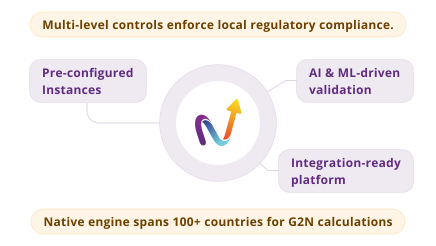
  • HR Blizz™ SaaS platform unifying payroll, HR, and reporting across 160 countries.
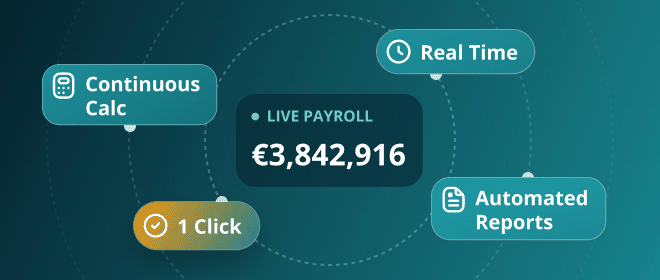
  • G2N Nova engine delivering accurate gross-to-net calculations including French CSG, CRDS, and supplementary pension contributions.
  • SOC 1, SOC 2, ISO 27001, and GDPR-certified data security.
  • 24/7 in-country French payroll specialists providing local expertise and global consistency.

With over 20 years of global payroll expertise, 8,000+ clients, and 160+ country coverage, Mercans is trusted by leading multinationals expanding into the French market.

Explore Mercans’ France Employer of Record and payroll services to see how your business can simplify DSN compliance, automate URSSAF reporting, and scale operations across France with confidence.

Frequently Asked Questions (FAQs)

Q1: Is the DSN an annual or monthly declaration?

The DSN is a monthly declaration, filed every month based on the previous month’s payroll data. Event-based DSNs (signalements) are submitted within 5 days of qualifying events.

Q2: When is the DSN due?

For companies with 50 or more employees paying salaries within the same month, the DSN is due by noon on the 5th of the following month. For all other employers, the deadline is noon on the 15th of the following month.

Q3: What happens if I miss a DSN deadline?

Late or incorrect filings can trigger penalties of up to 1.5 percent of the PMSS per employee per occurrence, with doubled penalties for repeat offences within 12 months. France’s “droit à l’erreur” provision allows correction in the following month’s DSN without penalty if complementary contributions are paid.

Q4: Do foreign companies without a French establishment need to file a DSN?

Yes. Foreign employers (entreprises étrangères) employing staff under the French social security system must file a DSN, even without a French establishment. They typically register with the Centre National Firmes Étrangères (CNFE) in Strasbourg.

Q5: What is the Montant Net Social (MNS)?

The MNS is a standardized net amount calculated for each employee, used to determine eligibility for social benefits like RSA and prime d’activité. It has been mandatory in DSN block S21.G00.58 since January 2024.

Q6: What is a Compte Rendu Métier (CRM)?

A CRM is an automated feedback report issued by URSSAF, AGIRC-ARRCO, France Travail, or other recipients when anomalies are detected in your DSN. CRMs must be reviewed and addressed in subsequent declarations.

Q7: Can I file the DSN without payroll software?

No. The DSN must be generated from a DSN-compatible payroll software (logiciel de paie) or via an expert-comptable. Manual entry is not accepted for the structured XML format.

Q8: What is the DSN de substitution?

Activated from 2025, the DSN de substitution allows URSSAF to unilaterally correct anomalies and recover contributions when employers fail to address CRM feedback. It carries administrative fees and reputational risk.