Global Payroll Orchestration: Definition, Benefits, Challenges and Best Practices

Global payroll orchestration is the coordinated management of payroll processes, systems, employee data, approvals, calculations, payments, and compliance requirements across multiple countries through a connected and standardized operating framework.

It helps multinational organizations bring different payroll activities together while accounting for local tax laws, social security contributions, employment regulations, currencies, and reporting obligations. Instead of managing each country’s payroll as an isolated process, businesses can coordinate workflows, monitor payroll status, and maintain consistent oversight across their international workforce.

Global payroll orchestration may involve payroll software, human capital management (HCM) systems, enterprise resource planning (ERP) platforms, time and attendance tools, finance applications, and local payroll expertise.

The goal is to make international payroll more consistent, visible, efficient, and manageable without overlooking country-specific requirements.

How Does Global Payroll Orchestration Work?

Global payroll orchestration connects the different activities involved in preparing, validating, approving, and completing payroll across multiple jurisdictions. The exact workflow depends on an organization’s payroll model, technology, and country coverage.

Common components include:

  • Employee data synchronization: Collecting relevant information about new hires, terminations, salaries, working hours, leave, bonuses, and deductions from connected systems.
  • Payroll processing coordination: Scheduling payroll activities and ensuring that required inputs are available before calculations begin.
  • Local payroll calculations: Applying the relevant country’s tax rules, social security contributions, statutory deductions, and employment requirements.
  • Validation and approvals: Identifying discrepancies, reviewing payroll results, resolving exceptions, and routing payroll for authorized approval.
  • Payments and reporting: Coordinating salary payments, payroll outputs, accounting records, and statutory reports according to local requirements.
  • Centralized monitoring: Providing visibility into payroll progress, outstanding actions, deadlines, and exceptions across countries.

For example, a company operating in the United Kingdom, Germany, and Singapore may use one central workflow to monitor payroll completion across all three countries. Each payroll still follows its applicable local rules, but the organization gains a consistent way to oversee progress, review results, and manage deadlines.

Why Is Global Payroll Orchestration Important?

As businesses expand internationally, payroll becomes more complex. Different tax systems, payment schedules, currencies, employment regulations, and technology environments can create fragmented workflows and increase administrative demands.

Global payroll orchestration helps address these challenges by coordinating activities that would otherwise be managed through separate systems, spreadsheets, vendors, or teams.

Its main benefits include:

1. Greater Payroll Visibility

A centralized view of payroll activities allows HR and finance teams to monitor progress across countries, identify outstanding approvals, and address delays before payroll deadlines are missed.

2. Improved Data Accuracy

Connected systems and standardized validation procedures can reduce duplicate data entry, inconsistent employee records, and errors caused by manual transfers between applications.

3. More Efficient Payroll Operations

Automated workflows can reduce repetitive administrative tasks, improve coordination between teams, and help organizations manage multiple payroll cycles more efficiently.

4. Stronger Compliance Management

Global orchestration supports consistent oversight of payroll controls while allowing local calculations and statutory reporting to follow the rules applicable in each jurisdiction. Businesses must still ensure that local requirements are correctly configured and reviewed.

5. Better Financial Planning

Consolidated payroll information helps finance teams review labor costs, compare payroll expenditure across regions, and prepare more consistent reports for budgeting and forecasting.

6. Easier International Expansion

A coordinated payroll framework can make it easier to introduce new countries, employees, and payroll workflows without creating an entirely disconnected process for every market.

Global Payroll Orchestration vs. Global Payroll Management

Global payroll management refers broadly to the administration and delivery of payroll across multiple countries. Global payroll orchestration focuses more specifically on how the different systems, processes, people, and activities work together.

For example, global payroll management may involve calculating salaries and submitting statutory reports in individual countries. Global payroll orchestration coordinates the data transfers, processing schedules, validation steps, approvals, and reporting workflows connecting those activities.

The two concepts are closely related. Orchestration is an approach that can strengthen the coordination and oversight of a broader global payroll management operation.

Key Challenges in Global Payroll Orchestration

Although orchestration can simplify complex payroll operations, implementation requires careful planning.

Disconnected technology systems: Legacy payroll applications may not communicate effectively with HR, finance, or time-tracking systems, making reliable data exchange difficult.

Different country regulations: Tax rates, statutory contributions, reporting deadlines, and employment laws vary by jurisdiction and can change over time.

Inconsistent data standards: Different countries or business units may use different formats, employee identifiers, and payroll input procedures.

Data privacy and security: Payroll information contains sensitive employee and compensation data. Organizations must implement appropriate access controls, secure integrations, retention practices, and safeguards for cross-border data transfers.

Unclear responsibilities: Payroll teams, local providers, HR departments, and finance teams need clearly defined ownership of inputs, approvals, corrections, and compliance responsibilities.

Limited process visibility: Without reliable monitoring and exception reporting, organizations may struggle to identify delayed inputs, unresolved discrepancies, or missed approval deadlines.

Best Practices for Implementing Global Payroll Orchestration

Organizations can improve their orchestration strategy by establishing a consistent operating framework while preserving the flexibility needed for local payroll requirements.

  • Map existing payroll workflows: Document payroll inputs, systems, owners, deadlines, approvals, and reporting requirements in every country.
  • Standardize where possible: Establish common data definitions, validation rules, reporting formats, and approval procedures without forcing identical statutory processes across different jurisdictions.
  • Integrate core systems: Connect payroll with relevant HCM, ERP, finance, and time and attendance applications to reduce manual transfers and improve data consistency.
  • Automate routine tasks: Use workflow automation for recurring activities such as data validation, approval notifications, deadline monitoring, and exception routing.
  • Maintain local compliance controls: Review country-specific calculations, statutory reporting, and regulatory updates regularly.
  • Strengthen data governance: Apply role-based access, audit trails, secure data transfers, and appropriate data retention policies.
  • Monitor performance: Track indicators such as on-time payroll completion, error rates, unresolved exceptions, manual adjustments, and payroll processing time.
  • Review and improve continuously: Use payroll performance data and feedback from local teams to identify bottlenecks and refine processes.

How Mercans Supports Global Payroll Orchestration

Organizations managing payroll across multiple countries can benefit from technology that connects payroll workflows, supports local compliance, and provides centralized operational visibility.

Mercans provides global payroll solutions that support multi-country payroll operations through technology, managed services, and local payroll expertise. Its approach helps businesses coordinate payroll activities while addressing country-specific requirements.

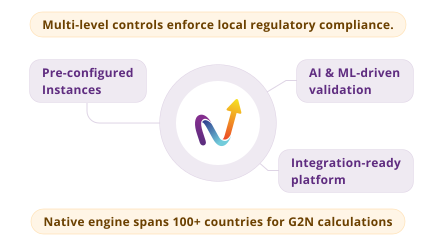
Mercans also offers global payroll technology designed to support scalable payroll operations, automated configuration, and integration with business systems. These capabilities can help organizations reduce fragmented workflows and improve oversight of international payroll processes.

By combining suitable technology with standardized controls and local expertise, businesses can build a more coordinated payroll operating model that adapts as their workforce expands.

Conclusion

Global payroll orchestration is an approach to coordinating international payroll processes, systems, teams, and compliance activities within a connected operating framework. It helps organizations improve visibility, reduce manual work, strengthen data consistency, and manage payroll operations across multiple jurisdictions.

Successful orchestration requires more than software integration. Businesses also need reliable employee data, clearly defined responsibilities, secure processes, accurate local payroll rules, and ongoing performance monitoring.

As organizations continue to expand across borders, a well-designed orchestration strategy can provide a stronger foundation for scalable, transparent, and reliable global payroll management.

Frequently Asked Questions (FAQs)

1. What is global payroll orchestration in simple terms?

Global payroll orchestration is the coordination of payroll systems, workflows, data, approvals, and payments across multiple countries. It helps businesses manage international payroll through a connected process while meeting the specific requirements of each country.

2. What is the difference between global payroll orchestration and payroll automation?

Payroll automation uses technology to perform individual tasks, such as calculating wages, validating data, or generating reports. Global payroll orchestration coordinates these tasks, systems, and teams into a connected workflow across countries. Automation can be an important component of orchestration.

3. What are the main benefits of global payroll orchestration?

The main benefits include better payroll visibility, fewer manual processes, improved data consistency, more efficient approvals, stronger compliance oversight, and easier coordination across international operations. Actual results depend on the organization’s systems, processes, and implementation.

4. Which technologies support global payroll orchestration?

Common technologies include global payroll platforms, HCM systems, ERP software, time and attendance applications, integration tools, workflow automation, and reporting dashboards. APIs and other secure integration methods can help these systems exchange payroll-relevant information.

5. How does global payroll orchestration help with compliance?

It helps organizations coordinate compliance-related workflows, monitor statutory deadlines, standardize validation procedures, and maintain records of payroll reviews and approvals. However, orchestration does not automatically guarantee compliance; payroll calculations and reporting must still meet the applicable local laws.

6. How can a business implement global payroll orchestration?

A business can begin by mapping its existing payroll processes, identifying disconnected systems, standardizing data and controls, integrating relevant applications, and automating appropriate workflows. It should also establish clear responsibilities, maintain country-specific compliance procedures, and measure performance to identify areas for improvement.