AI Governance in Payroll: Definition, Risks & Compliance

AI governance in payroll is the framework of policies, controls, processes, and oversight used to ensure that artificial intelligence is used responsibly, securely, transparently, and compliantly in payroll operations.

As payroll platforms increasingly use AI for anomaly detection, payroll validation, forecasting, automation, compliance monitoring, and data analysis, organizations need controls around how these systems are developed, implemented, monitored, and used.

AI governance does not mean preventing payroll teams from using artificial intelligence. Instead, it establishes boundaries around what AI can do, what data it can access, how its outputs are evaluated, and when human review is required.

The objective is to combine the efficiency of AI-powered payroll technology with appropriate human oversight and risk management.

Why Is AI Governance Important for Payroll?

Payroll is a particularly sensitive area for AI because it processes financial and personal information and directly affects employees.

A payroll system may handle:

  • Employee salaries
  • Bank account information
  • Tax information
  • Social security details
  • Benefits information
  • Working hours
  • Bonuses and deductions
  • Personal identification data
  • Employment information
  • Payroll history

An error in an AI-supported payroll process can therefore have a direct financial or compliance impact.

AI governance helps organizations establish accountability before automation is introduced into critical payroll workflows.

A useful way to think about it is:

AI automation determines what a system can do. AI governance determines how that capability should be controlled.

How Does AI Governance Apply to Payroll?

AI governance can apply throughout the lifecycle of an AI-enabled payroll system.

This includes the initial selection of the technology, data used by the system, configuration, testing, deployment, monitoring, and eventual replacement or retirement.

The U.S. National Institute of Standards and Technology (NIST) AI Risk Management Framework provides a useful general model based on four functions: Govern, Map, Measure, and Manage. NIST describes governance as a cross-cutting function that informs the other stages of AI risk management.

For payroll teams, this can translate into four practical questions:

Govern: Who is responsible for the AI system?

Map: What could go wrong, and who could be affected?

Measure: How accurately, fairly, securely, and consistently does the system perform?

Manage: What happens when the system produces an error or identifies a potential risk?

Common Uses of AI in Payroll

AI can support payroll operations in several ways without necessarily replacing payroll professionals.

Payroll Anomaly Detection

AI can analyze historical payroll information and identify unusual changes, such as unexpected salary variations, duplicate payments, unusual deductions, or inconsistent payroll entries.

This can help payroll teams focus their attention on exceptions that require investigation.

Payroll Data Validation

AI-supported systems can compare payroll information against configured rules or historical patterns and flag potential inconsistencies before payroll is finalized.

Compliance Monitoring

AI can assist organizations in monitoring changes in payroll-related requirements and identifying areas that may require review.

However, AI-generated compliance information should be validated against authoritative legal or government sources before being used for statutory payroll decisions.

Payroll Forecasting

Organizations can use AI and predictive analytics to identify trends in payroll costs, workforce expenses, overtime, and other payroll-related metrics.

Process Automation

AI can support repetitive payroll activities and reduce manual intervention in processes such as data validation, exception identification, and reporting.

What Are the Main Risks of AI in Payroll?

AI can create efficiencies, but governance is necessary because automated systems can introduce new risks.

Incorrect Payroll Decisions

An AI system may identify an incorrect pattern or produce an inaccurate output.

For payroll, even a relatively small error can result in an incorrect employee payment, deduction, contribution, or report.

Bias and Discrimination

AI systems can reproduce or amplify problems contained in their underlying data or design.

This is particularly important where AI is used to make or support employment-related decisions. Organizations should understand whether an AI system could produce outcomes that disadvantage particular groups.

NIST identifies fairness and harmful-bias management among the characteristics organizations should consider when developing trustworthy AI systems.

Data Privacy

Payroll data is highly sensitive.

Organizations should establish appropriate controls over:

  • What employee data an AI system can access
  • Where the information is stored
  • Who can access it
  • How long it is retained
  • Whether it is transferred to third parties
  • Whether the data is used to train or improve an AI model

Lack of Explainability

Payroll professionals may need to understand why an AI system flagged a transaction or generated a particular recommendation.

If the system cannot provide meaningful information about its output, human reviewers may find it difficult to investigate errors.

Over-Automation

Not every payroll decision should necessarily be automated.

A governance framework can identify situations where AI should only provide a recommendation or alert, while a qualified payroll professional retains responsibility for the final decision.

Third-Party AI Risk

Payroll software may incorporate AI features provided by third-party vendors.

Organizations should therefore consider not only their own controls but also the AI governance, security, data handling, and compliance practices of their technology providers.

NIST’s AI RMF specifically recommends considering risks associated with third-party software, data, and other components of an AI system.

Human Oversight in AI-Powered Payroll

Human oversight is one of the most important components of responsible payroll automation.

AI can identify a potential problem, but the payroll team may still need to determine whether the result is actually an error.

For example, an AI system might flag a large salary increase as unusual. A payroll professional can then establish whether the change resulted from a legitimate promotion, annual salary review, bonus, or another approved adjustment.

This approach creates a human-in-the-loop payroll process:

AI identifies → Payroll professional reviews → Decision is confirmed → Payroll is processed

NIST’s AI RMF includes defining and documenting processes for human oversight as part of AI risk management.

AI Governance and Payroll Compliance

AI governance and payroll compliance are closely connected, but they are not the same thing.

Payroll compliance focuses on meeting applicable legal, tax, employment, social security, reporting, and payroll requirements.

AI governance focuses on controlling the way artificial intelligence is used to support those processes.

A compliant payroll operation therefore needs to consider both.

For example, if an AI system helps calculate payroll deductions, the organization remains responsible for ensuring that the resulting calculation complies with the applicable statutory requirements.

AI does not transfer the organization’s legal responsibilities to the software.

AI Governance and Employee Data

Payroll AI should operate within an organization’s wider data protection and information-security framework.

Before introducing an AI feature, organizations should establish:

  • What employee information is processed
  • Why the information is required
  • Which systems can access it
  • Whether third-party providers receive the data
  • How data is protected
  • How long information is retained
  • How employees’ privacy rights are addressed
  • What happens if the AI system produces an incorrect result

These questions become particularly important for multinational companies because payroll information may be processed across multiple countries with different privacy and data-transfer requirements.

Creating an AI Governance Framework for Payroll

There is no single governance model that applies to every payroll operation. However, organizations can build a framework around several core controls.

Define Ownership

Assign responsibility for AI-enabled payroll systems.

This may involve payroll, HR, IT, information security, legal, compliance, and data-protection teams.

Maintain an AI Inventory

Keep a record of AI systems being used within payroll and document what each system does.

For example:

  • Payroll anomaly detection
  • Payroll forecasting
  • Employee support chatbot
  • Compliance monitoring
  • Automated payroll validation

Classify the Risk

Not every AI use case carries the same level of risk.

A system that identifies unusual payroll transactions may require different controls from a system that makes decisions affecting employee compensation or employment status.

Test Before Deployment

AI systems should be evaluated before being introduced into production payroll workflows.

Testing can examine accuracy, reliability, bias, security, explainability, and potential failure scenarios.

NIST recommends measuring AI risks and monitoring AI systems before and during operation rather than treating evaluation as a one-time activity.

Monitor Continuously

AI governance should continue after implementation.

Payroll data, business processes, regulations, software configurations, and AI models can change over time.

Regular monitoring helps organizations identify emerging issues and determine whether additional controls are required.

Document Decisions

Organizations should maintain appropriate records of:

  • AI system purpose
  • Data sources
  • Risk assessments
  • Testing
  • Controls
  • Human oversight
  • Incidents
  • Model or system changes
  • Vendor information

Documentation supports accountability and makes it easier to investigate issues.

AI Governance for Global Payroll

AI governance becomes more complex when payroll operates across multiple countries.

A multinational organization may need to consider different:

  • Payroll regulations
  • Tax requirements
  • Employment laws
  • Data protection rules
  • AI regulations
  • Reporting requirements
  • Employee rights

A single global AI policy may therefore need to be supported by country-specific controls.

This is particularly relevant when AI is integrated into a global payroll platform that processes employee information from multiple jurisdictions.

AI Governance and Mercans Payroll Technology

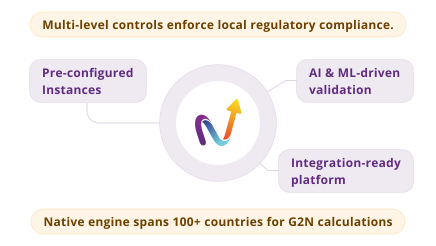
Mercans incorporates AI and automation into its payroll technology to support global payroll operations.

Its technology can use AI and machine learning capabilities for areas such as payroll anomaly detection, payroll validation, compliance-related processes, and payroll insights.

For international organizations, AI-powered payroll technology can help reduce manual work while giving payroll teams greater visibility into potential exceptions.

Mercans’ global payroll offering supports payroll operations across multiple countries and is designed to combine centralized technology with country-specific payroll requirements.

For organizations evaluating AI-powered payroll, governance should remain part of the technology-selection process. Businesses should assess not only what an AI system can automate, but also its controls for data protection, human oversight, monitoring, auditability, and compliance.

You can explore Mercans’ Global Payroll solutions and Global Payroll SaaS for more information.

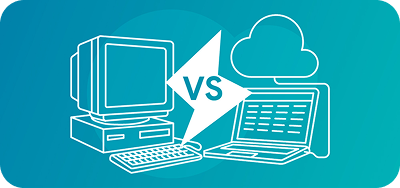
AI Governance vs. AI Automation in Payroll

AI automation and AI governance serve different purposes.

AI automation asks:

What payroll activity can technology perform automatically?

AI governance asks:

Under what conditions should that technology perform the activity, and who remains accountable?

A mature payroll operation needs both.

Automation can improve speed and reduce repetitive manual work, while governance provides the controls necessary to manage errors, privacy, compliance, and accountability.

A Practical AI Governance Checklist for Payroll

Before deploying AI within payroll, organizations can consider the following questions:

  • Is the purpose of the AI system clearly documented?
  • What payroll data does the system access?
  • Is the data appropriate for the intended use?
  • Who owns the system?
  • Has the system been tested?
  • How is accuracy measured?
  • Can potential bias be identified?
  • Is human review required?
  • Can payroll professionals override the AI output?
  • How are errors recorded and investigated?
  • Is employee data adequately protected?
  • What third-party vendors are involved?
  • How often is the system reviewed?
  • What happens if the AI system fails?
  • Are applicable legal and regulatory requirements documented?

These questions can form part of a wider AI risk-management program. NIST’s AI RMF similarly emphasizes ongoing governance, measurement, documentation, and management throughout the AI lifecycle.

The Future of AI Governance in Payroll

Payroll is likely to become increasingly automated as organizations adopt AI-powered payroll platforms and analytics.

The focus of payroll governance will therefore shift from simply asking whether automation works to asking whether it works reliably, securely, transparently, and within the organization’s compliance requirements.

For payroll leaders, the emerging model is not necessarily AI replacing payroll expertise. Instead, it is a combination of:

AI automation + payroll expertise + human oversight + continuous risk management.

Organizations that establish governance alongside automation can create clearer accountability around how AI is used in payroll and how potential risks are identified and addressed.

Frequently Asked Questions About AI Governance in Payroll

What is AI governance in payroll?

AI governance in payroll is the set of policies, controls, responsibilities, and monitoring processes used to manage the responsible use of artificial intelligence in payroll operations.

Why is AI governance important for payroll?

Payroll involves sensitive employee and financial information. AI governance helps organizations manage risks involving inaccurate calculations, privacy, bias, security, compliance, lack of transparency, and excessive automation.

Can AI completely automate payroll?

AI can automate or support many payroll activities, but organizations should determine which processes require human review. Automated outputs still need appropriate controls, particularly when they can affect employee pay, statutory compliance, or sensitive personal data.

How can AI create payroll compliance risks?

AI can produce incorrect outputs, use inappropriate data, miss regulatory changes, or make recommendations that require additional human review. Organizations remain responsible for ensuring that payroll processes comply with applicable laws and regulations.

What is human oversight in AI payroll?

Human oversight means that qualified employees remain involved in reviewing, approving, or overriding AI-generated outputs where appropriate. For example, AI can flag an unusual payroll transaction while a payroll professional determines whether the transaction is legitimate.

How does AI governance protect employee payroll data?

AI governance can establish controls over data access, processing, storage, retention, third-party sharing, security, and monitoring. These controls help organizations manage the privacy and security risks associated with using AI with payroll information.

Does Mercans use AI in payroll?

Mercans incorporates AI and machine learning capabilities into its payroll technology to support areas such as anomaly detection, payroll automation, compliance processes, and payroll insights. Businesses can explore Mercans’ Global Payroll and Global Payroll SaaS solutions for more information.

What framework can organizations use for AI risk management?

The NIST AI Risk Management Framework is one established framework that organizations can use to structure AI risk management. Its core functions are Govern, Map, Measure, and Manage, and it is designed as voluntary guidance rather than a one-size-fits-all compliance checklist.