Global Payroll

Payroll in Brazil

Accurate payroll, full compliance, zero hassle.

Global Payroll Team
Written by Global Payroll Team
Published on September 22, 2026
Last updated September 22, 2026
Expert Reviewed

Mercans is your premier partner for top-quality payroll services in Brazil, offering both Managed and SaaS solutions. Our steadfast commitment to delivering exceptional payroll outsourcing in Brazil is unmatched. Drawing from extensive experience in the payroll sector, Mercans ensures precise and compliant payroll services, establishing us as the preferred option for businesses of all sizes. Count on Mercans for prompt and accurate payroll transactions, complemented by the convenience of multi-currency payments tailored to the Brazilian market. As your dedicated local payroll provider in Brazil, we feature a team of in-country payroll specialists well-versed in local regulations, providing comprehensive assistance for a seamless payroll experience customized to your business requirements.

Payroll Services in Brazil

At Mercans, our unwavering commitment to local compliance in Brazil goes beyond a mere checklist. We proactively navigate the intricate regulatory landscape – including Brazil’s fully digital eSocial reporting framework – ensuring your business aligns seamlessly with the country’s norms. Here’s an insight into how Mercans expertly manages key activities, safeguarding both compliance and operational efficiency:

Comprehensive Services Include

Payroll Settlement

  • Precise calculations encompassing INSS, FGTS, income tax withholding, and other deductions.
  • Inclusion of overtime, the mandatory 13th salary (décimo terceiro), and applicable allowances.
  • Preparation of periodic eSocial events covering admissions, remuneration, and terminations.

Payment Processing

  • Generation and delivery of payslips (holerite).
  • Efficient management of FGTS deposits and the mandatory 13th salary instalments.
  • Streamlined payments through a compliant local Brazilian Real (BRL) bank account.

Regulatory Compliance

  • Filing of FGTS, INSS, and income tax withholding obligations through the eSocial and DCTFWeb systems.
  • Accurate monthly and continuous reporting, replacing what were formerly separate annual filings.
  • Ongoing monitoring of Brazil’s evolving tax reform and labor court developments, including the unresolved “pejotização” contractor-classification case.

Digital Compliance Management

  • Registration and maintenance of the company’s eSocial employer profile, tied to its digital certificate.
  • Digital termination processing via the eSocial S-2299 event.
  • Expert management of Receita Federal and Caixa Econômica Federal (FGTS) filings.

Minimum Wages in Brazil

Brazil’s national minimum wage is BRL 1,621 per month, effective 1 January 2026.

Working Hours

The standard legal working week in Brazil is 44 hours, structured as 8 hours per day, with overtime capped at 2 extra hours per day.

13th Salary (Décimo Terceiro)

Brazil requires a mandatory 13th-month salary, equal to 1/12 of the employee’s annual salary per month worked. It is generally paid in two instalments: the first (up to 50% of the prior year’s salary) by 30 November, and the second, subject to withholding, by 20 December.

Key Points on Overtime

Weekday Overtime
Overtime is paid at a minimum 50% premium above the normal hourly rate on weekdays.
Sunday & Holiday Overtime
Overtime worked on a Sunday or public holiday commonly carries a 100% premium above the normal hourly rate.
Hours Banking (Banco de Horas)
An individual or collective agreement can authorize hours banking, compensating overtime with time off instead of a salary premium, within legally defined limits.

Payroll Cycle in Brazil

Salaries in Brazil are paid monthly, generally by the 5th business day of the following month, and must be paid in Brazilian Real (BRL) – Brazilian law voids any local employment obligation stipulated in a foreign currency, so payroll must run through a local BRL bank account. Employers must provide an itemized payslip (holerite) each pay period.

Company Registration in Brazil

When establishing a business presence in Brazil to run local payroll, foreign companies typically choose from the following structures, registered through the state Board of Trade (Junta Comercial):

Sociedade Limitada (Ltda)

The default vehicle for the large majority of foreign entrants. No statutory minimum capital, and a single-quotaholder version (Sociedade Limitada Unipessoal) is permitted. A foreign quotaholder must appoint a Brazil-resident attorney-in-fact to receive service of process, and foreign corporate documents require legalization and sworn translation.

Sociedade Anônima (S.A.)

Typically used for larger operations, joint ventures, or more complex capital structures rather than a straightforward hiring vehicle. Bringing in an expatriate officer generally requires registering a minimum BRL 600,000 in foreign capital investment with the Central Bank to support the relevant visa.

Branch (Filial) of a Foreign Company

A foreign company can only operate directly as a Brazilian branch after a Presidential Decree under the Civil Code – a notoriously slow route, commonly taking 6 to 12 months or longer, and rarely granted for ordinary commercial activity. Branch liability is also unlimited, with the foreign parent directly answering for branch obligations. This route is essentially impractical for a standard hiring and payroll use case.

Setting up and maintaining any of these structures – including the ongoing corporate compliance obligations that come with them – requires dedicated legal and administrative resources. Mercans’ Employer of Record and Global Payroll solutions allow companies to hire and pay employees in Brazil without first establishing any of these entities.

Employer Registration for Payroll in Brazil

A company obtains its CNPJ (tax identification number) as part of the integrated registration process at the Board of Trade. Every active CNPJ with a labor obligation – even a company with no employees but a pro-labore payment – must also register an employer profile in eSocial, Brazil’s unified digital bookkeeping system for labor, social security, and tax reporting, tied to a digital certificate issued to the company.

Where an employer’s initial or increased capital comes from abroad, that foreign capital must also be registered with the Central Bank, generally required for investments of USD 100,000 or more. Opening a local bank account for a foreign-owned entity typically requires the company’s incorporation documents, proof of registered address, identification of legal representatives, and a beneficial-ownership declaration.

Payroll Taxes in Brazil

Personal Income Tax in Brazil

Personal income tax in Brazil (IRPF) is progressive, and was significantly reformed effective 1 January 2026. Monthly income up to BRL 5,000 is effectively exempt under the new reduction mechanism, with a gradually tapering reduction applying up to BRL 7,350, above which the standard progressive brackets of 7.5%, 15%, 22.5%, and 27.5% apply. A new minimum income tax also applies to individuals with annual income above BRL 600,000, reaching a guaranteed minimum effective rate of 10% above BRL 1,200,000 per year.

Tax Reporting

FGTS contributions are declared and paid through the FGTS Digital platform, with payment due by the 20th of the following month – a deadline that moved from the 7th when FGTS Digital replaced the previous system in March 2024. Social security (INSS) and other federal contributions are declared through DCTFWeb, with the declaration itself generally due by the last business day of the following month, while the corresponding payment (DARF) remains due by the 20th. Mercans confirms the exact current-cycle dates for each engagement, since these deadlines have moved more than once in recent years.

Social Security in Brazil

Brazilian payroll involves several mandatory contributions layered on top of gross salary.

Contribution Who Pays Rate
INSS (Social Security) Employee Progressive: 7.5%, 9%, 12%, 14%, up to a monthly contribution ceiling of approximately BRL 8,475.55
INSS Patronal (Employer Social Security) Employer 20% of gross payroll, uncapped (subject to variation under the Simples Nacional tax regime)
FGTS Employer 8% of gross monthly salary

Employers registered under the Simples Nacional simplified tax regime should note that companies in Annexes I, II, III, and V already have employer INSS bundled into their single DAS tax payment; only Annex IV (certain labor-intensive services) pays employer INSS separately at 20% on top of the DAS.

Annual Reporting: Now Consolidated into eSocial

Brazil has substantially simplified year-end payroll compliance in recent years by folding several previously separate annual filings into eSocial’s continuous reporting. RAIS (the annual social information report) is now populated automatically from ongoing eSocial data rather than filed as a standalone form. CAGED (the monthly employment/unemployment statistics report) has similarly been replaced by the eSocial admission (S-2200) and termination (S-2299) events. DIRF, the annual withholding tax statement, was extinguished for tax facts occurring from 1 January 2025 onward, with continuous eSocial and EFD-Reinf reporting now serving the equivalent purpose. In practice, this means employers who keep their periodic eSocial events current are no longer separately filing these three annual reports.

Termination Payroll in Brazil

Union homologation of a termination is no longer legally required since Brazil’s 2017 labor reform, unless the applicable collective bargaining instrument specifically calls for it. The termination settlement (TRCT) is now formalized digitally through the eSocial termination event (S-2299), which must generally be transmitted within a short window of the termination date. Final settlement payments – covering outstanding wages, proportional 13th salary, proportional vacation pay plus the 1/3 bonus, and the FGTS balance and any applicable penalty – are likewise due within a short statutory window following termination; Mercans confirms the precise current deadline for each case given recent changes to related filing rules.

Employees vs Independent Contractors (“Pejotização”)

Engaging what is functionally an employee through their own registered company (“PJ”) instead of a CLT employment contract remains an active and unresolved legal risk area in Brazil. Brazil’s Federal Supreme Court continues to review the legality of PJ contractor arrangements (Tema 1.389); a merits judgment attempt in the STF plenary in December 2025 was paused by a request for further review from another justice, and as of this writing no final ruling has been issued. Companies engaging talent in Brazil through compliant CLT employment – including via an EOR – avoid this ongoing legal uncertainty.

Brazil Compliance Requirements

Obligation Frequency / Deadline
FGTS (via FGTS Digital) Monthly, by the 20th of the following month
INSS / Federal Contributions (DCTFWeb Payment) Monthly, by the 20th of the following month
DCTFWeb Declaration Monthly, by the last business day of the following month
13th Salary (Décimo Terceiro) By 30 November (first instalment) and 20 December (second instalment)
Termination Event (eSocial S-2299) & Final Settlement Within a short statutory window of the termination date

Employee Benefits in Brazil

Mercans, in adherence to Brazilian labor law, ensures that employees receive the right benefits by staying vigilant about statutory deductions and entitlements.

  • 13th Salary: A mandatory 13th-month payment, described above.
  • FGTS: An 8% employer contribution into a personal savings account for each employee.
  • Annual Leave: 30 calendar days per year after 12 months of service, reduced on a sliding scale if unjustified absences exceed certain thresholds.
  • Sick Leave: The employer pays the first 15 days of sick leave in full; from day 16 onward, the benefit is paid by INSS.
  • Maternity Leave: 120 days paid, extendable to 180 days under the voluntary “Empresa Cidadã” program.

Benefits of Payroll Outsourcing in Brazil

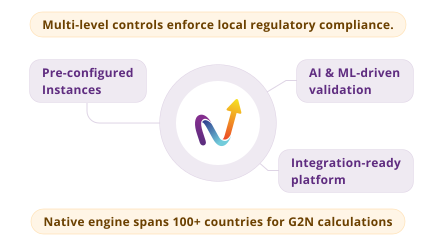
For our payroll services, we have strategically implemented a robust tool designed to seamlessly operate across diverse countries, ensuring regional uniformity and meeting the specific requirements of our clients. This tool reflects our commitment to delivering:
Stringent Data Security Measures
Incorporating industry-leading security measures to safeguard sensitive data, including compliance with GDPR, SOC, ISO, and OWASP standards. ISO 27001 and ISAE3402 certifications ensure adherence to stringent information security protocols, guaranteeing the highest level of data protection.
Consistent and Sustainable Performance
Ensuring reliable performance that meets the dynamic demands of payroll services, providing clients with consistent and sustainable solutions across Brazil’s fully digital compliance environment.
Flexibility and Scalability
Offering flexibility and scalability to accommodate evolving client needs and adapt to changing business environments, ensuring seamless integration and expansion.
Collaborative Cloud Platform
Utilizing a cloud-based platform that facilitates collaborative work, promoting efficiency and accessibility across teams, enhancing collaboration and productivity.
Key Features of Electronic Payroll Support

  • Full Traceability: Enabling a traceable process from generation to transmission and validation, ensuring transparency and accountability at every step, consistent with data accepted by eSocial.
  • Efficiency in Human Resources: Enhancing the efficiency of the human resources area by streamlining the payroll settlement process, resulting in significant time savings and improved resource allocation.
  • Certified Suppliers: Partnering with certified suppliers who uphold the highest standards of information security with ISO 27001 certification, ensuring secure data transmission processes and bolstering the integrity of our services.

Payroll Solutions in Brazil

Uncover the potential of seamless payroll processing in Brazil with Mercans’ Global Payroll Solutions. Our flexible models ensure local compliance, support multi-currency transactions, and offer connectivity to global Human Capital Management (HCM) and Enterprise Resource Planning (ERP) systems. Paying correctly has never been more straightforward.
Explore Our Flexible Models

  • SaaS (Software as a Service): Tailored for enterprise businesses managing multi-country payroll with intricate complexities arising from diverse data points, locations, currencies, and languages. Our SaaS model streamlines operations for optimal efficiency.
  • Managed Services: Designed for mid-sized and large enterprise businesses, our Managed Services model caters to those operating multi-country payroll. It provides on-demand HR expertise, ensuring security, reliability, and compliance across the board.
  • HRMS (Human Resource Management System): Perfect for mid to large businesses in expansion mode, our HRMS model offers a comprehensive range of functionalities, including payroll and benefits. Businesses can select the specific features they need, ensuring a tailored and efficient solution.

Streamline Payroll with Mercans’ Technology and Integrations

Mercans leads the way in providing top-tier payroll solutions in Brazil, offering a diverse range of tailored options to meet our clients’ unique needs. Choose Mercans as your reliable ally, ensuring a smooth and effective payroll process in Brazil’s dynamic business environment.

  • Cutting-Edge Technology: Explore the forefront of innovation with Mercans’ state-of-the-art technology, driving our global payroll solutions.
  • Seamless Integrations: Effortlessly integrate your Human Capital Management (HCM) systems with Mercans’ solutions, enhancing connectivity and efficiency.
  • Recognized Excellence: Partner with an esteemed organization known for its commitment to excellence in delivering outstanding payroll services.

Outsource to Payroll Company in Brazil

In the dynamic business landscape of Brazil, Mercans stands as a beacon of excellence, offering tailored solutions to meet the diverse needs of our clients. With a large domestic market, sophisticated digital tax administration, and strategic importance in Latin America, Brazil presents attractive opportunities for business expansion, alongside genuinely intricate payroll requirements shaped by its CLT framework and fully digital eSocial reporting system. Mercans is your trusted partner in navigating the complexities of the Brazilian market. Our unwavering commitment to 100% local compliance, coupled with our extensive knowledge of Brazilian labor laws, ensures that businesses establish a solid presence in Brazil with ease. By choosing Mercans, companies can leverage our expertise to streamline operations, adhere to statutory requirements, and lay the groundwork for sustained growth in this dynamic environment. With Mercans by your side, embark on a journey of success and prosperity in Brazil’s vibrant business landscape.

This document was prepared for informational purposes only. As local laws & regulations keeps on changing. Please consult your tax & legal advisors as well.
Contact Sales
Let's get this conversation started. Tell us a bit about your requirement, and we'll get in touch a soon as we can.

    Sample message

    1. Headcount per legal entity (breakdown by country/entity)

    2. Systems to be interfaced with (e.g., HRIS, payroll, finance, time tracking, etc.)

    3. Any specific integration requirements or preferred platforms

    4. Requirement for additional modules (e.g., benefits administration, time & attendance, expense management)

    5. Level of customization or configuration needed for systems integration

    FAQs

    How do you ensure compliance with Brazil's eSocial reporting requirements?

    Our global payroll platform automates country-specific rules, including Brazil’s fully digital eSocial system, which covers admissions, remuneration, and terminations, and now absorbs what were formerly separate annual filings like RAIS, CAGED, and DIRF.

    How do you manage Brazil's FGTS and INSS filing deadlines?

    We track current filing and payment deadlines through the FGTS Digital and DCTFWeb systems, which have changed more than once in recent years, ensuring contributions are calculated and remitted accurately and on time.

    Is it safe to hire workers in Brazil as independent contractors (PJ) instead of employees?

    This carries meaningful legal risk. Brazil’s Federal Supreme Court continues to review the legality of PJ contractor arrangements, with no final ruling issued as of this writing. Genuine CLT employment through an EOR is a materially lower-risk path.

    What challenges arise when integrating Brazilian payroll data with global systems, and how do you address them?

    Integration challenges are solved through a unified payroll platform that consolidates data, standardizes reporting, and connects HR, finance, and compliance teams across every country you operate in, including Brazil.

    How do you manage currency requirements when running payroll in Brazil?

    We ensure salaries are processed through a compliant local Brazilian Real (BRL) bank account, as Brazilian law requires, while giving multinational clients consolidated multi-currency visibility across their global payroll.

    Need payroll in Brazil?

    Accurate, compliant payroll processing handled by local experts.

    Talk to an expert
    Proven expertise in global payroll.