Employer of Record

Employer of Record (EOR) Malta

Hire compliantly, pay accurately, expand confidently.

Global Payroll Team
Written by Global Payroll Team
Last updated April 24, 2026
Expert Reviewed

An Employer of Record (EOR) acts as the legal employer for workers in Malta. Often known as a Global Professional Employer Organization (Global PEO), an EOR manages essential employment aspects, ensuring compliance with Maltese labor laws and regulations. Responsibilities include handling payroll, taxes, legally mandated benefits, and drafting employment agreements.

The Employer of Record (EOR) in Malta is responsible for:
  • Ensuring strict compliance with Malta’s employment laws.
  • Managing the complexities of the local payroll process.
  • Overseeing the filing of employment-related taxes and necessary documentation.
  • Providing employees with accurate payslips.
  • Facilitating timely distribution of employee salary payments.

Enhance your global expansion with our streamlined Global PEO services, eliminating the need for entity setup in Malta. Our Employer of Record (EOR) Malta ensures a compliant legal presence, adherence to local regulations, and Intellectual Property protection, allowing your business to focus on its core objectives. Navigate global mobility and work visas with ease, while building a diverse and efficient global workforce. Trust Mercans as your Employer of Record in Malta for a seamless and compliant employment experience for your global team.

Things you need to know before hiring in Malta

Employment Contracts in Malta

Employment contracts in Malta serve as essential frameworks for defining the rights and responsibilities of both employers and employees, establishing clear terms for workplace conduct, dispute resolution, and termination processes. These contracts provide security and clarity, detailing the fundamental rules and expectations of the employment relationship.

Key elements of an employment contract typically include:

  • Terms of Employment: Specifics on job roles, responsibilities, and working hours.
  • Compensation and Benefits: Clear information on salary, bonuses, and other benefits.
  • Social Provisions: Details on sick pay, parental leave, and other entitlements.
  • Contract Modifications: The procedures for altering contract terms if needed.
  • Notice Periods: Defined timelines for either party to terminate the employment relationship.

Contracts may be established through verbal agreements, written negotiations, or collective bargaining agreements. Each contract provides a mutual understanding of the terms and any breaches that may occur.

If a contract breach arises, there are several options for resolution, ranging from informal discussions and mediation to formal arbitration and legal action. If necessary, disputes can be escalated to Malta’s civil courts.

Not all contracts in Malta involve traditional employment settings. Service contracts, often resulting from an expression of interest or tender process, are commonly used for contractors providing specific services. A service contract outlines the terms of service delivery, payment arrangements, and performance expectations. These contracts also define mechanisms for handling disputes, including penalties for unmet obligations, quality standards, and arbitration options for addressing conflicts.

Working Hours

Typically, the standard work week in Malta is set at 40 hours, excluding any overtime. However, certain legal provisions allow for working time to extend beyond 40 hours, provided that the average working time does not exceed 48 hours per week over the applicable reference period, usually 17 weeks.

Probation Period

The initial employment period, or probation, is a valuable stage in establishing an employment relationship. It enables both parties to evaluate job compatibility, with the employer offering necessary support to assist the new employee’s transition. This period should be reasonably set to ensure adequate assessment time.

Probation for Open-Ended Contracts

For open-ended (indefinite) contracts, the standard probationary period is six months, though a shorter duration can be agreed upon by both parties.

Probation for Fixed-Term Employment

For fixed-term employment, the probation period is set proportionally based on the contract’s duration. Under Maltese rules, probation for fixed-term contracts follows proportionality guidelines relative to contract length. Unless otherwise agreed upon, the following terms apply to standard fixed-term contracts:

Contract length Applicable probation period
Less than 6 months One-third (1/3) of the duration of the contract of service
6 months 2 months
7 months 2 months
8 months 3 months
9 months 3 months
10 months 3 months
11 months 4 months
12 months 4 months
13 months 4 months
14 months 5 months
15 months 5 months
16 months or more 6 months

For roles in technical, executive, administrative, or managerial capacities, specific probation terms may apply as detailed in the general conditions of employment.

13th Month Salary

Malta does not have a distinct law or regulation that requires the payment of a 13th month’s salary. Instead, employment conditions and benefits in Malta are primarily regulated by the Employment and Industrial Relations Act and subsidiary legislation.

Termination, Severance Pay and Notice Period

Termination of Definite Contracts

Fixed-term contracts in Malta should not be ended before the agreed-upon expiration date. Under Maltese law, an employer’s premature termination of a fixed-term contract is considered an unfair dismissal. However, the natural expiration of a fixed-term contract is not viewed as termination.

If an employer ends a fixed-term contract early, they are generally required to pay the employee half of the wages that would have been earned for the remaining contract period. Similarly, if an employee leaves before the contract expires, they may be required to pay the employer half of the wages that would have accrued. However, if there is a good and sufficient cause for either dismissal or resignation, either party may terminate the contract without facing financial penalties.

Termination of Indefinite Contracts by Employers

An employer may terminate an employment contract only under the following conditions:

  • Presence of good and sufficient cause;
  • Redundancy;
  • Reaching pensionable age, where applicable under law.

If none of these conditions apply and an employee believes they were dismissed unfairly, they may file a complaint with the Industrial Tribunal within four months of the dismissal. Should the Tribunal determine that the dismissal was indeed unjustified, it may order the employee’s reinstatement, re-engagement, or award compensation.

Notice Period in Malta

If an employment contract is terminated within the first month of the probationary period, there is no obligation to give notice. However, once an employee has completed one month of service during probation, a one-week notice period is required.

The notice period, as stipulated by Maltese law, is based on the length of an employee’s continuous service:

  • Up to 1 month: No notice required
  • More than 1 month and up to 6 months: 1 week
  • More than 6 months and up to 2 years: 2 weeks
  • More than 2 years and up to 4 years: 4 weeks
  • More than 4 years and up to 7 years: 8 weeks
  • More than 7 years and up to 8 years: 9 weeks
  • More than 8 years and up to 9 years: 10 weeks
  • More than 9 years and up to 10 years: 11 weeks
  • More than 10 years: 12 weeks

While Maltese law does not generally mandate severance pay beyond wages due for the notice period, employers or trade unions may offer or negotiate severance payments in particular circumstances.

Employees vs Independent Contractors

One significant risk is misclassification, where Maltese authorities may determine that a contractor is actually functioning as an employee. This assessment is based on the nature of the working relationship, particularly the level of control the business exerts over the contractor. Indicators of employee status include managing the contractor’s work schedule, setting specific work methods, or providing a fixed, regular monthly payment that resembles a salary.

While the government does not routinely audit contractor relationships, this issue may arise if the contractor seeks employee status. To reduce this risk, it is essential to have a clear contract in place and ensure that invoices reflect the contractor’s self-employed status.

Criteria Employee Contractor / self-employed
Control over work Works under the employer’s direction and control Generally decides how the work is carried out and is not under the same day-to-day control
Payment structure Paid wages under a contract of service Paid fees under a contract for service
Work location May work at the employer’s premises or elsewhere, depending on the role and contract Often chooses where to work, subject to the service agreement
Tools and resources May use tools and resources provided by the employer Often provides own tools, equipment, and business resources
Contractual basis Employed on a definite or indefinite contract of service Engaged under a contract for service or self-employment arrangement
Benefits and entitlements Covered by statutory employment conditions such as leave and other protections under employment law Not normally entitled to employee statutory benefits as such; rights depend mainly on the service contract and self-employed status
Tax and social security Employer handles payroll obligations and employment-related deductions/contributions Generally responsible for own tax and social security obligations
End of contract rights May have notice and other termination rights depending on the type of employment contract and length of service End rights usually depend on the service contract rather than employee dismissal rules
Employment rights Protected by Malta’s employment law framework Generally not protected as an employee unless the relationship is found to be one of employment in substance

Social Security in Malta

In Malta, social security contributions are categorized based on the nature of employment or source of income, impacting eligibility and benefits. These distinctions ensure alignment with Malta’s social security obligations for employed, self-employed, and passive income earners.

Class Types of Social Security Contributions

Class 1 Contributions – Employed Individuals

  • Who it Covers: Employees working under a traditional employment arrangement.
  • Structure: Contributions are divided equally between employer and employee. The employer deducts the employee’s portion directly from their wages.
  • Categories Within Class 1: A, B, C, D – categorized by age and income level, affecting the rate each person pays.

Special Case – Part-Time Workers

  • Those earning less than the national minimum wage may contribute based on 10% of their earnings rather than the standard rate. However, employers must still pay their part based on the minimum wage rules applicable to the category.

Class 2 Contributions – Self-Employed (Self-Occupied) Individuals

  • Who it Covers: Self-employed individuals with income from active trade or professional services, where earnings exceed a set threshold.
  • Calculation: Based on the net income from trade or business from the previous tax year.
  • Frequency: Payments are made quarterly to the Malta Tax and Customs Administration.
  • Categories: SA, SB, SC – reflect different levels of earnings and are adjusted based on income brackets.
  • First-Year Flexibility: For new self-employed individuals, contributions are based on the lowest rate since prior income data is unavailable.

Class 3 Contributions – Self-Employed with Passive Income

  • Who it Covers: Individuals whose income derives solely from passive sources like rents or investments, with no active trade or profession.
  • Eligibility: Specific criteria apply, such as prior contribution history, participation in certain government schemes, or specific civil status.
  • Purpose: Limited to supporting pension benefits without extending to short-term benefits.

Malta’s Class 1 social security contributions are divided into specific categories, each tailored to different groups based on age, employment status, and income levels. This structure aims to balance contributions fairly across various employment types, including youth workers and students in specific programs.

Categories of Class 1 Contributions

Category A
  • Applies to: Employees under 18 years of age earning up to €223.77 weekly.
  • Contribution Rate: Employees pay €6.94 weekly, matched by employers, totaling €13.88. A small maternity fund contribution also applies.
Category B
  • Applies to: Employees aged 18 or older earning up to €223.77 weekly.
  • Contribution Options: Fixed Rate: €22.38 each from employer and employee, totaling €44.76, with an additional maternity contribution.
  • Pro-Rata Option: Employees may opt to contribute 10% of their basic weekly wage, which qualifies them for prorated contributory benefits.
Category C
  • Born up to December 31, 1961: Employees earning €223.78 to €446.95 weekly.
  • Born January 1, 1962, and after: Employees earning €223.78 to €559.30 weekly.
  • Contribution Rate: 10% of the basic weekly wage paid by both employer and employee. A maternity fund contribution also applies.
Category D
  • Born up to December 31, 1961: Employees with earnings of €446.96 or higher weekly.
  • Born January 1, 1962, and after: Employees with earnings of €559.31 or higher weekly.
  • Contribution Rate: €44.69 each from employer and employee for older cohorts, or €55.93 each for younger cohorts, with the applicable maternity fund contribution.
Student-Specific Categories (E and F)
  • Category E: For students under 18, enrolled in full-time courses or approved programs, with contributions capped according to the current annual schedule.
  • Category F: For students 18 and older, also enrolled in full-time studies or similar approved schemes. Contributions are based on 10% of weekly income up to the current cap, with the applicable maternity fund contribution.

Types of Contributions by Eligibility and Circumstance

UN – Underage Contributions
  • Who it Applies To: Persons under the age of 18.
  • Purpose: While tracked in the contribution record, underage contributions are set apart due to differing benefit access for young workers.
ST – Standard Contributions
  • Who it Applies To: Individuals aged 18 and above, in line with full contribution requirements.
  • Purpose: Covers full social security benefits, including both pension and short-term benefits.
  • Frequency: Recorded weekly, contributing to an annual total of 52 or 53 contributions based on the number of Mondays in the year.
5C – Contributions for Maltese Residents Employed Abroad
  • Who it Applies To: Maltese residents working abroad under foreign employment contracts, yet maintaining their residency in Malta.
  • Conditions: No contribution is required from the foreign employer; contributions are handled directly by the Maltese resident.
  • Payment Schedule: Paid quarterly like self-employed contributions.

Payroll in Malta

  • Minimum Wages: As of January 1, 2026, Malta’s national minimum wage has been updated. For individuals aged 18 and older, the minimum weekly wage is €229.44.
  • Payroll Cycle: Payroll frequency in Malta may vary by employer and contract. Salaries are commonly paid monthly, while some employers may use four-weekly cycles.
  • Overtime Pay: Minimum overtime rates for most sectors are determined by the relevant Wage Regulation Order (WRO) that governs their operations. For employees not covered by a specific Wage Regulation Order, overtime is generally compensated at one and a half times the normal rate for hours worked beyond 40 in a week, averaged over the applicable reference period or shift cycle.

Mercans’ payroll capabilities

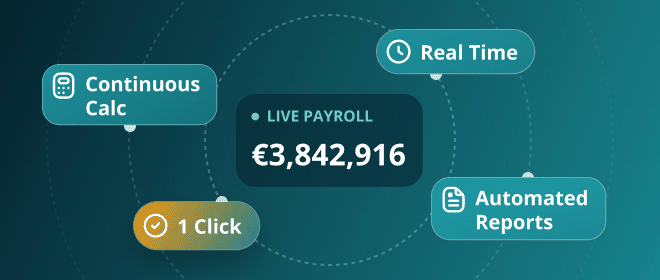
  • Payroll Cycle: At Mercans, we prioritize a seamless payroll cycle that ensures timely and accurate payments for both employees and contractors in the local currency, Euro (€). Our approach guarantees that payroll is processed smoothly, allowing for a localized experience that meets the unique needs of your business.
  • Payroll Setup, Processing, and Administration: Our services go well beyond conventional payroll solutions. We offer complete payroll setup, precise processing, and efficient administration. With a strong commitment to accuracy and compliance, we meticulously manage each step of the payroll process. This means you can focus on your core business functions while we take care of the complexities of payroll management.
  • Statutory Filings and Payments: Stay compliant with Malta’s regulatory requirements effortlessly with Mercans by your side. Our dedicated team handles all statutory filings and payments, ensuring your business meets all legal obligations without hassle. You can rely on us for accurate and timely submissions, providing you with the peace of mind you need to concentrate on your business growth.
  • Pay Employees and Contractors in the Local Currency: At Mercans, we understand the importance of a streamlined payroll process that caters to the specific needs of your business. That’s why we ensure timely and accurate payments to both employees and contractors in the local currency, Euro (€). This commitment to local currency processing not only simplifies financial management but also enhances employee satisfaction, as they receive their payments in a familiar and accessible currency. Trust Mercans to facilitate seamless transactions, making payroll a hassle-free experience for your organization.

Personal Income Tax in Malta

Malta’s Taxation System

Malta’s taxation framework is well-designed and efficient, making it an attractive destination for investors and businesses. With a network of over 70 double tax treaties, investors can achieve considerable fiscal advantages through careful planning and structuring.

Personal Income Tax Overview

In Malta, personal tax liability is determined by an individual’s residence, ordinary residence, and domicile status. The country employs a progressive tax system with rates ranging from 0% to 35%.

Tax Rates for Residents: For individuals opting for single taxation, the personal income tax rates for 2026 are as follows:

Taxable income (€) Rate (%) Subtract (€)
Up to 12,000 €0.00 0
12,001 – 16,000 €15.00 1,800
16,001 – 60,000 €25.00 3,400
60,001 and over 35 9,400

Married couples can opt for joint taxation, aggregating their incomes and applying the following rates:

Taxable income (€) Rate (%) Subtract (€)
Up to 13,000 €0.00 0
13,001 – 17,500 €15.00 1,950
17,501 – 60,000 €25.00 3,700
60,001 and over 35 9,700

Tax is assessed in the year following its accrual, known as the year of assessment. For example, income earned in basis year 2026 is assessed in year of assessment 2027.

Temporary Residents

Individuals who are temporary residents in Malta may be taxed on Malta-source income and, depending on their status, on foreign income remitted to Malta. Tax treatment depends on residence and domicile status.

Employment and Business Income

Tax on employment income is handled through the Final Settlement System (FSS), with employers deducting taxes directly from employees’ wages. For self-employed individuals, income is taxable after legitimate business expenses have been deducted. Employment-related expenses are only deductible if incurred strictly for job performance. Fringe benefits are also subject to taxation.

Dividends and Tax Credits

Malta operates under a full imputation system for dividends. Dividends paid by a resident company carry a tax credit equivalent to the tax already paid by the company. Shareholders are taxed on gross dividends at applicable rates but can deduct this tax credit from their overall tax liability, often treating it as a final tax option.

Malta Employee Hiring Cost

If the salary of an employee is EUR 100,000, the total annual cost of employing them in Malta is calculated as follows:

Cost Component Amount (EUR)
Gross Annual Salary 100,000.00
Annual Employer Costs 3,144.00
Total Annual Cost 103,144.00

Explanation

  • Gross Annual Salary: This is the salary agreed upon for the employee, which amounts to EUR 100,000.
  • Annual Employer Costs: This includes the employer’s social security contribution and any other employment-related statutory costs applicable to the employee’s category.
  • Total Annual Cost: The overall financial obligation for the employer combines both the gross salary and employer costs.

Employee Benefits in Malta

In Malta, the framework for employee benefits is structured to ensure both mandatory protections and supplementary enhancements, providing a holistic approach to worker welfare.

Mandatory Benefits

Malta’s legal framework guarantees a range of mandatory benefits designed to promote fair treatment and financial security for employees. Key components include:

Paid Leave

Malta offers a robust paid leave system, encompassing:

  • Annual Leave: Employees working a standard 40-hour week are entitled to 192 hours of paid annual leave. In addition, where a national or public holiday falls on a Saturday, Sunday, or the employee’s weekly day of rest, the equivalent of one working day is added to the employee’s vacation leave entitlement.
  • Sick Leave: Employees are entitled to sick leave according to the applicable Wage Regulation Order. Where no specific Wage Regulation Order applies, the minimum entitlement is two working weeks per year, calculated in hours.
  • Public Holidays: Malta recognizes 14 public holidays each year, providing paid leave for these occasions.

Parental Leave

Supporting families, Malta offers dedicated family-related leave:

  • Maternity Leave: Expecting mothers are entitled to 18 weeks of maternity leave in accordance with Maltese law.
  • Paternity Leave: Employees who are equivalent second parents receive 10 working days of paid paternity leave immediately after the birth or adoption of the child.

Other Mandatory Benefits

  • Probationary Period: Employment contracts may include a probationary period in line with law.
  • Notice Period: A minimum notice period is required for termination, varying based on length of service.
  • Severance Pay: Employees may receive compensation in particular cases such as redundancy or unjust dismissal, depending on the circumstances and applicable law.
  • Overtime Pay: Employees working beyond their standard hours are entitled to premium overtime rates.
  • Social Security: Employers contribute to a social security system that provides pensions and other benefits.

Supplementary Benefits

Many employers in Malta enhance their benefits offerings to attract and retain talent. These supplementary benefits may include:

Health and Wellness Initiatives

  • Private Health Insurance: Companies often provide health insurance that exceeds public healthcare coverage.
  • Wellness Programs: Employers may support gym memberships, fitness classes, or on-site wellness activities to encourage healthy lifestyles.

Work-Life Balance and Flexibility

  • Flexible Work Arrangements: Options such as remote work and flexible hours help improve work-life balance.
  • Additional Paid Leave: Some employers offer extra vacation days beyond the legal minimum.

Financial and Professional Development

  • Performance Bonuses: Bonuses tied to individual or company performance serve as incentives.
  • Profit Sharing: Companies may distribute a portion of profits to employees to foster engagement.
  • Training and Development: Investment in employee growth through training programs and educational stipends is common.

Lifestyle and Leisure Benefits

  • Company Discounts: Employees may receive discounts on products and services such as gym memberships and travel.
  • On-Site Amenities: Providing free or subsidized meals, laundry services, or childcare facilities enhances convenience for employees.

Health Insurance Requirements

Malta operates a dual healthcare system, consisting of a public healthcare service and a private healthcare sector. Health insurance requirements vary based on nationality and immigration status:

EU/EEA Citizens and Maltese Nationals

These individuals generally access public healthcare through Malta’s social security and health system. They can opt for private health insurance for quicker access and greater choice in services.

Non-EU/EEA Citizens

Access to public healthcare for non-EU/EEA citizens depends on their residence and contribution status. Private health insurance is commonly required or advisable depending on the immigration route.

Retirement Plans

Malta’s retirement planning combines a mandatory state pension with optional private plans:

State Pension Scheme

This mandatory system provides basic retirement benefits funded by national insurance contributions from both employers and employees.

  • Eligibility: All individuals earning above the applicable threshold contribute to the state pension.
  • Retirement Age: Pension age depends on year of birth. For persons born from 1962 onwards, the statutory pension age is 65.
  • Benefits: The pension amount varies based on contribution history.

Private Pension Plans

Voluntary private plans complement the state pension, offering additional retirement security.

  • Employer-Sponsored Plans: Many companies offer these plans, with tax benefits for contributions.
  • Personal Plans: Individuals can establish their own plans, allowing for personalized investment choices.

Work Permit in Malta

Malta as a Prime Destination for International Business Expansion and Expatriates

Malta offers an appealing environment for expatriates and companies aiming to expand globally. For businesses considering relocating employees or recruiting new talent in Malta, it’s essential to secure the proper work visas and permits to maintain legal compliance.

Understanding Malta’s work visa process is crucial, as non-compliance with local laws may lead to delays and penalties.

Work Visa Types Available in Malta

Malta provides several visa types for foreign nationals, including options for tourism, business, and medical purposes. For those planning to work in Malta, there are two primary visa categories:

  • Short-Stay Visa (C Visa): This Schengen visa allows foreign nationals to enter Malta and travel within other Schengen countries. The C Visa is available as a single-entry, double-entry, or multiple-entry visa, permitting stays of up to three months.
  • National Long-Stay Visa (D Visa): Required for individuals planning to work or reside in Malta for over three months. In addition to the D Visa, third-country nationals generally require a Single Permit or another relevant employment-related residence permit.

Essential Requirements for Malta Work Visas

To apply for a Maltese work visa, foreign nationals generally need the following documents:

  • Completed visa application form
  • A cover letter stating the purpose of travel to Malta
  • A valid passport with at least two blank pages
  • Two recent passport-sized photographs
  • Proof of travel medical insurance, where applicable
  • An employment contract from a Malta-based employer
  • Proof of accommodation in Malta
  • Evidence of sufficient financial resources for the duration of the stay, where applicable

Alongside a visa, most third-country nationals working in Malta will require a Single Permit, which combines residence and work authorization. The requirements generally include:

  • Completed application form
  • Copy of the applicant’s CV
  • Employer’s covering letter and position details
  • Signed employment contract
  • Professional references and testimonials, where relevant
  • Any health, police conduct, qualification, or sector-specific documents required under the current checklist
  • Evidence that any labour market testing or advertising rules have been followed, where applicable

Application Steps

Prospective employees should consult the nearest Maltese embassy or consulate for up-to-date visa requirements before submitting their visa application and supporting documents.

Employers are responsible for submitting the Single Permit application for most non-EU workers through the relevant Maltese authorities and portals, together with the required supporting documents and fees.

Once the visa and permit are approved, the employee is cleared to travel to Malta and start work in line with the permit conditions. Adhering to these procedures is essential to ensure a smooth and compliant transition to Malta’s workforce.

EOR Solutions in Malta

EOR for Prospective Employees
Mercans provides comprehensive Employer of Record (EOR) solutions for businesses looking to hire their ideal candidates in Malta. Our services cover all aspects of the employee lifecycle, ensuring adherence to Maltese labor laws and regulations.
EOR + Recruitment
For organizations in need of talent acquisition support, our combined EOR and recruitment services offer a complete solution. Leveraging our extensive network and expertise, we assist you in finding, onboarding, and retaining top talent, facilitating your expansion into the Maltese market.
Visa Sponsorship and Global Mobility
Our visa sponsorship and global mobility services simplify the complexities of expatriate employment. We manage the relocation of your international workforce, ensuring compliance with Malta’s immigration and employment laws.
AOR for Contractor Payments
For businesses facing challenges with contractor payments, our Assistance on Record (AOR) services provide an effective solution. We manage the intricacies of contractor payments, ensuring accuracy and compliance throughout the process.
Converting Freelancers to Employees
Mercans aids in transitioning independent contractors to permanent employees in Malta. Our expertise ensures that this process is seamless and compliant with local legal requirements.
HCM Integration
Integrate Mercans’ EOR services effortlessly with your HCM system in Malta for real-time data exchange, improved compliance, and cost efficiency. Rely on our expertise for a cohesive, compliant, and efficient approach to enhancing your workforce management and payroll operations.

Best Employer of Record Malta

  • Compliance with Regulatory Standards: Mercans is committed to full compliance with the regulations set forth by Malta’s Department of Industrial and Employment Relations, ensuring that all legal requirements are met.
  • Independent Entity: Operating as a standalone organization, Mercans delivers reliable and customized employment services tailored to the unique needs of each client.
  • Diverse Employment Solutions: Mercans effectively manages various employment arrangements, including employees, freelancers, contractors, and expatriates, providing flexible solutions that cater to diverse workforce needs.
  • Tailored for Large Enterprises: Mercans is equipped to support enterprise-level businesses, offering scalable and sophisticated services designed to accommodate complex organizational structures and requirements.
  • Multi-Currency Payroll Management: Mercans facilitates payroll management in multiple currencies, ensuring smooth financial operations for global and multinational companies.
  • Extensive Global Reach: With a broad international network, Mercans excels at handling multi-country payroll, enabling seamless operations across borders.
  • Commitment to Data Security: Mercans is fully compliant with GDPR and adheres to rigorous security standards, including SOC 1 and SOC 2 certifications, ensuring the highest level of data protection.
  • ISO Certifications: Mercans holds ISO 20000 and ISO 27001 certifications, reflecting our dedication to excellence in IT service management and information security.
  • Robust Security Standards: Mercans meets OWASP ASVS 3.0 compliance standards, ensuring strong security practices in application development and management.
  • HRBlizz: Our proprietary HR Blizz platform is a global payroll and talent management SaaS solution that streamlines payroll processes while ensuring compliance with local laws. Backed by a team of over 1,000 in-country specialists, we provide expert guidance on labor laws and business practices.
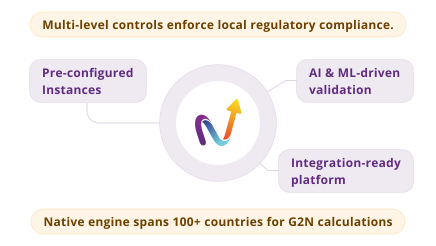
  • G2N Nova: G2N Nova offers advanced global gross-to-net payroll processing in over 100 countries, making it the most sophisticated native payroll engine available. It can be utilized as a standalone service or integrated seamlessly with leading HCM and Workforce Management systems.

Conclusion

In summary, Mercans delivers unparalleled Employer of Record (EOR) solutions in Malta, guaranteeing accuracy, compliance, and efficiency in payroll management. Our extensive range of services simplifies operations, making us a dependable partner for businesses dealing with the intricacies of the Maltese employment market. Rely on Mercans to streamline your global workforce management, ensuring a smooth and successful expansion into Malta.

This document was prepared for informational purposes only. As local laws & regulations keeps on changing. Please consult your tax & legal advisors as well.
Contact Sales
Let's get this conversation started. Tell us a bit about your requirement, and we'll get in touch a soon as we can.

    Sample message

    1. We want to expand in $country

    2. We want you to employ 'X' number of employees on our behalf

    3. Contract duration – 3/6/9/12/18/24 months

    4. Number of legal entities (if any exist today)

    5. Employment type: EOR employee or contractor?

    6. Any benefits requirement or “standard statutory only”?

    FAQs

    What is an Employer of Record (EOR) in Malta?

    An Employer of Record in Malta is a professional service provider that legally employs staff on behalf of another company. The EOR takes care of employment contracts, payroll, taxes, statutory benefits, and ensures compliance with Maltese labor regulations, allowing companies to hire locally without registering a Maltese entity.

    How can foreign companies hire employees in Malta without establishing a local entity?

    Foreign businesses can engage an EOR to employ staff in Malta. The EOR assumes all legal employer responsibilities while the client company supervises day-to-day work. This enables companies to operate in Malta quickly without forming a branch or subsidiary.

    What compliance, payroll, and HR services does an EOR in Malta handle?

    EORs in Malta manage all employment-related obligations, including drafting contracts, processing payroll, withholding taxes, contributing to social security, managing mandatory benefits, and completing government filings. They can also assist with work permits or visas for international hires.

    What are the benefits of using EOR services in Malta?

    Using an EOR streamlines entry into the Maltese market, reduces administrative workload, ensures adherence to local labor laws, minimizes legal risks, and accelerates hiring processes.

    How much does it cost to hire employees through an EOR in Malta?

    Costs depend on the services provided, with typical fees ranging from $500 to $2,000 per employee per month. Companies should consult the EOR provider for a customized pricing plan.

    Is an EOR the right solution for expanding a business into Malta?

    An EOR is ideal for businesses seeking to hire in Malta without establishing a local presence. It allows companies to focus on their core operations while the EOR manages all employment-related tasks efficiently.

    Ready to hire in Malta?

    No local entity needed. Our experts handle payroll, compliance, and onboarding.

    Talk to an expert
    Proven expertise in global payroll.