Employer of Record

Employer of Record (EOR) Ireland

Hire compliantly, pay accurately, expand confidently.

Global Payroll Team
Written by Global Payroll Team
Last updated April 23, 2026
Expert Reviewed
An Employer of Record (EOR) acts as the legal employer for workers in Ireland, often referred to as a Global Professional Employer Organization (Global PEO). This service oversees key aspects of employment, ensuring strict adherence to local labor laws and regulations. Responsibilities include managing payroll, taxes, statutory benefits, and employment agreements.

Key Responsibilities of an EOR:
  • Legal Compliance: Ensuring the worker’s employment complies with Irish labor laws.
  • Payroll Management: Overseeing the local payroll process.
  • Tax Filing: Handling employment-related taxes and necessary paperwork.
  • Payslip Provision: Supplying workers with payslips.
  • Salary Distribution: Managing salary payments to workers.

Streamline your global expansion with our Global PEO services, a hassle-free solution without the need for entity setup. Our Employer of Record (EOR) in Ireland ensures a legal presence, compliance, and intellectual property (IP) protection, allowing your business to focus on its core operations. Facilitate seamless global mobility and work visas while building a diverse and efficient global workforce. Partner with Mercans, your Employer of Record in Ireland, for a compliant and efficient employment experience for your global workforce.

Things you need to know before hiring in Ireland

Employment Contracts in Ireland

Employment Contracts

As an employer, when you hire an individual for a regular wage or salary, you establish a ‘contract of employment’ with them. This contract delineates both your rights and responsibilities as an employer and those of your employees.

Legally, you are not required to provide the entire contract in writing; however, you must issue a ‘written statement of terms of employment’ to your employees, outlining the key terms of their employment.

Employment contracts can be categorized into open-ended or fixed-term types. Most employment contracts are open-ended, meaning they continue until either you or the employee decides to terminate the contract, typically by providing notice. Alternatively, you may offer fixed-term or specified-purpose contracts that end on a particular date or upon the completion of a specific task.

Your employment contract with employees may include:

  • ‘Express’ Terms: These are clearly communicated to the employee either verbally or in writing.
  • ‘Implied’ Terms: These are not explicitly stated but are understood as part of the employment relationship (e.g., the expectation for employees to perform their job to the best of their ability).

Employer Responsibilities for Providing Terms of Employment

As an employer in Ireland, you are required to provide a written statement of the core terms of employment within the first five days of an employee starting their job. This written statement should outline both the employer’s and employee’s rights and responsibilities, establishing a clear ‘contract of employment.’ While the entire contract does not need to be in writing, this written statement is essential.

Core Terms of Employment

You must provide the following core terms in writing within five days of the employee’s start date:

  • Full names of both the employer and the employee.
  • Employer’s address
  • Place of work
  • Start date of employment.
  • Job title or a description of the nature of the work.
  • Duration of the contract, if it is temporary or fixed-term.
  • Pay rate or method of calculation, and the pay reference period.
  • Expected working hours and days.
  • Probation period duration and conditions, if applicable.
  • Terms related to working hours, including overtime

Remaining Terms of Employment

You must provide a written statement of the remaining terms of employment within two months of the employee’s start date. This should include:

  • Pay intervals
  • Paid leave entitlements, including annual leave and public holidays.
  • Sick pay provisions.
  • Pension schemes
  • Notice periods for termination.
  • Details of any collective agreements
  • Training provided by the employer.
  • For temporary agency contracts, the identity of the hiring person or firm
  • Social security contributions and protections.

If an employee is required to work outside Ireland for at least one month, you must also provide a written statement of the terms and conditions of their employment before they leave.

Working Hours

In Ireland, the standard maximum average working time is 48 hours per week. This average is normally calculated over a 4-month reference period, although in some sectors or under certain collective agreements it may be calculated over 6 or 12 months. This excludes time spent on annual leave, sick leave, maternity leave, adoptive leave, paternity leave, parental leave, and force majeure leave. Certain categories of workers are exempt or subject to specific rules. Young workers have separate protections and limits. For guidance on managing working hours and compliance, Mercans is here to assist.

Probation Period

In Ireland, a probationary period is commonly included in employment contracts to evaluate a new employee’s performance. Under the European Union (Transparent and Predictable Working Conditions) Regulations 2022, probation periods generally cannot exceed 6 months. In limited circumstances, probation may be extended where this is in the employee’s interest or where the employee has been absent, and public service probation may extend to 12 months. During probation, the Unfair Dismissals Acts generally do not apply where the dismissal occurs within the first 12 months of employment, but dismissals connected to discriminatory grounds, trade union activity, pregnancy, or statutory leave can still give rise to claims. Fair procedures should still be followed, particularly in cases involving alleged misconduct or capability concerns.

13th Month Salary

There is no legal requirement to provide a 13th or 14th month’s salary.

Termination, Severance Pay and Notice Period

Termination of Employment
In Ireland, the termination of employment must follow specific procedures and legal requirements:

  • Notice Periods: Both employees and employers are required to provide a notice period before ending a contract of employment. The length of notice depends on the employee’s length of continuous service:
    • 13 weeks to 2 years: 1 week
    • 2 to 5 years: 2 weeks
    • 5 to 10 years: 4 weeks
    • 10 to 15 years: 6 weeks
    • More than 15 years: 8 weeks
  • Employees must also provide at least one week’s notice if they have been continuously employed for 13 weeks or more. If a contract specifies a longer notice period, the contract terms must be followed.
  • Waivers and Payment in Lieu: Both parties may agree to waive the notice period or accept payment in lieu of notice. If the employee is not required to work during their notice period, the employer must compensate them accordingly.
  • Dismissal for Misconduct: Employers can terminate employment without notice in cases of serious misconduct. However, even in such cases, the principles of natural justice should be observed, ensuring fair procedures are followed.
Severance Pay
  • Statutory Severance Pay: In Ireland, there is no general statutory severance payment on termination unless redundancy applies. Employees dismissed by reason of redundancy may qualify for a statutory redundancy payment of two weeks’ pay for every year of reckonable service, plus one additional week’s pay, subject to the statutory weekly cap and qualifying conditions.
  • The statutory weekly cap used to calculate redundancy is €600, and employees generally need at least 2 years’ continuous service to qualify.
  • Contractual Severance Pay: Some employment contracts or company policies may provide additional severance benefits beyond the statutory requirements. These provisions vary by employer and should be reviewed in the individual employment contract.
Notice Period
Under the Minimum Notice and Terms of Employment Acts, 1973 to 2005, both employees and employers must adhere to minimum notice periods for terminating a contract of employment:

  • Employees: Must provide at least one week’s notice if they have been continuously employed for 13 weeks or more. If the contract specifies a longer notice period, that must be followed.
  • Employers: Must give notice based on the employee’s length of continuous service:
    • 13 weeks to 2 years: 1 week
    • 2 to 5 years: 2 weeks
    • 5 to 10 years: 4 weeks
    • 10 to 15 years: 6 weeks
    • More than 15 years: 8 weeks

Employees vs Independent Contractors

In the modern workforce, it’s crucial to correctly classify workers as either independent contractors or employees. Misclassification can lead to legal issues and unintended liabilities. The distinction between these two types of work arrangements primarily hinges on the nature of the contract and the relationship between the individual and the organization.

Independent Contractors operate under a contract for services and are generally considered self-employed. They have control over their work, bear financial risks, and are responsible for their own business operations. Employees, on the other hand, work under a contract of service and are entitled to employment protections, benefits, and rights.

Here’s a comparative look at the key differences between an Independent Contractor and an Employee:

CriteriaIndependent contractorEmployee
Contract typeContract for servicesContract of service / employment contract
ControlUsually decides how the work is done; client specifies the resultEmployer controls the work process, duties, and usually the hours
Financial riskBears business risk and may have to fix defective work at own costLittle or no personal financial risk from the work
InvestmentProvides own tools, equipment, insurance, and business investmentUsually uses employer’s equipment and makes no business investment
Opportunity for profitCan profit through pricing, efficiency, and managing costsPaid wages or salary; no separate profit from management
TaxationPays own Income Tax, USC, and PRSI through self-assessmentIncome Tax, USC, and PRSI deducted through PAYE; employer pays employer PRSI
Social welfare benefitsMore limited; self-employed PRSI benefits only where eligibleBroader access to PRSI-based benefits and statutory protections
Employment rightsGenerally not covered by employment law rights unless found to be an employeeProtected by employment law rights such as leave, working time, and unfair dismissal
LiabilityUsually liable for own acts or omissions and defective workEmployer is generally liable for acts done in the course of employment
Public liabilityUsually expected to hold own public liability or professional indemnity coverEmployer normally provides the relevant liability cover for work done

Key Points for Employers

  • Contractual Clarity: Ensure clear contractual terms defining the nature of the relationship. Independent contractors should have detailed contracts specifying their commercial role.
  • Legal Compliance: Misclassification can lead to legal issues and financial consequences. Adhering to the correct classification helps avoid breaches of employment legislation.
  • Financial and Legal Responsibilities: Understand the financial and legal responsibilities associated with each type of worker to ensure compliance and proper management.

Social Security in Ireland

Pay-Related Social Insurance (PRSI) is a mandatory contribution on employment income, including certain taxable benefits. For employees in Class A, employee PRSI is generally nil up to weekly earnings of EUR 352 and 4.2% above that level until 30 September 2026, rising to 4.35% from 1 October 2026. Employer PRSI under Class A is generally 9.0% on weekly earnings up to EUR 552 and 11.25% above EUR 552 until 30 September 2026, rising to 9.15% and 11.40% respectively from 1 October 2026.

PRSI also applies to self-employed income. Self-employed individuals generally become liable to Class S PRSI once annual income reaches EUR 5,000. The Class S rate is 4.2% until 30 September 2026 and 4.35% from 1 October 2026, subject to a minimum annual contribution of EUR 650.

Upcoming Changes: Effective 1 October 2026, PRSI rates will increase again for both employers and employees, with the updated rates reflected in the applicable PRSI class tables.

Earnings periodEmployer rateEmployee rate
Up to 30 September 202611.25% (Class A1)4.2% (Class A1)
0% (Class S1)4.2% (Class S1)
From 1 October 202611.40% (Class A1)4.35% (Class A1)
0% (Class S1)4.35% (Class S1)

Additional Information

  • Self-Employed PRSI: Individuals with annual income below EUR 5,000 are generally not subject to Class S PRSI.
  • Employee PRSI: PRSI may apply to share-based remuneration depending on the type of award and the facts of the arrangement. Employers should review the relevant Revenue guidance for equity compensation.

Payroll in Ireland

Payroll Essentials for Ireland

Understanding payroll regulations in Ireland is vital for businesses operating locally. These rules cover everything from company registration, tax obligations, and social insurance contributions to employee benefits. Mercans ensures seamless compliance with Irish payroll laws, expertly handling all required processes. This guide outlines the key payroll obligations in Ireland, including legal requirements, pension responsibilities, employment standards, and essential payroll procedures.

Government Requirements

Registration Requirements

  • Employer Registration: Employers who hire staff in Ireland must register as an employer with Revenue before paying employees. Registration is generally completed online through Revenue’s eRegistration service or ROS.
  • Director Registration: Companies must also operate PAYE for directors where required. Directors must pay Irish tax on income that is taxable in Ireland.
  • Exemptions: Registration is not generally required for a domestic employer with only one domestic employee who is employed solely in the home and paid less than EUR 40 per week.
  • Forms for Registration: Registration is now primarily completed online. In certain cases, paper forms such as Form TR1, TR1 (FT), TR2, TR2 (FT), or PREM Reg may still be used where applicable.
  • You pay them less than EUR 40 per week
  • You employ only one such individual

To register for PAYE or Pay Related Social Insurance (PRSI), the following paper-based forms may still be used in limited cases:

  • Form TR1 for individuals, sole traders, or partnerships
  • Form TR1 (FT) for non-resident individuals, sole traders, or partnerships
  • Form TR2 for companies
  • Form TR2 (FT) for non-resident traders
  • Form PREM Reg for employers already registered for income tax or corporation tax

Payroll registration must be completed before the first employee starts working.

Hiring an Employee

  • New Employees/Someone Who Has Never Worked in the State Before : New employees should create a “myAccount” and register their job under “Add Job or Pension Details” in PAYE Services. A Revenue Payroll Notification (RPN) is then made available to the employer for payroll deductions.
  • Returning EmployeesSomeone Who Has Worked in the State Before: If the employee has worked in the State before, the employer should register the employment and obtain the employee’s current RPN through payroll software or ROS before the first payday.

Ongoing Compliance Requirements

Employees are taxed via PAYE (Pay As You Earn), which is deducted directly from their pay by the employer. The amounts deducted are determined by Revenue based on Revenue Payroll Notifications (RPNs) issued to employers, ensuring accurate tax collection.

  • Income Tax and PAYE: Employers must consistently deduct PAYE from employee pay, ensuring compliance with tax regulations and reporting requirements.
  • PAYE Rates: Income tax is deducted at 20% and 40%, depending on the employee’s tax rate band and personal circumstances.
  • PRSI Contributions: Employees in Class A generally pay nil PRSI up to EUR 352 per week and 4.2% above that until 30 September 2026, with higher rates applying from 1 October 2026. Employer PRSI in Class A is generally 9.0% up to EUR 552 per week and 11.25% above that until 30 September 2026.
  • USC Deductions: For 2026, the Universal Social Charge is generally charged at 0.5%, 2%, 3%, and 8% depending on income thresholds, with an exemption where total income does not exceed the annual USC exemption limit.
  • Revenue Payroll Notification (RPN): This document provides essential information for accurate tax deductions and must be updated regularly. Employers can retrieve RPNs through payroll software or directly via ROS.
  • Payroll Submissions: Employers must report payroll details to the Revenue Commissioners on or before the date employees are paid. Each submission includes gross pay, payment dates, and deductions. Monthly statements from Revenue summarize liabilities and must be reviewed, accepted, or amended by the employer by the relevant deadline.

Pension Requirements

Registration and Types of Pension Schemes

  • Types of Schemes: Common options include occupational pension schemes, personal retirement savings accounts (PRSAs), and personal pension plans. Tax treatment depends on compliance with the relevant Revenue rules.
  • Employer Obligations: Employers that do not offer an occupational pension scheme must generally provide access to at least one standard PRSA for eligible excluded employees. Where an employer operates a pension scheme, payroll deductions and employer contributions must be remitted in line with scheme and provider requirements.
  • Additional Contributions: Employees can make extra voluntary contributions (AVCs), but any excess over age-related limits will not receive immediate tax relief.

Employment Obligations

Contracts and Employment Terms

  • Contract Requirements: Employees must receive a written statement detailing core terms within five days of starting, including names, addresses, expected duration, pay rates, and working hours.
  • Further Terms: A complete statement of terms must be provided within two months, covering job title, place of work, pay intervals, leave entitlements, and notice periods.

Rates of Pay

As of 1 January 2026, the national minimum wage is EUR 14.15 per hour, with reduced age-based rates applying to workers under 20.

Working Hours and Leave

Employers must ensure compliance with working time regulations, providing adequate rest breaks and leave, including annual, maternity, paternity, adoptive, parental, parent’s, carer’s, and sick leave where applicable. Minimum annual leave entitlement is four weeks, and Ireland has 10 public holidays each year.

Payroll Requirements

  • Pay Slips: All employees are entitled to a pay slip detailing gross wages and deductions, provided in either electronic or hard copy.

Banking Requirements Related to Payroll

Payroll payments can be made through various methods, including checks, credit transfers, or cash, providing flexibility for employers.

Minimum Wages

The National Minimum Wage Act 2000 establishes the minimum amount employees must be paid. As of 1 January 2026, the national minimum wage is €14.15 per hour. While employers can offer more, they cannot legally pay less than this rate, except in specific circumstances.

Minimum Wage Rates
  • 20 and over: €14.15 per hour (100%)
  • 19: €12.74 per hour (90%)
  • 18: €11.32 per hour (80%)
  • Under 18: €9.91 per hour (70%)
Key Points
  • Exemptions: The minimum wage does not apply to employees working for close relatives, statutory apprentices, or those under 20 years old, who are entitled to sub-minimum rates.
  • Pay Calculation: Minimum wage calculations include all gross pay, such as basic pay, bonuses, and certain allowances. It excludes overtime premiums, special duty allowances, and payments during absences.
  • Working Hours: Working hours for wage calculation include time spent working, available for work, and approved training, but exclude periods like standby time and travel to and from work.

Payroll Cycle

In Ireland, there is no statutory requirement to run payroll on a specific cycle such as weekly or monthly. Employees must be paid in accordance with the contract of employment, and employers must report pay and deductions to Revenue on or before the pay date. There are no regulations governing the payment of a 13th-month salary.

Overtime Pay

Overtime refers to work performed beyond your regular working hours. In general, there is no statutory entitlement to a higher overtime rate unless it is provided for in the employment contract, a collective agreement, or a sector-specific employment order. Nevertheless, many employers offer higher pay rates for overtime hours. To understand your entitlements, review your employment contract to confirm if overtime is required and, if so, the applicable pay rates. Additionally, certain industries may offer increased overtime pay compared to regular hours.

Mercans’ payroll capabilities

Payroll Cycle

Optimize your payroll management with Mercans’ expert services tailored for Ireland. We handle timely and accurate payments to both employees and contractors, ensuring transactions are processed in the local currency. Trust Mercans to make your payroll cycle efficient and compliant with local standards.

Payroll Setup, Processing, and Administration

Mercans delivers a full suite of payroll services, from meticulous setup to precise processing and effective administration. Our end-to-end approach guarantees accurate payroll management and adherence to local regulations, allowing you to concentrate on your primary business activities.

Statutory Filings and Payments

Stay compliant with Irish regulations effortlessly with Mercans. Our dedicated team takes care of all statutory filings and payments, ensuring that your business meets all legal requirements. Rely on Mercans for accurate and timely submissions, ensuring your statutory obligations are consistently fulfilled.

Pay Employees and Contractors in Local Currency

Experience seamless payroll operations with Mercans, where payments to employees and contractors are made in the local currency. This ensures compliance with Irish financial regulations and simplifies the payroll process for your business.

Personal Income Tax in Ireland

In Ireland, personal income tax is applicable based on residency and domicile status. Individuals who are both resident and domiciled in Ireland are generally taxed on their worldwide income. Individuals who are resident but not domiciled are generally taxed on Irish-source income, foreign employment income attributable to duties performed in Ireland, and other foreign income to the extent remitted to Ireland. Non-residents are generally taxed on Irish-source income and employment income relating to Irish work duties, subject to treaty relief where relevant.

Personal Income Tax Rates (2026)

Single and Widowed Persons (no dependent children):

  • 20% tax rate on income up to €44,000
  • 40% tax rate on income exceeding €44,000

Married Couple (one income):

  • 20% tax rate on income up to €53,000
  • 40% tax rate on income exceeding €53,000

Married Couple (two incomes):

  • 20% tax rate on income up to €88,000 maximum, depending on the lower earner’s income
  • 40% tax rate on income exceeding the applicable standard rate band

Ireland Employee Hiring Cost

Employing Individuals in Ireland: Employer Costs Breakdown

Employing individuals in Ireland involves several employer costs, including social insurance contributions and other mandatory benefits. Let’s break down the employer costs for an employee with a Gross Annual Salary of €240,000:

  • Social Insurance Contributions: Employers in Ireland are generally required to contribute to the Pay-Related Social Insurance (PRSI) scheme. For a high-earning employee in Class A, employer PRSI is generally charged at 11.25% until 30 September 2026 and 11.40% from 1 October 2026, subject to the applicable class rules and thresholds.
  • Total Annual Cost: When factoring in additional expenses such as pension contributions, private health insurance, and other benefits, the total annual cost of employing an individual will usually exceed the gross salary plus employer PRSI. Actual total cost will depend on the employee’s package and the timing of payments during the year.

For more detailed calculations and information about employer costs, you can refer to the latest guidelines on employment regulations and benefits in Ireland.

Employing individuals in Ireland: employer costs breakdownAmount
Gross annual salaryEUR 240,000.00
Annual employer costsEUR 27,090.00
1) Social Security (Employer PRSI)EUR 27,090.00
Total annual costEUR 267,090.00

Employee Benefits in Ireland

Employing individuals in Ireland involves several mandatory employee benefits that employers must offer. Here’s a summary of the key benefits:

  • PRSA Facility: Employers are required to provide access to a Personal Retirement Savings Account (PRSA) Facility for excluded employees, those not offered an occupational pension scheme within 6 months of starting employment. While employers are not generally obliged to contribute to the PRSA, they must facilitate employee access and payroll deductions where applicable.
  • Statutory Sick Pay Scheme: Employees are currently entitled to 5 days of statutory sick leave per calendar year. Sick pay must be paid at 70% of the employee’s normal wage, up to a maximum of €110 per day. The planned increase beyond 5 days has not yet been implemented.

State-Funded Employee Benefits

  • Death Benefits / Widow/Widower’s Pension: State pensions and related survivor benefits may be available where contribution conditions are met.
  • Illness Benefit: Provides financial support for employees unable to work due to illness, subject to PRSI contributions and eligibility conditions.
  • Invalidity Pension: Available for individuals unable to work long-term due to incapacity, subject to qualifying criteria.
  • Public Health Services: Access to the public health system varies by entitlement and individual circumstances, with private options also available.
  • The State Pension: Available subject to age and social insurance contribution conditions.
  • Maternity Benefit: Paid to employed and self-employed women meeting PRSI conditions, typically for 26 weeks.
  • Leave Periods: Statutory leave entitlements may include maternity, parental, paternity, parent’s, adoptive, force majeure, carer’s leave, and statutory sick leave, depending on eligibility.
  • Group Life Assurance / Death-in-Service Schemes: Many employers offer group life assurance, which provides financial protection to an employee’s dependents in the event of death. Premiums paid for approved plans are not taxed as income for employees. Typically, the benefit amount is around 4 times the employee’s base salary and can be set up under trust for quick payout outside of probate.
  • Group Income Protection: Although less common due to higher costs, this benefit provides a replacement income for employees who are long-term ill or disabled. It can cover up to 75% of salary, including state disability benefits. Payments commence after a deferred period and may continue until retirement age if the employee remains unable to work. Premiums are generally not taxed as a benefit in kind for employees, but claim benefits are taxable as income.
  • Group Medical & Dental Insurance: Private medical insurance is popular among employees when partially or fully funded by the employer, though premiums are generally subject to Benefit-in-Kind taxation. Options include a range of plans with various coverage levels, including access to general practitioners, specialists, and hospital services. Dental insurance is less common but is growing in popularity. Employers can also provide wellness programs through these plans.
  • Occupational Pensions / Group PRSA / Master Trusts: For employers offering pensions, various structures are available depending on business needs and practices. Contribution levels vary by employer and scheme design. Additional voluntary contributions are possible up to Revenue limits.
  • Pension Auto-Enrolment: Ireland’s national auto-enrolment retirement savings system, My Future Fund, was introduced from 1 January 2026. Eligible employees aged between 23 and 60 earning more than €20,000 a year and not already contributing to a pension through payroll may be automatically enrolled.
  • Subsidized Food / Social Events: Employers may offer subsidized food options, such as onsite cafeterias or vending machines, and sponsor social events, enhancing employee engagement.
  • Additional Paid Leave: Some employers offer extra paid leave or flexible working arrangements as additional perks.
  • Tax-Saver Commuter Benefits: Employers can pre-purchase transit tickets for employees, who then repay the cost from pre-tax salary, offering savings on commuting expenses.
  • Subsidized Gym Membership / Fitness Supports: Employers may partner with gyms or provide discounts on memberships, fitness classes, and organize sports activities to support employee wellness.
  • The Cycle-to-Work Scheme: Employers can purchase bicycles and safety equipment, which employees repay from pre-tax salary, reducing the cost of cycling to work.

Mandatory Employee Benefits in Ireland
Employing individuals in Ireland involves several mandatory employee benefits that employers must offer. Here’s a summary of the key benefits:

  • PRSA Facility: Employers are required to provide access to a Personal Retirement Savings Account (PRSA) Facility for excluded employees, those not offered an occupational pension scheme within 6 months of starting employment. While employers are not generally obliged to contribute to the PRSA, they must facilitate employee access and payroll deductions where applicable.
  • Statutory Sick Pay Scheme: Employees are currently entitled to 5 days of statutory sick leave per calendar year. Sick pay must be paid at 70% of the employee’s normal wage, up to a maximum of €110 per day. The planned increase beyond 5 days has not yet been implemented.

State-Funded Employee Benefits

  • Death Benefits / Widow/Widower’s Pension: State pensions and related survivor benefits may be available where contribution conditions are met.
  • Illness Benefit: Provides financial support for employees unable to work due to illness, subject to PRSI contributions and eligibility conditions.
  • Invalidity Pension: Available for individuals unable to work long-term due to incapacity, subject to qualifying criteria.
  • Public Health Services: Access to the public health system varies by entitlement and individual circumstances, with private options also available.
  • The State Pension: Available subject to age and social insurance contribution conditions.
  • Maternity Benefit: Paid to employed and self-employed women meeting PRSI conditions, typically for 26 weeks.
  • Leave Periods: Statutory leave entitlements may include maternity, parental, paternity, parent’s, adoptive, force majeure, carer’s leave, and statutory sick leave, depending on eligibility.

Supplementary Employee Benefits
  • Group Life Assurance / Death-in-Service Schemes: Many employers offer group life assurance, which provides financial protection to an employee’s dependents in the event of death. Premiums paid for approved plans are not taxed as income for employees. Typically, the benefit amount is around 4 times the employee’s base salary and can be set up under trust for quick payout outside of probate.
  • Group Income Protection: Although less common due to higher costs, this benefit provides a replacement income for employees who are long-term ill or disabled. It can cover up to 75% of salary, including state disability benefits. Payments commence after a deferred period and may continue until retirement age if the employee remains unable to work. Premiums are generally not taxed as a benefit in kind for employees, but claim benefits are taxable as income.
  • Group Medical & Dental Insurance: Private medical insurance is popular among employees when partially or fully funded by the employer, though premiums are generally subject to Benefit-in-Kind taxation. Options include a range of plans with various coverage levels, including access to general practitioners, specialists, and hospital services. Dental insurance is less common but is growing in popularity. Employers can also provide wellness programs through these plans.
  • Occupational Pensions / Group PRSA / Master Trusts: For employers offering pensions, various structures are available depending on business needs and practices. Contribution levels vary by employer and scheme design. Additional voluntary contributions are possible up to Revenue limits.
  • Pension Auto-Enrolment: Ireland’s national auto-enrolment retirement savings system, My Future Fund, was introduced from 1 January 2026. Eligible employees aged between 23 and 60 earning more than €20,000 a year and not already contributing to a pension through payroll may be automatically enrolled.

Employee Perks
  • Subsidized Food / Social Events: Employers may offer subsidized food options, such as onsite cafeterias or vending machines, and sponsor social events, enhancing employee engagement.
  • Additional Paid Leave: Some employers offer extra paid leave or flexible working arrangements as additional perks.
  • Tax-Saver Commuter Benefits: Employers can pre-purchase transit tickets for employees, who then repay the cost from pre-tax salary, offering savings on commuting expenses.
  • Subsidized Gym Membership / Fitness Supports: Employers may partner with gyms or provide discounts on memberships, fitness classes, and organize sports activities to support employee wellness.
  • The Cycle-to-Work Scheme: Employers can purchase bicycles and safety equipment, which employees repay from pre-tax salary, reducing the cost of cycling to work.

Work Permit in Ireland

Overview of Employment Permits

Ireland operates a range of employment permits for non-EEA nationals. The Department of Enterprise, Trade and Employment (DETE) administers the main employment permit system, while certain short-term permissions and immigration permissions are handled by the Irish immigration authorities. The principal permit types include the Critical Skills Employment Permit, Intra-Company Transfer Employment Permit, General Employment Permit, Contract for Services Employment Permit, Dependant/Partner/Spouse Employment Permit, Internship Employment Permit, Sports and Cultural Employment Permit, Exchange Agreement Employment Permit, and Reactivation Employment Permit.

Critical Skills Employment Permit

The Critical Skills Employment Permit is aimed at attracting highly skilled professionals to Ireland. To qualify, an individual must have an eligible job offer and meet the applicable remuneration threshold. As of 2026, eligible roles generally require annual remuneration of at least EUR 68,911, or EUR 40,904 for occupations on the Critical Skills Occupations List. A reduced threshold of EUR 36,848 may apply in certain recent graduate cases. The permit is typically issued for up to 2 years, and the application fee is generally EUR 1,000. Eligible family members may seek permission to reside and work in Ireland under the relevant immigration rules.

General Employment Permit

The General Employment Permit is intended for non-EEA nationals seeking employment in roles that are not on the Ineligible List of Occupations for Employment Permits. As of 2026, the main minimum annual remuneration threshold is EUR 36,605, with certain lower thresholds applying in specific cases such as recent graduate roles or designated occupations. The role must satisfy the permit criteria, and labour market testing may apply unless an exemption is available. The permit is generally available for an initial period of up to 2 years, with standard fees of EUR 500 for permits of 6 months or less and EUR 1,000 for permits of more than 6 months up to 24 months.

Intra-Company Transfer (ICT) Permit

The Intra-Company Transfer Employment Permit allows for the transfer of senior management, key personnel, or trainees from an overseas company to an Irish branch or subsidiary. The transferee remains employed by the foreign employer. As of 2026, the minimum annual remuneration threshold is EUR 49,523 for senior management and key personnel, and EUR 36,605 for trainees. The permit can be granted for periods ranging from 6 months up to 2 years initially, with extensions possible within the maximum limits set by the scheme. Standard fees are EUR 500 for permits of 6 months or less, EUR 1,000 for permits of more than 6 months up to 24 months, and EUR 1,500 for an extension application.

Permit Exemptions

Certain individuals are exempt from needing employment permits in Ireland. These include EEA and Swiss nationals, as well as non-EEA nationals who hold an immigration permission that already grants a right to work, such as certain Stamp 4 permissions and other exempt categories under Irish law. Eligibility should always be checked against the current DETE and immigration rules.

Atypical Working Scheme

The Atypical Working Scheme caters to short-term employment scenarios where a standard employment permit is not appropriate. It is commonly used for certain assignments of 15 to 90 days. Applications must generally be approved before travel to Ireland. If the person is visa-required, a visa must also be obtained after the permission is granted. The applicable fee should be checked at the time of application, as immigration fees and operational rules may change.

EOR Solutions in Ireland

Streamlined EOR Services in Ireland
Mercans delivers top-notch Employer of Record (EOR) services in Ireland, simplifying the employment process from candidate selection to onboarding. Our solutions cover payroll management, benefits administration, tax compliance, and HR administration, ensuring a seamless and legally compliant transition. With a deep understanding of Irish labor regulations, we handle employment contracts, salary disbursements, and benefits with precision, ensuring full legal compliance and operational efficiency.
EOR and Recruitment Expertise in Ireland
Mercans offers exceptional Employer of Record (EOR) services in Ireland, facilitating the recruitment and integration of top talent. Our skilled team manages the entire process, from candidate selection to smooth assimilation. We take care of employment contracts, payroll management, benefits administration, tax compliance, and HR administration, ensuring a smooth and compliant transition for your workforce.
Expat Visa Sponsorship and Global Mobility Facilitation
Mercans provides comprehensive Employer of Record (EOR) services, simplifying the visa sponsorship process for expatriates and enhancing global mobility. We navigate the complexities of visa procedures and ensure full compliance with local regulations. Our specialized services bridge the gap between international talent and opportunities, ensuring a smooth transition for expatriate employees.
Agent of Record (AOR) Services in Ireland
As an “Agent of Record,” Mercans ensures compliance, documentation, and legal requirements in contractor payments. Our EOR services in Ireland excel in this role, offering seamless, compliant, and efficient contractor payment solutions in the region.
Converting Independent Contractors to Permanent Employees in Ireland
Mercans’ EOR services in Ireland facilitate the smooth conversion of independent contractors into permanent employees, expertly navigating the complex regulatory landscape. Leveraging our experience and technology-driven efficiency, we ensure a seamless transition, prioritizing compliance and precision throughout the process.
HCM Integration in Ireland
Integrate Mercans’ EOR services seamlessly with your Human Capital Management (HCM) system in Ireland to enable real-time data exchange, enhance compliance, and optimize cost-efficiency. Trust our expertise to provide a unified, compliant, and efficient approach, elevating your workforce management and payroll operations to a higher level of effectiveness.

Best Employer of Record Ireland

Mercans is the best employer of record in Ireland for several compelling reasons:

  • Compliant with Office of Revenue Commissioners and Workplace Relations Commission (WRC): Mercans ensures adherence to all local regulatory requirements, maintaining compliance with the Office of Revenue Commissioners and the Workplace Relations Commission to provide a reliable and legally sound service.
  • Own Entity: Operating as an independent entity, Mercans offers a high level of operational integrity and flexibility, distinguishing itself with a dedicated focus on employment solutions.
  • Supports All Employment Types – Employees, Freelancers, Contractors, Expats: Whether managing traditional employees, freelancers, contractors, or expatriates, Mercans efficiently handles a diverse range of employment types, catering to various workforce needs.
  • Suitable for Enterprise Businesses: Designed to meet the complex needs of large-scale enterprises, Mercans provides robust solutions that align with the operational demands of sizable organizations.
  • Supports Multiple Currencies: Mercans’ ability to manage multiple currencies facilitates seamless international transactions and payroll processing, essential for global business operations.
  • Global Presence and Multi-Country Payroll Capabilities: With a broad international reach, Mercans offers multi-country payroll services, simplifying global workforce management for businesses operating across borders.
  • GDPR Certified, SOC 1 & SOC 2 Compliant: Mercans adheres to stringent data protection and security standards, being GDPR certified and SOC 1 & SOC 2 compliant to ensure the highest level of data integrity and privacy.
  • ISO 20000 & ISO 27001 Certified: Mercans holds ISO 20000 and ISO 27001 certifications, underscoring its commitment to IT service management and information security, further validating its reliability as an employer of record.
  • OWASP ASVS 3.0 Compliant: By aligning with the OWASP Application Security Verification Standard (ASVS) 3.0, Mercans demonstrates its dedication to advanced security practices and safeguarding applications.
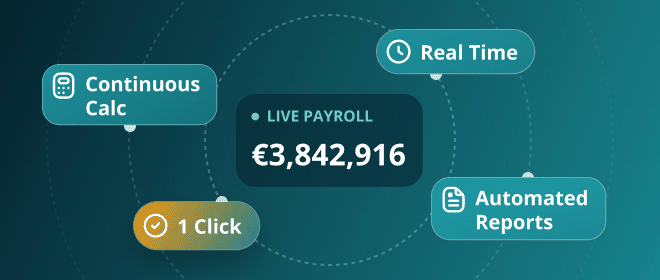
  • HRBlizz: Mercans HR Blizz is a proprietary global payroll and talent management SaaS suite that streamlines payroll processes while ensuring compliance with local regulations. With over 1,000 in-country specialists, it provides expert knowledge of labor laws and business protocols.
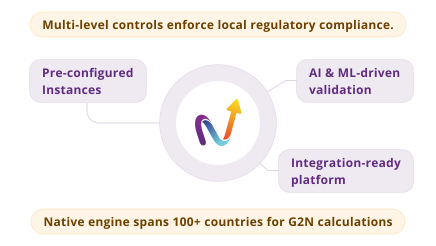
  • G2N Nova: G2N Nova provides global gross-to-net payroll processing in over 100 countries, making it the world’s most advanced native payroll engine. Available as a SaaS or service delivery platform, it can function as a stand-alone solution or integrate seamlessly with major HCM and Workforce Management systems.

Conclusion

Navigating employment in Ireland requires a thorough understanding of employer costs, labor laws, employee benefits, leave policies, payroll rules, and work permits. Adhering to these regulations is crucial to establishing a productive and legally compliant work environment. By prioritizing compliance and understanding the current Irish employment framework, employers can create a favorable and efficient workplace for their employees.

This document was prepared for informational purposes only. As local laws & regulations keeps on changing. Please consult your tax & legal advisors as well.
Contact Sales
Let's get this conversation started. Tell us a bit about your requirement, and we'll get in touch a soon as we can.

    FAQs

    What is an Employer of Record (EOR) in Ireland?

    An Employer of Record (EOR) in Ireland is a third-party service provider that legally employs workers on behalf of another company. The EOR manages all employment-related responsibilities, including contracts, payroll, taxes, benefits, and compliance with Irish labor laws, enabling businesses to hire employees without establishing a local entity.

    How can foreign companies hire employees in Ireland without opening a local entity?

    Foreign companies can engage an EOR to hire employees in Ireland. The EOR assumes the legal employer role, handling all statutory obligations, while the client company manages the employee’s daily tasks. This approach allows businesses to operate in Ireland without the need for a local branch or subsidiary.

    What compliance, payroll, and HR responsibilities does an EOR in Ireland handle?

    An EOR in Ireland ensures compliance with local labor laws by managing employment contracts, processing payroll, withholding and remitting taxes, making statutory contributions, administering mandatory benefits, and completing statutory filings. They also handle work permits and visa sponsorship for expatriate employees.

    What are the benefits of using EOR services in Ireland?

    Utilizing an EOR in Ireland offers several advantages: it simplifies market entry by eliminating the need for a local entity, ensures compliance with complex labor laws, reduces administrative burdens, mitigates legal risks, and accelerates the hiring process.

    How much does it cost to hire employees through an EOR in Ireland?

    The cost of hiring through an EOR in Ireland varies depending on the provider and the services included. Generally, fees can range from $500 to $2,000 per employee per month. It’s advisable to consult with the EOR provider for a detailed pricing structure.

    Is an EOR the best option for expanding a business into Ireland?

    An EOR is an effective solution for businesses looking to expand into Ireland without the complexities of setting up a local entity. It provides a compliant and efficient way to hire employees, allowing companies to focus on their core operations while the EOR manages employment-related tasks.

    Ready to hire in Ireland?

    No local entity needed. Our experts handle payroll, compliance, and onboarding.

    Talk to an expert
    Proven expertise in global payroll.