End-of-Service Benefits / Gratuity

End-of-Service Benefits, often abbreviated as EOSB or EOSG, and commonly known as gratuity, are statutory lump-sum payments that employers must pay to eligible employees when their employment ends. In the GCC region, gratuity is one of the most important pillars of labor law and payroll compliance, designed to compensate workers for their years of service and provide financial security when they leave a company.

In the United Arab Emirates, end-of-service gratuity is governed by Federal Decree-Law No. 33 of 2021 (the UAE Labour Law). In the Kingdom of Saudi Arabia, gratuity is regulated under Articles 84, 85, and 87 of the Saudi Labour Law. While the principle is similar across jurisdictions, the eligibility criteria, calculation methods, and reduction rules differ between countries, contract types, and employee categories.

For HR leaders, CFOs, and payroll managers operating in the Middle East, accurate gratuity calculation is essential for legal compliance, employee trust, and accurate financial forecasting.

How End-of-Service Gratuity Works in the UAE

Under UAE labour law, expatriate employees in the private sector become eligible for end-of-service gratuity once they complete one year of continuous service. The gratuity is calculated based on the employee’s last basic salary, excluding allowances such as housing, transportation, utilities, and overtime.

The standard UAE gratuity formula is:

  • 21 days of basic salary for each of the first 5 years of service
  • 30 days of basic salary for every additional year beyond 5 years
  • The total gratuity cap is 2 years of basic wages
  • Payment must be settled within 14 days of the contract end date

UAE nationals and GCC nationals do not receive end-of-service gratuity in the same way. Instead, they are enrolled in mandatory pension schemes such as the General Pension and Social Security Authority (GPSSA) or the Abu Dhabi Pension Fund (ADPF), with monthly employer and employee contributions.

The UAE has also introduced the voluntary Savings Scheme, an alternative to the traditional gratuity model where employers contribute 5.83 percent of an employee’s basic salary monthly for the first 5 years of service and 8.33 percent thereafter into approved investment funds.

How Gratuity Works in Saudi Arabia (KSA)

In Saudi Arabia, end-of-service gratuity is calculated as follows:

  • Half month’s wage for each of the first 5 years of service
  • Full month’s wage for each year of service beyond 5 years
  • Calculation is based on the last drawn basic salary plus regular allowances

KSA also applies resignation reduction rules:

  • Less than 2 years of service: no gratuity entitlement for voluntary resignation
  • 2 to 5 years: one-third of the calculated gratuity
  • 5 to 10 years: two-thirds of the calculated gratuity
  • More than 10 years: full gratuity entitlement
  • Employees terminated by the employer or whose contracts naturally expire are eligible for full gratuity after one year

Termination under Article 80 of the Saudi Labour Law (gross misconduct) can result in complete forfeiture of gratuity rights.

End-of-Service Benefits in DIFC and ADGM

For companies operating in the Dubai International Financial Centre (DIFC), gratuity has been replaced by the DIFC Employee Workplace Savings (DEWS) Plan since 2020. Under DEWS, employers contribute 5.83 percent of the basic wage for employees with under 5 years of service and 8.33 percent for those with more than 5 years, paid monthly into a regulated savings plan.

The Abu Dhabi Global Market (ADGM) follows a similar workplace savings model, signaling a broader regional shift from traditional lump-sum gratuity to funded, portable end-of-service savings schemes.

Common End-of-Service Benefits Compliance Challenges

Despite clear regulations, employers often face issues when calculating and paying EOSB, including:

  • Determining the correct basic salary versus total compensation
  • Handling unpaid leave, sabbaticals, and unauthorized absences in service tenure
  • Managing pro-rated gratuity for fractions of a year
  • Applying the correct contract rules after the 2023 UAE Labour Law reform
  • Calculating accruals on the balance sheet to avoid unfunded liabilities
  • Differentiating between expatriate gratuity and Emiratisation or Saudization pension contributions
  • Managing transitions between traditional gratuity and the UAE Savings Scheme or DIFC DEWS Plan

For multinational employers running payroll across multiple GCC jurisdictions, manual gratuity calculations create real compliance risk and financial exposure.

How Mercans Automates End-of-Service Benefits & Gratuity

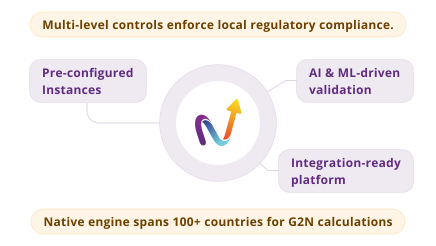
As a global leader in payroll technology and Employer of Record services, Mercans helps employers manage end-of-service gratuity, savings schemes, and pension contributions across 160+ countries, with deep expertise in the UAE, Saudi Arabia, Qatar, Oman, Bahrain, and Kuwait.

Through the proprietary HR Blizz payroll platform, Mercans delivers:

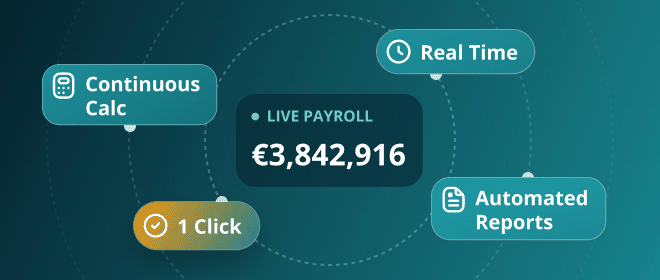
  • Automated gratuity accrual calculations aligned with UAE Federal Decree-Law No. 33 of 2021 and Saudi Labour Law Articles 84 to 87
  • Real-time end-of-service liability tracking on the balance sheet
  • Built-in support for the UAE voluntary Savings Scheme and DIFC DEWS Plan
  • Accurate handling of expatriate gratuity, GPSSA, ADPF, GOSI, and pension contributions
  • Automated final settlement processing covering unused leave, notice pay, and bonuses
  • Bilingual payslips and end-of-service letters in Arabic and English
  • Multi-entity payroll covering mainland, free zone, and offshore jurisdictions

Explore Mercans’ UAE payroll software at https://mercans.com/payroll-software/uae/ and the Saudi Arabia payroll platform at https://mercans.com/payroll-software/saudi-arabia/.

For a broader look at how Mercans manages WPS, gratuity, and labor law compliance in the region, read the company’s guide on Payroll Software in the UAE: Navigating Wage Protection and Labor Law Requirements.

Full payroll capabilities are available for the United Arab Emirates and for Saudi Arabia.

Frequently Asked Questions About End-of-Service Benefits & Gratuity

What is the difference between end-of-service benefits and gratuity?

The terms are often used interchangeably. Gratuity refers specifically to the lump-sum payment made to an employee at the end of employment, while end-of-service benefits (EOSB) is the broader umbrella that may also include unused leave encashment, notice pay, repatriation costs, and final salary settlement.

Who is eligible for end-of-service gratuity in the UAE?

Expatriate private-sector employees who complete at least one year of continuous service are eligible for gratuity under Federal Decree-Law No. 33 of 2021. UAE and GCC nationals are instead enrolled in pension schemes through GPSSA or the Abu Dhabi Pension Fund.

How is end-of-service gratuity calculated in the UAE?

Gratuity in the UAE is calculated on the last basic salary as 21 days’ wage per year for the first 5 years of service and 30 days’ wage per year thereafter. The total payout is capped at 2 years of basic salary, and full settlement must be made within 14 days of the contract end date.

How is gratuity calculated in Saudi Arabia?

In Saudi Arabia, gratuity is half a month’s wage for each of the first 5 years of service and a full month’s wage for each year beyond 5. Resignation reduction rules apply, with reduced entitlements for employees who voluntarily resign before completing 10 years of service.

Is gratuity calculated on basic salary or total salary?

Gratuity in the UAE is calculated strictly on the last basic salary, excluding housing, transport, and other allowances. In Saudi Arabia, certain regular allowances may be included in the base for gratuity calculation, depending on contract terms.

When must employers pay end-of-service gratuity?

Under UAE law, employers must pay gratuity along with all other end-of-service entitlements within 14 days of the contract end date. Delayed settlement can lead to labor complaints filed with MOHRE and potential financial penalties.

What is the UAE Savings Scheme and how does it affect gratuity?

The UAE Savings Scheme, introduced through Cabinet Decision No. 96 of 2023, is a voluntary alternative to traditional gratuity. Employers contribute 5.83 percent of basic salary monthly for the first 5 years of service and 8.33 percent thereafter into an approved investment fund, replacing the lump-sum gratuity model for enrolled employees.

What is the DIFC DEWS Plan and how does it compare to gratuity?

The DIFC Employee Workplace Savings (DEWS) Plan replaced the traditional end-of-service gratuity model in DIFC in 2020. Instead of a lump-sum payout, employers make monthly contributions to a regulated savings plan, giving employees portable, funded retirement benefits.

Can an employer withhold gratuity from an employee?

Employers cannot withhold statutory gratuity simply due to a dispute or performance issue. However, they may lawfully deduct amounts the employee owes, such as outstanding loans, salary advances, or court-ordered payments. Misconduct under Article 80 of the Saudi Labour Law or relevant UAE provisions can result in forfeiture of gratuity.

How does Mercans help employers manage end-of-service benefits?

Mercans automates gratuity accruals, final settlement calculations, savings scheme contributions, and pension management through its HR Blizz payroll platform. With country-specific compliance built in for the UAE, KSA, and the wider GCC, Mercans helps employers reduce risk, forecast liabilities, and process end-of-service payments accurately. Get started at the Mercans UAE payroll page or the Mercans Saudi Arabia payroll page.