Employer of Record

Employer of Record (EOR) Lithuania

Hire compliantly, pay accurately, expand confidently.

Global Payroll Team
Written by Global Payroll Team
Last updated April 24, 2026
Expert Reviewed

An Employer of Record (EOR) in Lithuania acts as the legal employer for your workforce, playing a critical role in ensuring full compliance with Lithuania’s labor laws and regulations. As a leading Global Professional Employer Organization (Global PEO), our EOR services go beyond basic legal representation, actively managing essential employment functions, such as streamlined payroll processing, tax handling, benefits administration, and the creation of necessary employment contracts.

In Lithuania, our dedicated Employer of Record manages key responsibilities, including:
  • Ensuring rigorous adherence to Lithuania’s employment laws to maintain complete legal compliance.
  • Managing local payroll processes with precision and efficiency.
  • Handling the submission of employment taxes and required documentation.
  • Providing detailed payslips for transparent financial reporting.
  • Disbursing salary payments promptly to maintain financial stability for employees.

Choosing our Global PEO services with an Employer of Record in Lithuania offers your business a hassle-free pathway to expansion, eliminating the need to establish a local entity. Our EOR services ensure a legal presence, full compliance, and protection of Intellectual Property, allowing your business to concentrate on core operations. Additionally, our team streamlines global mobility and work visa processes, supporting the creation of a diverse and productive international workforce.

Things you need to know before hiring in Lithuania

Employment Contracts in Lithuania

In Lithuania, employment contracts are governed by strict regulations aimed at ensuring fair terms, legal compliance, and clear communication between employers and employees. Article 42 of the Labor Code provides a comprehensive framework for the conclusion and commencement of employment contracts, establishing responsibilities for both parties.

Conclusion of an Employment Contract

  • An employment contract in Lithuania is officially considered concluded once both parties agree on essential conditions, as defined in the Labor Code. These terms typically include job role, salary, and working hours, among others.

Mandatory Notification

  • Employers are required to notify the State Social Insurance Fund Board at least one working day before the employee’s scheduled start date. This notice ensures that the contract is in alignment with national social insurance regulations.
  • Exceptions apply if:
    • The employee’s work location is outside Lithuania, or
    • EU social security regulations or international treaties exempt the employee from Lithuanian social insurance laws.

Contract Effectiveness and Compensation

  • The contract formally takes effect when the employee begins work.
  • If, through no fault of the employee, the contract cannot take effect, the employer must provide compensation equivalent to at least the agreed-upon salary for up to one month.
  • In cases where the employee fails to start work due to personal fault, and does not provide three working days’ notice to the employer, the employee must compensate the employer for damages, with the amount not exceeding two weeks’ salary.

Workplace Familiarization Requirements

  • Before the employee begins work, the employer is obligated to familiarize them with:
    • The working conditions as outlined in the contract,
    • Labor laws and workplace policies relevant to the position,
    • Health and safety requirements to ensure a secure working environment.

These provisions highlight Lithuania’s commitment to protecting worker rights and setting clear, fair standards for both employers and employees, ensuring a transparent and compliant employment framework.

Working Hours

The average working time, including overtime, is capped at 48 hours per week; however, the maximum allowable working time, including overtime and additional work, is limited to 12 hours per day and 60 hours per week.

The maximum overtime is set at eight hours per week, or up to 12 hours per week if the employee consents; the annual cap on overtime is 180 hours.

Probation Period

The probationary period in Lithuania is limited to a maximum of three months. However, in specific circumstances outlined by law, this duration can be extended. During this period, employee absences are not taken into account.

13th Month Salary

While Lithuanian law does not require a 13th-month salary, it is common practice for employers to provide performance-related bonuses.

Termination, Severance Pay, and Notice Period

Termination of a fixed-term employment contract can only occur for legitimate reasons as defined by law, and the employer must adhere to established notice procedures. In cases of termination at the employer’s initiative without the employee’s fault, the standard notice period is one month, but it is reduced to two weeks if the employment relationship has lasted less than one year. These notice periods are doubled or tripled for certain protected categories of employees under the Labour Code.

Severance Payments

When an employment contract ends at the employer’s initiative without any fault on the part of the employee, the employee is generally entitled to severance pay equal to two months’ average wage. If the employment relationship has lasted for less than one year, the severance pay is equal to half of one month’s average wage.

  • Less than 12 months of service: Half of one month’s average wage
  • 12 months or more of service: Two months’ average wage

In addition, a dismissed employee may also be entitled to a long-term employment benefit in accordance with the applicable law, depending on their continuous length of service with the employer.

Employees vs Independent Contractors vs Agency Workers

Employees
Establishing an employment relationship grants employers the ability to safeguard confidential company information and intellectual property during and after an employee’s tenure, as long as these responsibilities are clearly defined in relevant agreements. Additionally, such arrangements can prevent former employees from launching competing enterprises or soliciting other team members, provided that a specific non-compete agreement is signed and the employer offers the necessary financial compensation.
Independent Contractors or Consultants
In Lithuania, employers often engage independent contractors and consultants. This approach allows them to avoid the more formal employment termination procedures and the protections and benefits typically afforded to employees. Furthermore, utilizing independent contractors can reduce certain labor costs, as the social insurance treatment differs from employment. However, these agreements may be scrutinized by regulatory authorities, making it crucial for the contracts to accurately represent the working relationship.
Agency Workers
Agency workers in Lithuania possess a distinct status. They are entitled to equal treatment concerning pay and working conditions when compared to employees directly hired by the end-user client of the agency. Moreover, the end-user client is responsible for ensuring the workplace health and safety of agency workers.

Social Security in Lithuania

Social security in Lithuania is primarily structured through a comprehensive system of social insurance contributions, aimed at providing various benefits to individuals engaged in labor relations or similar employment-like situations. Here’s a breakdown of the key aspects of social security in Lithuania, including the types of contributors, the types of insurance, and the contribution rates.

Social Insurance Contributions

Eligibility for Social Insurance

Social insurance is available to several groups of individuals, including:

  • Employees: Individuals employed under employment contracts within Lithuania or posted to the country for over one year are eligible. This also includes those working for Lithuanian insurers outside the country, unless specified otherwise by international treaties or EU regulations.
  • Self-Employed Persons: Permanent residents receiving income from copyright contracts with Lithuanian entities are covered under certain conditions, as are individuals engaged in creative or performance activities.
  • Farmers and Business Owners: Farmers, members of households, and owners of individual enterprises are included in the social insurance system for pensions, sickness, maternity, and unemployment, provided they receive the requisite income.
  • Special Cases: Various groups, such as politicians, military personnel, and individuals in public service, are also covered under specific laws governing their employment.

Types of Insurance:

Social insurance contributions cover various areas, including:

  • Pensions
  • Sickness
  • Maternity
  • Unemployment
  • Accidents at Work and Occupational Diseases

Contribution Rates

For the year 2026, the rates of social insurance contributions are set as follows:

  • Total Contribution Rate for Insured Persons: 19.5%
    • Pension Insurance: 8.72%
    • Sickness Insurance: 1.99%
    • Maternity Insurance: 1.81%
    • Health Insurance: 6.98%
  • Employer Contribution Rates:
    • Overall employer state social insurance contribution rate: 1.47%
    • Unemployment Insurance: 1.31% or 2.03% for fixed-term contracts
    • Accidents at Work and Occupational Diseases: 0.16% overall, with risk categories applied in practice

The contributions are calculated based on the employee’s income but are subject to a ceiling of 60 average wages. If an individual has multiple employments, contributions are aggregated across employers for calculation purposes.

Special Provisions

  • Self-Employed Persons: Individuals engaged in individual activities on a business certificate pay social insurance contributions primarily for pension and health insurance, with specific exemptions outlined in the Law on State Social Insurance.
  • Spouses of Delegated Persons: Spouses of civil servants or military personnel working abroad may also receive social insurance coverage at the state’s expense, depending on the contributions made by the employed partner.
  • Social Status Considerations: Individuals with special statuses, such as those providing care for children or disabled persons, as well as military personnel in service, receive state-covered social insurance.

Payroll in Lithuania

Minimum Wage

Starting January 1, 2026, Lithuania’s minimum monthly wage is established at €1,153, which translates to a minimum hourly rate of €7.05.

Payroll Cycle

Employers are mandated to pay salaries at least twice a month. However, employees can opt to receive their salary on a monthly basis instead. Payments for work performed during a calendar month must generally be made within 10 working days following the end of the month, unless labor law rules or the employment contract provide otherwise. If employers fail to comply with the statutory deadlines, they may be liable for late payment consequences under the Labour Code.

Overtime Pay

Employees who work on their designated rest days that fall outside their scheduled shifts, as well as those who work on holidays, are entitled to at least double their usual hourly wage.

For night shifts and any overtime, employees should receive a minimum of 1.5 times their standard pay rate.

If overtime is performed on a rest day not part of the regular schedule or during night shifts, employees must be compensated at least double their normal rate. Additionally, if overtime occurs on a holiday, the pay increases to a minimum of 2.5 times the employee’s regular wage.

Upon request, employees have the option to add hours worked on rest days or holidays, or overtime calculated at rates of 1.5, 2.0, or 2.5 times their standard pay, to their annual leave entitlement.

Payroll Compliance in Lithuania

Navigating payroll in Lithuania requires careful attention to a range of regulatory and statutory obligations. Businesses operating in Lithuania must comply with legal mandates covering employee contracts, tax reporting, social contributions, pension obligations, and specific employment entitlements. Below is a comprehensive overview of the key compliance and reporting requirements to ensure effective payroll operations in Lithuania.

Government Requirements

Registration Requirements

Before initiating payroll activities, companies must register with Lithuania’s State Social Insurance System (SoDra) and the State Tax Inspectorate (STI). Once the company is legally registered in the commercial register, relevant data is automatically forwarded to these institutions. Employers gain access to online platforms like My STI and EDS for tax submission and the SoDra portal for social insurance reporting. These systems are essential components of compliant payroll solutions in Lithuania.

Employment Contracts

To formalize an employment relationship, a written employment contract must be signed by both the employer and the employee. These contracts are governed by the Labour Code of the Republic of Lithuania and must define job responsibilities, salary, working conditions, and other legal entitlements.

Ongoing Compliance Requirements

Personal Income Tax (PIT)

Employers are responsible for calculating and withholding PIT from employees’ wages. Employment-related income is generally taxed at 20%, with a 32% rate applying to the annual portion exceeding an amount equal to 60 average wages.

PIT Reporting

Monthly PIT reports must be submitted to STI by the 15th of each month, outlining all taxable salaries and withheld taxes.

Annual PIT Report

By 15 February of the following year, employers must file an annual PIT report, detailing each employee’s annual income, tax deductions, and non-taxable payments such as insurance or travel allowances.

Social Security Contributions (SSC)

For 2026, employees generally contribute 19.5% for pension, sickness, maternity, and health insurance, while the employer’s overall state social insurance contribution rate is 1.47%, with separate accident insurance risk categories applied in practice.

SSC Reporting

Monthly SSC reports must be submitted through the SoDra system and should include the total salary base, contribution breakdown, and employee identifiers such as personal and social contribution codes.

Pension Requirements

Registration Requirements

Employee pension registration occurs automatically through their inclusion in the SoDra system, requiring no additional administrative effort.

Ongoing Compliance Requirements

Lithuania operates a three-tier pension system:

  • First tier – funded by compulsory social insurance.
  • Second tier – pension accumulation through private funds, with employee and state contributions under the applicable rules.
  • Third tier – private pension savings with tax incentives for both employees and employers.

Employers must ensure contributions are calculated and transferred correctly under the applicable system.

Employment Obligations

Minimum Wage

Lithuania mandates a minimum monthly wage, which increased to €1,153 in 2026 for a full-time work schedule.

Annual Paid Leave

Employees are entitled to a minimum of 20 working days of paid leave annually. Additional days are awarded based on years of service, job conditions, or employee demographics.

Additional Privileges for Persons Raising Children

Employees with dependents may be eligible for extra paid leave or reduced working hours, particularly those raising children under 12 or with disabilities.

Categories of Special-Purpose Leave

Includes maternity, paternity, parental, educational, sabbatical, unpaid leave, and time off for public service duties, as outlined in the Labour Code.

Breaks in Work

Rest periods and breaks are also regulated, and vary by the type of employment agreement (full-time, part-time, or rotational shifts).

Payroll Requirements

Lithuanian payroll involves three core contributions:

  • PIT
  • SSC
  • Employer-side statutory fund contributions where applicable

Employers must pay salaries at least once or twice monthly, depending on agreement. Accurate recordkeeping is mandatory, and employees must receive itemized pay slips detailing hours worked, deductions, and taxes at least once a month.

Banking Requirements Related to Payroll

In Lithuania, salary payments are commonly made via bank transfer as standard payroll practice, ensuring transparency and traceability.

Mercans’ payroll capabilities

Payroll Cycle
In Lithuania, payroll typically operates on a monthly schedule, which involves systematic steps including the initial setup, salary processing, and compliance reporting. Mercans’ Employer of Record (EOR) services expertly navigate these stages to ensure timely and accurate payroll management.
Pay Employees and Contractors in the Local Currency
Mercans facilitates salary payments in euros, ensuring that employees and contractors are compensated in the local currency. This enhances convenience and ensures compliance with local payment practices.
Payroll Setup, Payroll Processing, and Payroll Administration
Mercans’ EOR services efficiently manage all aspects of payroll in Lithuania. This includes the configuration of payroll systems, processing salaries, and administering employee benefits and leave entitlements, all with a focus on accuracy and efficiency.
Statutory Filings and Payments
Adherence to local regulations is essential in Lithuania. Mercans ensures full compliance with Lithuanian laws, providing support for statutory filings and facilitating timely payments to avoid any potential penalties.

Personal Income Tax in Lithuania

Overview of Personal Income Tax (PIT)

In Lithuania, personal income tax applies to the worldwide income of tax residents. For non-residents, only specific types of income sourced from Lithuania are subject to PIT, including:

  • Employment-related Income: This includes wages and salaries from employment or similar relations.
  • Profit Distributions: Income derived from distributed profits and payments to members of the Board or Supervisory Board.
  • Interest Income: This generally includes all interest income except for that received from government non-equity securities.
  • Royalties: Income from intellectual property rights and related payments.
  • Income from Sports Activities: This encompasses earnings directly or indirectly related to sports activities, whether paid to the athlete or a third party.
  • Performing Activities: Similar to sports, this includes earnings from performances, regardless of the payment structure.
  • Rental Income: Income generated from leasing immovable property located within Lithuania.
  • Sale of Property: Income from the sale or transfer of movable property registered in Lithuania or the sale of immovable property located in the country.
  • Individual Activities: Earnings derived from individual activities carried out through a fixed base in Lithuania, including income attributed to that base from foreign sources.
  • Compensation for Copyright Infringement: Earnings received as compensation for infringement of copyright rights.

Personal Income Tax Rates

As of 2026, personal income tax rates in Lithuania are structured as follows:

  • 20% Rate: This rate generally applies to employment-related income and certain similar payments up to the annual portion not exceeding an amount equal to 60 average wages.
  • 32% Rate: This rate applies to the annual portion of the relevant income exceeding an amount equal to 60 average wages.
  • Dividends: Income from profit distributions, such as dividends, is subject to a flat PIT rate of 15%.
  • Individual Activity Income: This income is taxed under the rules applicable to individual activities, with rates depending on the type and amount of income and the applicable tax credit mechanism.
  • Other Income: Other categories of income may be subject to 15%, 20%, or 32% depending on the nature of the income and the applicable annual thresholds under the Law on Income Tax of Individuals.

Lithuania Employee Hiring Cost

Let’s suppose the salary of an employee in Lithuania is €100,000 per year. To understand the total cost of hiring this employee, we break down the calculations to include both the gross salary and the additional employer costs, such as social security contributions. The gross annual salary for the employee is €100,000.00. In addition to this, the annual employer costs include mandatory employer-side social insurance contributions and other applicable statutory employer charges. Therefore, the total annual cost of employing this individual will exceed the gross salary and depend on the applicable contribution rates and risk category assigned to the employer.

Calculation Breakdown

Description Amount (€)
Gross annual salary €100,000.00
Annual employer costs €2,490.00
Total annual cost €102,490.00

Employee Benefits in Lithuania

Mandatory Employee Benefits

Lithuania’s pension system allows residents to build their retirement savings through a combination of state and private contributions. The structure consists of three distinct pillars, each designed to facilitate different aspects of pension accumulation.

Pillar I

This pillar is the foundation of the state social security system, where individuals either contribute or are covered for a social insurance pension. This is a mandatory requirement for all employees.

Pillar II

This pillar features additional financing sources, including employee and state contributions under the current pension accumulation rules. Once an individual enrolls in a pension fund, access to these funds is generally deferred until retirement age, subject to the applicable legal rules. The system includes automatic enrollment and opt-out mechanisms for eligible participants.

Pillar III

This pillar consists of voluntary contributions to private pension funds or life insurance policies. Participation is open to everyone, including individuals who do not contribute to the mandatory social insurance scheme.

To qualify for a pension from the state social insurance fund (SoDra), individuals must be at retirement age and meet the required social insurance contribution record under the applicable rules.

Maternity and Paternity Benefits

Expecting mothers are entitled to maternity benefits if they meet the minimum social insurance record requirements under the current rules. Maternity and paternity benefits are calculated based on compensatory earnings and are administered through the social insurance system. Parents can also take childcare leave for one or two years, with benefit levels depending on the selected option and the applicable legislation.

Employment Insurance

Lithuania’s employment insurance system offers financial assistance to individuals experiencing income loss due to various circumstances such as illness, disability, and parental leave. For the initial two days of illness, employers are responsible for compensating employees at the rate required by law. From the third day onward, sickness benefits are generally paid through the social insurance system. Additionally, disability allowances are available for those who cannot work due to prolonged incapacitation, calculated based on the individual’s insured income.

In terms of parental benefits, maternity leave ensures financial support for new mothers during their time off work, with compensation typically based on their earnings prior to leave. Furthermore, the pension system in Lithuania is designed to provide long-term financial security for employees upon retirement, contributing to their overall economic stability.

Additional Employee Benefits

  • Healthcare: In Lithuania, one of the most sought-after supplementary benefits is voluntary health insurance. These plans often include complimentary annual health check-ups, dental services, and vision care, enhancing overall employee well-being.
  • Retirement: For retirement benefits, please refer to Pillar III outlined in the mandatory benefits section related to pensions.
  • Education: Organizations have the option to support employee development through training and education, typically covering all associated costs. This investment in learning helps employees advance their skills and careers.
  • Flexible Benefits: In recent years, there has been a notable trend towards offering flexible benefits as a strategy to enhance employee retention, uplift morale, decrease absenteeism, and foster higher productivity levels. Younger employees, in particular, value flexible options and prefer employers who prioritize their health and overall well-being.
  • Fitness Facilities: Larger local employers and multinational corporations often provide on-site gym facilities for their employees. In contrast, smaller businesses might offer subsidies for gym memberships. It’s important to note that fitness-related benefits are generally taxable, and additional taxes may apply when reimbursing these services through health insurance.

Work Permit in Lithuania

Lithuania is an attractive destination for foreign professionals seeking employment opportunities, thanks to its robust economy and appealing lifestyle. The country, as a member of the European Union, offers unique immigration regulations that facilitate the hiring of both EU and non-EU citizens. While EU nationals can work in Lithuania without a work permit, non-EU citizens must usually follow the structured process applicable to work permits and temporary residence permits.

Types of Work Permits

Lithuania offers various types of work-related immigration routes tailored to different employment needs:

  • EU Blue Card: Designed for highly skilled workers, this route allows non-EU nationals to work and live in Lithuania while offering a pathway to long-term residence.
  • Intra-Company Transfer: This route is for employees who are transferred within a multinational company to a branch or subsidiary in Lithuania.
  • General Work Route: A standard work-related route for non-EU nationals seeking employment in various sectors, typically involving a work permit and a temporary residence permit for employment.
  • Seasonal Work: Specifically for individuals looking to engage in seasonal employment, often in agriculture or tourism.

Application Process for a Work Permit

To work in Lithuania, non-EU citizens must generally follow these steps:

  • Employer Application: The process commonly begins with the Lithuanian employer applying for the required work authorization through the Employment Service, where applicable.
  • Submission of Required Documents: The employee must supply necessary documentation, including:
    • A valid passport.
    • A completed application form.
    • A mediation letter or other employer supporting documents where required.
    • Proof of qualifications and professional accreditation.
    • Evidence of sufficient means and accommodation where applicable.
    • Health insurance coverage.
  • Work Authorization: Once the relevant labor or migration authority approves the application, the foreign national proceeds with the residence process applicable to the case.
  • Temporary Residence Permit: Following changes that took effect in 2024, foreigners who wish to work in Lithuania generally need to obtain a Lithuanian temporary residence permit, except in limited cases expressly exempted by law.
  • Processing Time: Processing times vary depending on the permit type, the applicant’s country of application, and the chosen migration procedure.

Duration and Extensions

  • Initial Validity: The validity depends on the immigration route used, the employment basis, and the decision of the competent authority.
  • Renewal Process: Employers and employees should initiate renewal procedures sufficiently in advance of expiry. If the employment continues, the employee will usually need to renew the temporary residence permit or other relevant status.

Family Reunification

Holders of a valid temporary residence permit in Lithuania may, subject to the applicable rules, invite their family members to join them. Family members must follow the relevant family reunification procedure for lawful stay in Lithuania.

EOR Solutions in Lithuania

  • EOR for Prospective Employees: Mercans provides comprehensive Employer of Record (EOR) solutions for businesses looking to hire their ideal candidates in Lithuania. Our services cover all aspects of the employee lifecycle, ensuring full compliance with Lithuanian labor laws and regulations.
  • EOR + Recruitment: For companies in need of talent acquisition support, our combined EOR and recruitment services offer a complete solution. Leveraging our extensive network and expertise, we assist you in finding, onboarding, and retaining top talent, simplifying your entry into the Lithuanian market.
  • Visa Sponsorship and Global Mobility: Our visa sponsorship and global mobility services streamline the process of expatriate employment. We help facilitate the relocation of your international workforce while ensuring adherence to Lithuanian immigration and employment laws.
  • AOR for Contractor Payments: If your business faces challenges with contractor payments, our Assistance on Record (AOR) services can help. We manage the complexities of contractor payments, ensuring accuracy and compliance throughout the process.
  • Converting Freelancers to Employees: Mercans specializes in assisting companies with the transition from independent contractors to full-time employees in Lithuania. Our expertise guarantees smooth conversions while meeting all legal requirements.
  • HCM Integration: Seamlessly integrate Mercans’ EOR services with your Human Capital Management (HCM) system in Lithuania for real-time data exchange, enhanced compliance, and improved cost efficiency. Rely on our expertise for a cohesive, compliant, and effective approach to workforce management and payroll operations.

Best Employer of Record Lithuania

Mercans is the best Employer of Record in Lithuania for several reasons:

  • Compliant with Local Regulations: Mercans strictly adheres to all regulatory requirements established by Lithuanian authorities, ensuring compliance with labor laws and regulations. This includes full compliance with the Ministry of Social Security and Labour (SADM/MoSSL) and the State Labour Inspectorate.
  • Independent Entity: Operating as a standalone entity, Mercans provides reliable and customized employment services tailored to the unique needs of businesses in Lithuania.
  • Diverse Employment Support: Mercans effectively manages various employment types, including full-time employees, freelancers, contractors, and expatriates, offering flexible solutions that cater to diverse workforce needs.
  • Enterprise-Level Solutions: Designed to meet the demands of large enterprises, Mercans delivers scalable and sophisticated services that accommodate complex organizational structures.
  • Multi-Currency Payroll Management: Mercans manages payroll in multiple currencies, facilitating smooth financial operations for both global and multinational businesses operating in Lithuania.
  • Global Presence with Multi-Country Payroll Capabilities: With a broad global network, Mercans excels at handling multi-country payroll, ensuring seamless international operations for businesses expanding into Lithuania.
  • Data Protection Compliance: Mercans adheres to rigorous data protection and security standards, including GDPR certification and compliance with SOC 1 and SOC 2 frameworks, ensuring the safety of sensitive information.
  • ISO Certifications: With ISO 20000 and ISO 27001 certifications, Mercans demonstrates a commitment to high-quality IT service management and robust information security practices.
  • Security Standards Compliance: Mercans meets the OWASP ASVS 3.0 standards, ensuring strong security practices are upheld in application development and management.
  • HRBlizz: Mercans HR Blizz is a proprietary global payroll and talent management software suite that streamlines payroll processes while ensuring compliance with local regulations. With a team of over 1,000 in-country specialists, it provides expert knowledge of Lithuanian labor laws and business protocols.
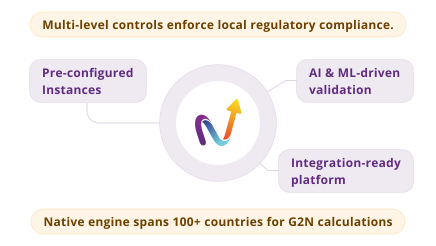
  • G2N Nova:G2N Nova offers global gross-to-net payroll processing in over 100 countries, positioning it as one of the most advanced native payroll engines available. Offered as a SaaS or service delivery platform, it can function independently or integrate seamlessly with major Human Capital Management and Workforce Management systems.

Conclusion

In conclusion, Mercans provides unparalleled Employer of Record (EOR) solutions in Lithuania, guaranteeing accuracy, compliance, and efficiency in payroll management. Our extensive range of services simplifies operational processes, making us a dependable partner for businesses navigating the intricacies of the Lithuanian employment landscape. Rely on Mercans to enhance your global workforce management, ensuring that your expansion into Lithuania is a smooth and successful venture.

This document was prepared for informational purposes only. As local laws & regulations keeps on changing. Please consult your tax & legal advisors as well.
Contact Sales
Let's get this conversation started. Tell us a bit about your requirement, and we'll get in touch a soon as we can.

    Sample message

    1. We want to expand in $country

    2. We want you to employ 'X' number of employees on our behalf

    3. Contract duration – 3/6/9/12/18/24 months

    4. Number of legal entities (if any exist today)

    5. Employment type: EOR employee or contractor?

    6. Any benefits requirement or “standard statutory only”?

    FAQs

    What is an Employer of Record (EOR) in Lithuania?

    An Employer of Record (EOR) in Lithuania is a third-party provider that legally employs workers on behalf of another company. The EOR handles contracts, payroll, taxes, benefits, and compliance with Lithuanian labor laws, allowing businesses to hire without a local entity.

    How can foreign companies hire employees in Lithuania without setting up a local entity?

    Foreign companies can hire through an EOR, which acts as the legal employer while the client company manages daily tasks. This avoids the need for a local branch or subsidiary.

    What compliance, payroll, and HR services does an EOR in Lithuania provide?

    An EOR manages employment contracts, payroll, tax withholding, statutory contributions, benefits, filings, and can assist with work permits and visas for expatriates.

    What are the benefits of using EOR services in Lithuania?

    Using an EOR simplifies market entry, ensures legal compliance, reduces administrative work, mitigates risks, and speeds up hiring.

    How much does it cost to hire employees through an EOR in Lithuania?

    Fees typically range from $500 to $2,000 per employee per month, depending on services. It’s best to consult the provider for details.

    Is an EOR the best solution for expanding a business into Lithuania?

    An EOR is ideal for businesses expanding into Lithuania without setting up a local entity, letting companies focus on core operations while the EOR handles employment tasks.

    Ready to hire in Lithuania?

    No local entity needed. Our experts handle payroll, compliance, and onboarding.

    Talk to an expert
    Proven expertise in global payroll.