Employer of Record

Employer of Record (EOR) in Taiwan

Hire compliantly, pay accurately, expand confidently.

Global Payroll Team
Written by Global Payroll Team
Last updated April 24, 2026
Expert Reviewed

An Employer of Record (EOR) acts as the legal employer for workers in Taiwan, providing a crucial role commonly known as a Global Professional Employer Organization (Global PEO). As your dedicated Employer of Record in Taiwan, we take charge of various employment aspects. This includes meticulous oversight to ensure strict compliance with local labor laws and regulations, expert management of payroll processes, handling taxes, offering mandated benefits, and crafting comprehensive employment agreements.

With Mercans as your Employer of Record in Taiwan, you can rely on a partner committed to:
  • Ensuring meticulous compliance with Taiwan’s employment laws.
  • Skillfully managing the intricacies of the local payroll process.
  • Expertly handling the filing of employment-related taxes and requisite paperwork.
  • Issuing timely payslips to the worker.
  • Disbursing the worker’s salary payments promptly.

Our Global PEO services in Taiwan provide a seamless solution for your global expansion, eliminating the need for entity setup. As your trusted Employer of Record in Taiwan, we guarantee legal compliance, a robust local presence, and Intellectual Property (IP) protection. This allows your business to concentrate on its core operations. Benefit from our expertise to facilitate seamless global mobility, efficiently manage work visas, and build a diverse and productive global workforce. Choose Mercans as your Employer of Record in Taiwan for a compliant and streamlined employment experience for your global workforce.

Things you need to know before hiring in Taiwan

Employment Contracts in Taiwan

In Taiwan, the Labor Standards Act (LSA) sets stringent measures to safeguard employees, categorizing employment contracts into fixed-term and non-fixed term. The Act generally favors non-fixed term contracts for continuous work, offering better protection to employees. Fixed-term contracts are exceptions and must adhere to specific criteria:

Determination of Fixed-term Contracts
  • Courts consider the content and nature of the contract, not solely the written form.
  • For “specific nature of work,” recordation with the competent authority does not by itself determine the contract’s nature.
Criteria for Fixed-term Contracts
  • Temporary employment: Non-continuing employment for six months or less.
  • Short-term employment: Non-continuing employment expected to be completed within six months.
  • Seasonal employment: Non-continuing employment affected by seasonal factors with a term shorter than nine months.
  • Specific employment: Non-continuing employment completed within a specific period.
On-Demand and Automated Payment Services
The term “continuous work” is understood as work related to the employer’s continuous business needs, not temporary or seasonal.
Legitimate Fixed-term Contracts in Judicial Practice
Strict standards apply, recognizing legitimacy in specific cases like one-day tasks or project-specific roles.
Impact of Signing Fixed-term Contracts for Continuous Work
  • Continuous work generally requires a non-fixed term contract.
  • Employers violating this may face fines of NT$20,000 to NT$300,000 under Article 79 of the Act.
Employment Contracts in Taiwan
  • Divided into fixed-term and non-fixed term.
  • Probationary period negotiated between employers and employees, usually around three months in practice.
  • Annual leave entitlement based on years of service, ranging from 3 to 30 days.
  • Termination notice requirements vary from 10 to 30 days based on years of service.
Probation Period
The Labor Standards Act does not prescribe the maximum duration of a probationary period. The term “trial period” lacks a statutory definition within the LSA. The duration of the trial period is subject to negotiation between employers and employees. While there is no specific regulation on the longest permissible trial period, conventional practices often span three months. Throughout this trial period, the employment relationship remains subject to the mandatory requirements of the LSA and other applicable labor laws.
13th Month Salary
While it is not obligatory, 13th-month and even 14th-month salary practices remain common in Taiwan, especially before the Lunar New Year. Festival bonuses are also customary before the Dragon Boat Festival and Mid-Autumn Festival.
Working Hours
Workers’ standard working hours should not surpass eight hours per day or 40 hours per week. Subject to approval by a labor union or, in the absence of one, endorsement from a labor-management conference within a business entity, an employer has the flexibility to redistribute the standard working hours across any two workdays in a two-week period. It is permissible to allocate a maximum of two hours to each of the other workdays. However, the aggregate weekly working hours must not exceed 48 hours.

Termination, Severance Pay and Notice Period

Termination

Employers may not terminate employees without good cause, and the necessity for advance notice depends on the reason for termination and the employee’s years of service. There are two main categories of good causes for termination, each with its own set of conditions. Advance notice is required for reasons such as business suspension, operating losses, force majeure, changes in the nature of business, or an employee’s inability to perform duties. However, under certain circumstances, an employer can dismiss an employee without notice, such as when the employee misrepresents facts, engages in violent acts, violates the labor contract or work rules in a serious way, deliberately damages property, or is absent from work without cause under the statutory standards.

Severance Pay

In Taiwan, severance pay is governed by the Labor Standards Act (LSA) and the Labor Pension Act (LPA). Employees who started after 1 July 2005 under the Labor Pension Act generally receive severance pay calculated at half a month of average wages per full year of service, up to a maximum of six months’ average wages. Employees with service predating 1 July 2005 may have seniority governed by the old LSA pension system for the relevant period, while later seniority is handled under the Labor Pension Act unless a lawful election applies.

Procedurally, dismissals require good cause under the LSA. Mass terminations follow the Act for Worker Protection of Mass Redundancy, which contains separate thresholds, notice rules, and consultation obligations.

Class or collective actions are allowed, initiated by labor unions. Employers can impose mandatory retirement at 65, subject to the law, and the employee cannot refuse.

Notice Period

Article 16 of the LSA outlines the minimum notice periods for employer termination:

  • Employed for over 3 months but less than 1 year: 10 days’ notice.
  • Employed for over 1 year but less than 3 years: 20 days’ notice.
  • Employed for over 3 years: 30 days’ notice.

Upon receiving notice, an employee can request leave during work hours, up to 2 days a week, for job hunting, with continued wage payment. If an employer terminates without proper notice, full wages for the notice period must be paid.

Overtime Pay

Taiwan’s Labor Standards Act contains detailed overtime pay rules. For overtime on regular workdays, employers must pay the regular hourly wage plus at least an additional one-third of the hourly wage for the first two overtime hours, and at least an additional two-thirds for the next two hours. Overtime on rest days and work on national holidays follow separate statutory calculation rules. Employers must calculate overtime precisely and may not replace statutory overtime pay with compensatory arrangements unless the law permits and the required agreement is in place.

Employees vs Independent Contractors

Comparison Between Taiwanese Employees and Contractors:

Criteria Contractors Employees
Autonomy Higher autonomy over how work is performed Works under the employer’s direction and supervision
Tools and Equipment Usually uses own tools and equipment Employer often provides tools and work resources
Integration Less integrated into the client’s organization More integrated into the employer’s business operations
Benefits Generally not entitled to employee protections and statutory labor benefits Entitled to labor-law protections and statutory benefits where applicable
Engagement Usually project-based, task-based, or service-based May be fixed-term or indefinite, depending on the employment arrangement
Risk of Loss Bears own business and financial risk Employer generally bears business risk
Subcontracting May delegate or subcontract if the contract allows Usually expected to perform work personally
Payment Structure Paid service fees under contract terms Paid wages or salary through payroll
Work Schedule Greater flexibility, subject to contractual deadlines Working hours and attendance are generally controlled by the employer
Legal Framework Mainly governed by civil / commercial contract rules Governed by labor laws, especially the Labor Standards Act and related rules
Tax and Social Insurance Generally handles own tax filings and insurance arrangements Employer generally handles payroll withholding and labor/social insurance compliance
Reclassification Risk Higher if the arrangement functions like employment in practice Lower if properly structured as employment

This table provides a concise overview of the key distinctions between contractors and employees in Taiwan, considering autonomy, tools, integration, benefits, engagement, risk, and subcontracting.

Social Security in Taiwan

Employer and Employee Contributions
  • Taiwan’s social security system comprises the Labor Insurance Program (including ordinary accident insurance and employment insurance where applicable), the Labor Occupational Accident Insurance system, the National Health Insurance Program (NHIP), and the Labor Pension Program (LPP).
  • The Labor Insurance Program covers old age, injury, sickness, disability, and death, while the Labor Occupational Accident Insurance system specifically covers occupational accidents and diseases. The Labor Pension Program provides pension protection, and from 1 January 2026 foreign professionals are also covered by the new labor pension system under the current legal framework.
Employee Contributions (2026)
  • Labor Insurance Program (LIP): The ordinary labor insurance premium rate is 11.5% of the monthly insured salary in 2026, capped at TWD 45,800. Employees generally bear 20% of the ordinary labor insurance premium.
  • National Health Insurance Program (NHIP): The regular premium rate remains 5.17% of the insured salary amount. Employees generally bear 30% of the ordinary premium for themselves and their dependents under the applicable category rules.
  • Labor Pension Program (LPP): Employees may make voluntary labor pension contributions of up to 6% of monthly wages.
Employer Contributions (2026)
  • Labor Insurance Program (LIP): Employers generally bear 70% of the ordinary labor insurance premium. The ordinary labor insurance premium rate is 11.5% in 2026.
  • Labor Occupational Accident Insurance: Employers bear 100% of the occupational accident insurance premium, with the applicable rate varying by industry classification. Office work commonly uses a low rate such as 0.14%, but the actual rate depends on the business category.
  • National Health Insurance Program (NHIP): Employers generally pay 60% of the ordinary NHI premium.
  • Labor Pension Program (LPP): Employers must contribute a minimum of 6% of the employee’s monthly wage to the labor pension account where the Labor Pension Act applies.
Comparison with Surrounding Countries (Average Contributions)
  • South Korea: Contribution burdens differ by scheme and category.
  • China: Contribution burdens vary significantly by locality and social insurance type.
  • Japan: Contribution burdens differ by scheme and category.

Note: Social security contribution rates and regulations are subject to change. Consult with a local HR or tax professional for the latest information.

Payroll in Taiwan

Minimum Wages

The prevailing minimum wage in Taiwan is NT$29,500.00 per month and NT$196 per hour, effective from January 1, 2026. All figures are denoted in Taiwan Dollars.

Payroll Cycle

In Taiwan, wages must be paid at least once a month. It is common market practice to process payroll monthly, and many employers pay around the 5th, 10th, or 15th of the following month, provided the agreed payment date is reasonable under labor guidance.

Overtime Pay

Overtime pay in Taiwan must be calculated in accordance with the Labor Standards Act and paid on the nearest agreed wage payment date, or together with the current monthly salary if that is how the parties have arranged payroll. Overtime cannot be ignored simply because the extra time worked is less than one hour.

Mercans’ payroll capabilities

  • Payroll Cycle: Ensuring timely payment to both employees and contractors in the local currency, Taiwan Dollar.
  • Payroll Services: Proficient in comprehensive payroll setup, processing, and administration.
  • Statutory Compliance: Expert handling of statutory filings and payments to meet regulatory requirements.

Personal Income Tax in Taiwan

Overview

Individual Income Tax (IIT) is applicable to both resident and non-resident individuals for Taiwan-sourced income, unless exempt under the Income Tax Act and related laws.

Tax Rates for Non-Residents

  • Non-resident individuals generally face 18% withholding tax on salary income from Taiwan sources.
  • In specific short-stay cases and for certain categories of income, different rules or exemptions may apply under the Income Tax Act and applicable tax treaties.

Progressive Tax Rates for Residents

  • 5% on income up to TWD 590,000.
  • 12% on income from TWD 590,001 to 1,330,000.
  • 20% on income from TWD 1,330,001 to 2,660,000.
  • 30% on income from TWD 2,660,001 to 4,980,000.
  • 40% on income above TWD 4,980,000.

Income Basic Tax (IBT)

Residents face a flat 20% IBT on foreign-sourced income meeting specific criteria. IBT calculation includes add-back items, and if IBT exceeds regular income tax, it is payable based on the statutory formula.

IBT Add-Back Items

  • Qualified insurance benefits.
  • Income from certain transactions.
  • Non-cash charitable donations.
  • Foreign-sourced income over the statutory threshold.

Credit for Foreign Taxes

While foreign-sourced income can increase IBT, credits may be available for foreign taxes paid, subject to limitations.

Taiwan Employee Hiring Cost

In Taiwan, employing an individual requires taking into account not only the gross salary but also employer costs such as labor insurance, occupational accident insurance, national health insurance, and labor pension contributions where applicable. The total annual cost therefore depends on the employee’s insured salary level, benefit structure, and the employer’s applicable insurance category and rate.

Employee Benefits in Taiwan

Public Holidays
Taiwan observes statutory paid holidays under the official holiday calendar, including days such as Founding Day, Peace Memorial Day, Labor Day, Dragon Boat Festival, Mid-Autumn Festival, National Day, and other designated holidays depending on the official calendar and lunar dates for the year concerned.
Accruals and Paid Time Off (PTO)
Employees are entitled to paid annual leave based on service duration:

  • 3 days for 6 months to 1 year
  • 7 days for 1 to 2 years
  • 10 days for 2 to 3 years
  • 14 days for 3 to 5 years
  • 15 days for 5 to 10 years
  • Additional 1 day per year for over 10 years, up to 30 days.

Accumulated annual leave usage can follow different timelines, decided by mutual agreement within 30 days of eligibility. Unused vacation can be carried over or converted into wages according to the LSA rules.

Maternity, Paternity, Adoption, and Parental Leave
Maternity leave of 8 weeks is granted under the applicable law. For miscarriage, leave varies based on pregnancy duration. Pregnancy checkup accompaniment and paternity leave is 7 days. Parental leave without pay is available to eligible employees raising a child under three years old, and from 1 January 2026 the current system also allows more flexible day-based or hour-based use within the legal framework.
Sick Leave and Occupational Sickness Leave
Employees are entitled to ordinary sick leave of less than 30 days per year if not hospitalized. In case of hospitalization, up to one year of sick leave is permitted within a two-year period. The combined total of hospitalized and non-hospitalized ordinary sick leave may not exceed one year within two years. Pay during ordinary sick leave follows the applicable statutory rules, including the rule that ordinary sick leave within 30 days in one year is generally paid at half salary.
Family Care Leave, Jury Duty, Voting Leave, and Bereavement Leave
Family care leave allows up to 7 days per year and is incorporated into personal leave. Employers must grant leave for public duties according to law. Bereavement leave varies based on the relation to the deceased.

Work Permit in Taiwan

To work in Taiwan, foreign nationals generally need a work permit before they may legally start work. The employer normally applies for the work permit from the Ministry of Labor. After the work permit is approved, the employee may then proceed with the related visa and residence procedures, such as a resident visa and Alien Resident Certificate where applicable. The exact immigration route depends on the category of worker, such as foreign professional, foreign special professional, white-collar employee, or other status under the applicable immigration and employment rules. Mercans, as a global Employer of Record solution, facilitates the work permit application process by providing comprehensive HR solutions and expert guidance, streamlining the hiring process for companies worldwide.

EOR Solutions in Taiwan

EOR for Prospective Employees
Mercans offers seamless Employer of Record (EOR) solutions for businesses that have already identified their ideal candidates in Taiwan. Our services encompass every aspect of the employee lifecycle, ensuring compliance with Taiwan labor laws and regulations.
EOR + Recruitment
For those seeking assistance in talent acquisition, our EOR and recruitment services provide a holistic solution. We tap into our extensive network and expertise to help you find, onboard, and retain top talent, streamlining your expansion into the Taiwan market.
Visa Sponsorship and Global Mobility
Navigating the intricacies of expatriate employment is simplified through our visa sponsorship and global mobility services. We facilitate the relocation of your international workforce, ensuring compliance with Taiwan immigration and employment laws.
AOR for Contractor Payments
Businesses grappling with contractor payments can leverage our Assistance on Record (AOR) services. We handle the complexities of contractor payments, guaranteeing accuracy and compliance.
Converting Freelancers to Employees
Mercans supports the transition from independent contractors to permanent employees in Taiwan. Our expertise ensures smooth conversions while adhering to legal requirements.
HCM Integration
Integrate Mercans’ EOR services seamlessly with your HCM system in Taiwan for real-time data exchange, enhanced compliance, and cost-efficiency. Trust Mercans for a unified, compliant, and efficient approach, elevating your workforce management and payroll operations.

Best Employer of Record Taiwan

Mercans Stands Out as the Leading Employer of Record in Taiwan for the Following Reasons:

  • Regulatory Compliance: Mercans ensures full compliance with all regulations set by the Ministry of Labor, Republic of China (Taiwan) and relevant Taiwanese authorities. It strictly adheres to Taiwan’s employment laws and standards, guaranteeing full legal compliance.
  • Independent Operation: Operating as a distinct entity, Mercans offers reliable and customised employment services tailored to the unique needs of businesses in Taiwan.
  • Diverse Employment Support: Mercans efficiently manages various forms of employment, including employees, freelancers, contractors, and expatriates, providing flexible solutions to meet a wide range of workforce needs.
  • Enterprise-Focused Solutions: Specifically designed to cater to large enterprises, Mercans delivers scalable and sophisticated services that accommodate complex organisational structures.
  • Multi-Currency Payroll Management: Mercans facilitates payroll processing in multiple currencies, ensuring seamless financial operations for businesses operating in Taiwan and internationally.
  • Global Reach and Payroll Expertise: With a robust international presence, Mercans excels in managing multi-country payroll, enabling smooth operations across borders.
  • Data Protection and Compliance: Mercans adheres to rigorous data protection standards, including GDPR compliance and SOC 1 & SOC 2 certifications, ensuring the highest levels of data security.
  • ISO Certifications: Mercans holds ISO 20000 and ISO 27001 certifications, reflecting its commitment to excellence in IT service management and information security.
  • Security Standards Compliance: Mercans meets the OWASP ASVS 3.0 standards, ensuring strong security practices in application development and management.
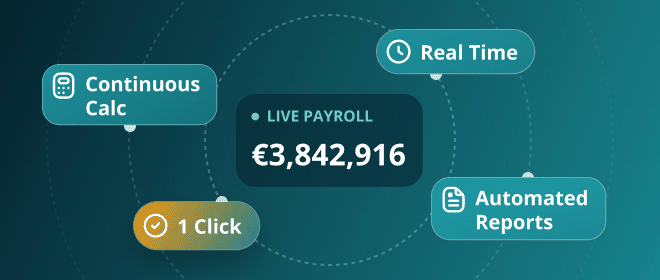
  • HR Blizz Platform: The proprietary HR Blizz platform is a global payroll and talent management SaaS suite that streamlines payroll processes while ensuring compliance with Taiwan’s regulations. With over 1,000 local experts, it provides in-depth knowledge of employment laws and business practices.
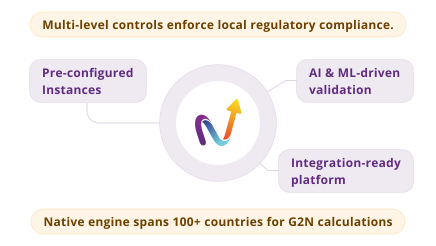
  • G2N Nova Payroll Engine: G2N Nova offers global gross-to-net payroll processing across more than 100 countries, making it one of the most advanced payroll engines available. It can be deployed as a SaaS solution or integrated seamlessly with major Human Capital Management and Workforce Management systems.

Conclusion

Experience the ease of global expansion with Mercans’ comprehensive EOR solutions in Taiwan. From payroll and compliance to seamless workforce integration, Mercans ensures a smooth journey for businesses venturing into the Taiwanese market, providing unmatched support and expertise.

This document was prepared for informational purposes only. As local laws & regulations keeps on changing. Please consult your tax & legal advisors as well.
Contact Sales
Let's get this conversation started. Tell us a bit about your requirement, and we'll get in touch a soon as we can.

    Sample message

    1. We want to expand in $country

    2. We want you to employ 'X' number of employees on our behalf

    3. Contract duration – 3/6/9/12/18/24 months

    4. Number of legal entities (if any exist today)

    5. Employment type: EOR employee or contractor?

    6. Any benefits requirement or “standard statutory only”?

    FAQs

    What is an Employer of Record in Taiwan?

    An Employer of Record in Taiwan is a third-party service provider that legally employs workers on behalf of another company. The EOR manages all employment-related responsibilities, including contracts, payroll, taxes, benefits, and compliance with Taiwanese labor laws, enabling businesses to hire employees without establishing a local entity.

    How can foreign companies hire employees in Taiwan without setting up a legal entity?

    Foreign companies can engage an EOR to hire employees in Taiwan. The EOR assumes the legal employer role, handling all statutory obligations, while the client company manages the employee’s daily tasks. This approach allows businesses to operate in Taiwan without the need for a local branch or subsidiary.

    What compliance, payroll, and HR tasks does an EOR in Taiwan manage?

    An EOR in Taiwan ensures compliance with local labor laws by managing employment contracts, processing payroll, withholding and remitting taxes, making social security contributions, administering mandatory benefits, and completing statutory filings. They also handle work permits and visa sponsorship for expatriate employees.

    What are the benefits of using EOR services in Taiwan?

    Utilizing an EOR in Taiwan offers several advantages: it simplifies market entry by eliminating the need for a local entity, ensures compliance with complex labor laws, reduces administrative burdens, mitigates legal risks, and accelerates the hiring process.

    How much does it cost to hire employees through an EOR in Taiwan?

    The cost of hiring through an EOR in Taiwan varies depending on the provider and the services included. Generally, fees can range from $500 to $2,000 per employee per month. It’s advisable to consult with the EOR provider for a detailed pricing structure.

    Is an EOR the best option for expanding a business into Taiwan?

    An EOR is an effective solution for businesses looking to expand into Taiwan without the complexities of setting up a local entity. It provides a compliant and efficient way to hire employees, allowing companies to focus on their core operations while the EOR manages employment-related tasks.

    Ready to hire in Taiwan?

    No local entity needed. Our experts handle payroll, compliance, and onboarding.

    Talk to an expert
    Proven expertise in global payroll.