Employer of Record

Employer of Record (EOR) Oman

Hire compliantly, pay accurately, expand confidently.

Global Payroll Team
Written by Global Payroll Team
Last updated April 24, 2026
Expert Reviewed

In Oman, being the designated Employer of Record Oman, we play a crucial role as the legal employer for workers. Functioning as a Global Professional Employer Organization (Global PEO), this key position involves overseeing various aspects of employment, ensuring strict compliance with Oman’s labor laws and regulations. We skillfully manage critical tasks, including payroll, taxes, mandated benefits, and the creation of employment agreements.

As your trusted Employer of Record in Oman, our responsibilities include:
  • Ensuring stringent compliance with Oman’s employment laws.
  • Expertly managing the intricacies of local payroll.
  • Handling the filing of employment-related taxes and essential documentation.
  • Providing transparent payslips to the worker.
  • Facilitating the timely distribution of the worker’s salary payments.

For businesses seeking to streamline global expansion without the need for entity setup, our Global PEO services, featuring our Employer of Record Oman services, offer a hassle-free solution.

Our dedicated EOR in Oman ensures legal presence, compliance, and Intellectual Property protection, allowing your business to focus on core functions. One can experience seamless global mobility, efficient work visas, and the cultivation of a diverse global workforce with Mercans, your trusted Employer of Record in Oman and the GCC.

Things you need to know before hiring in Oman

EOR Solutions in Oman

EOR for Prospective Employees
Mercans offers seamless Employer of Record (EOR) solutions for businesses that have already identified their ideal candidates in Oman. Our services encompass every aspect of the employee lifecycle, ensuring compliance with Oman labor laws and regulations.
EOR + Recruitment
For those seeking assistance in talent acquisition, our EOR and recruitment services provide a holistic solution. We tap into our extensive network and expertise to help you find, onboard, and retain top talent, streamlining your expansion into the Oman market.
Visa Sponsorship and Global Mobility
Navigating the intricacies of expatriate employment is simplified through our visa sponsorship and global mobility services. We facilitate the relocation of your international workforce, ensuring compliance with Oman immigration and employment laws.
AOR for Contractor Payments
Businesses grappling with contractor payments can leverage our Assistance on Record (AOR) services. We handle the complexities of contractor payments, guaranteeing accuracy and compliance.
Converting Freelancers to Employees
Mercans supports the transition from independent contractors to permanent employees in Oman. Our expertise ensures smooth conversions while adhering to legal requirements.
HCM Integration
Integrate Mercans’ EOR services seamlessly with your HCM system in Oman for real-time data exchange, enhanced compliance, and cost-efficiency. Trust our expertise for a unified, compliant, and efficient approach, elevating your workforce management and payroll operations.

Employment Contracts in Oman

In accordance with Oman’s Labour Law, a written employment contract is a legal requirement, outlining key details and qualifications. Where the contract is drafted in a language other than Arabic, an Arabic version or translation is required for official use. Standard forms approved by the Ministry of Labour are commonly used, especially for local regulatory filings, while expatriates often have more detailed contracts covering additional benefits.

Contract Duration and Transition
Employment contracts in Oman may be for a fixed term or an indefinite term. If the parties continue to perform a fixed-term contract after expiry without renewal documentation, the legal consequences should be assessed under the Labour Law and general contract principles. Confidentiality and non-compete obligations may be agreed, subject to the legal limits now reflected in the Labour Law, including a maximum post-termination non-compete period of two years where the legal conditions are met.
Probation Period
An employer is entitled to stipulate that a probationary period applies for up to three months. Any probationary period must be set out in the employment contract, otherwise it will not apply.
13th Month Salary
In Oman, employers are not obligated by law to provide a 13th-month payment.
Hiring Expatriates
To hire expatriates, employers need labour clearance from the Ministry of Labour and an employment visa from the Royal Oman Police. Expatriates must obtain a residence card upon arrival, and they are only permitted to work for the employer who has obtained the necessary clearances and visas.
Explore Mercans’ solutions for streamlined global employment tasks, ensuring compliance and efficiency worldwide.
Working Hours
Under the current Labour Law, the normal working time is a maximum of 8 actual working hours per day and 40 actual working hours per week, excluding the daily rest break. During Ramadan, the maximum working hours are reduced to 6 hours per day or 30 hours per week for Muslim workers.

Termination, Resignation or Retirement

  • Contract Renewal: Limited period contracts end on expiry unless renewed or otherwise continued in accordance with law.
  • Notice Period for Unlimited Contracts:
    • 30 days for monthly salaried employees.
    • 15 days for other employees, unless a longer period is agreed upon.
  • Compensation for No Notice: If terminated without notice, the terminating party pays compensation equal to the gross salary for the notice period or the remaining part thereof.
  • Validity of Termination Notice: Notices during employee leave become valid the day following the end of leave.
  • Termination Without Notice or Gratuity: Employers may dismiss without notice or gratuity in specified cases, including false identity, mistakes causing grave material loss, safety non-compliance, absenteeism, disclosure of secrets, criminal convictions, assaults, and grave breaches of obligations.
  • Age Limit: Retirement and pension matters are governed by the applicable social protection and pension rules. Employers should review the relevant scheme and contract terms rather than rely on a single general retirement-age rule for every worker.
  • End of Service Gratuity: Upon termination of workers who do not benefit from the Social Protection Law, the employer pays end of service gratuity in accordance with Article 61 of the Labour Law.
  • Employee’s Right to Leave Work Without Notice: A worker may leave work without being bound by the notice period in the cases specified by law, such as fraud, employer non-compliance, assault, or severe danger, while retaining legal rights.
  • End of Service Gratuity on Lawful Departure: If the worker is entitled under Article 61, the employer remains obligated to pay the end of service gratuity where applicable.
  • Certificate of Service: Upon resignation, the employer provides a free certificate of service outlining employment details, including dates, role, salary, allowances, and benefits. The employer must also return any deposited documents or certificates to the employee.

Termination
  • Contract Renewal: Limited period contracts end on expiry unless renewed or otherwise continued in accordance with law.
  • Notice Period for Unlimited Contracts:
    • 30 days for monthly salaried employees.
    • 15 days for other employees, unless a longer period is agreed upon.
  • Compensation for No Notice: If terminated without notice, the terminating party pays compensation equal to the gross salary for the notice period or the remaining part thereof.
  • Validity of Termination Notice: Notices during employee leave become valid the day following the end of leave.
  • Termination Without Notice or Gratuity: Employers may dismiss without notice or gratuity in specified cases, including false identity, mistakes causing grave material loss, safety non-compliance, absenteeism, disclosure of secrets, criminal convictions, assaults, and grave breaches of obligations.

Retirement
  • Age Limit: Retirement and pension matters are governed by the applicable social protection and pension rules. Employers should review the relevant scheme and contract terms rather than rely on a single general retirement-age rule for every worker.
  • End of Service Gratuity: Upon termination of workers who do not benefit from the Social Protection Law, the employer pays end of service gratuity in accordance with Article 61 of the Labour Law.

Resignation
  • Employee’s Right to Leave Work Without Notice: A worker may leave work without being bound by the notice period in the cases specified by law, such as fraud, employer non-compliance, assault, or severe danger, while retaining legal rights.
  • End of Service Gratuity on Lawful Departure: If the worker is entitled under Article 61, the employer remains obligated to pay the end of service gratuity where applicable.
  • Certificate of Service: Upon resignation, the employer provides a free certificate of service outlining employment details, including dates, role, salary, allowances, and benefits. The employer must also return any deposited documents or certificates to the employee.

Social Security in Oman

Following the Social Protection Law reform, the contribution structure for covered Omani employees now generally includes 13.5% by the employer and 8% by the employee, for a total of 21.5% of the monthly wage. This is made up of 11% employer and 7.5% employee contributions for old age, disability and death insurance, 1% employer contribution for work injuries and occupational diseases, 0.5% each by employer and employee for employment security, 1% employer contribution for sick and other leave insurance, and 1% employer contribution for maternity and paternity leave insurance.

Social Security for Omani Nationals

Illustrative Example

Insured Person’s Salary

325 Omani rials

Contributions

  • Employer: 325 * 13.5% = 43.875 Omani rials
  • Insured Person: 325 * 8% = 26.000 Omani rials
Payment Schedule

Payment Period

First 15 days of the month following the month for which payment is due.

Example

January contributions paid from 1 February to 15 February.

Notices and Payment

Notice Issuance

By the end of each month, the Social Protection Fund’s systems calculate monthly contributions, and notices are issued through the electronic portal.

Payment Channels

Contributions can be paid via available e-payment channels.

Payment Flexibility

Installment Basis

Employers with arrears may request installment-based payments following the Social Protection Fund regulations and systems’ rules.

Contribution Exchange

Transfer to Other Schemes

The competent authority facilitates transferring contributions to other pension schemes upon an employee’s termination from the private sector and joining covered entities.

From Social Insurance Scheme to

  • Diwan of Royal Court Pension Fund
  • Civil Service Employees Pension Fund
  • Ministry of Defense Pension Fund

From Other Schemes to Social Insurance Fund

Contributions must be transferred upon employee movement from other pension schemes to the Social Protection Fund where applicable.

Previous Service Inclusion
Employees moving to the private sector from covered entities can request inclusion of previous service within the applicable legal period for entitlement to pension or end-of-service benefits where the law allows.

Social Security for Omani Nationals in GCC Countries

ContributorsContribution rate (%)Calculation from gross salary
Employer13.50%11.0% old age, disability and death + 1.0% work injuries and occupational diseases + 0.5% employment security + 1.0% maternity leave
Insured person (employee)8.00%7.5% old age, disability and death + 0.5% employment security
GovernmentNot shown as a standard employer/employee contribution row in the current SPF contribution-rate guidance

Citizens Working in GCC – Social Insurance Contributions

Contributory Wage Definition

  • The contributory wage is the total basic salary plus regular allowances, subject to the applicable ceiling under the relevant rules.
  • The employee must be insured according to the salary and elements defined in the social insurance law of their home state.
  • The employer’s liability is capped based on the contributory wage or salary elements applicable in the state of the place of business.
  • If the employer’s contribution is restricted, the employee pays the difference unless the state covers it on behalf of its citizen employee.

Percentage of Deducted Contributions

  • Monthly contribution: The contribution percentage depends on the applicable insurance branch and whether the worker is covered under the Omani or GCC coordination rules.
  • Applicable to insured Omani workers and GCC employers with Omani employees.

Scheme for Omanis Working Abroad and Persons of Equivalent Status

Monthly Contributions Details

Contributions
Contributions are determined according to the applicable scheme and selected income bracket under the current social protection rules.
Payment Period
Within the first 15 days of the month following the payment month.
Penalty for Late Payment
If the insured person fails to pay within the prescribed period, late payment consequences apply under the Social Protection Fund rules.
Advance Payment Option
The insured may pay contributions in advance every three months, six months, or every year at their discretion if the scheme permits.
Income Bracket Adjustment
The insured person may amend the selected income bracket in accordance with the governing scheme rules.

Employment Security Scheme

The Employment Security Scheme in Oman stands as a national initiative grounded in principles of social solidarity. The primary objective is to extend social protection to Omanis who face job loss beyond their control. The scheme acts as a bridge, easing the transition period between the loss of previous employment and the pursuit of new job opportunities. It achieves this by providing a source of income to affected citizens, ensuring a decent standard of living for them and their families.

Contributors of the Scheme

The Employment Security Scheme encompasses the Omani labor force covered by the applicable branches of the social protection system. The scheme’s resources are derived from:

  • Employer’s Contribution: The employer is obligated to contribute 0.5% of the monthly wage of the insured employee.
  • Insured Person’s Contribution: The insured person is required to contribute 0.5% of their monthly wage.
  • Additional Fee: A 5% fee is added to each permit or permit renewal for employing non-Omani workers in commercial work.

Contributions Procedure

Employers, both in the public and private sectors, have specific obligations regarding contributions:

  • Public Sector: Employers in the administrative apparatus of the state and other legal public entities must pay the scheme’s contributions at the end of each month.
  • Private Sector: Employers in the private sector are mandated to make contributions within the first 15 days of the month following the entitlement month. Regardless of the sector, employers are responsible for both their contributions and those of the insured individuals. The employer has the option to deduct the contributions from the insured person’s salary or wage during payment cycles.

Procedures for Service Termination by Employers

In the private sector, employers planning collective service terminations must adhere to specific procedures:

  • Notice Requirement: Employers are obligated to provide the Ministry of Labour with a notice of no less than three months before the intended date of collective termination.

Social Protection Fund (SPF)

The Social Protection Fund is now the core authority in Oman’s social protection landscape, replacing the older PASI framework for current administration. It functions as the government’s administrative body for social security and social protection law.

Key Objectives and Coverage

The Fund’s mission revolves around providing social protection for Omani employees, addressing risks associated with retirement, disability, death, occupational diseases, injuries, employment security, and other covered branches under the Social Protection Law.

Contributors and Contributions

Contributions to the Social Protection Fund come from both employers and employees. Private companies operating in Oman and GCC countries with Omani employees are mandated to register and contribute under the applicable branches. Contributions are calculated based on the wage elements recognized by the law and regulations. The main breakdown includes:

  • Employer Contributions: 11% for old age, disability and death, 1% for work injuries and occupational diseases, 0.5% for employment security, 1% for sick and other leave insurance, and 1% for maternity and paternity leave insurance.
  • Employee Contributions: 7.5% for old age, disability and death and 0.5% for employment security.
  • Government Contributions: Government support also applies in certain branches under the Social Protection Law.

Registration Process

Omani citizens within the covered age categories can register with the Social Protection Fund and receive the required insurance registration data for their working life.

New Job Security Insurance

The new employment security insurance created an additional unemployment-protection dimension within Oman’s social protection system. Employers are required to inform the Ministry of Labour in advance of planned collective terminations. Contributions for this insurance include:

  • Employer Contributions: 0.5% of the employee’s monthly wage.
  • Employee Contributions: 0.5% of the employee’s monthly wage.

Additional payments include a 5% fee for each new license or license renewal when recruiting foreign nationals instead of Omanis.

Future Prospects and Reforms

Oman’s recent reforms continue to modernize the social protection system and broaden coverage, with phased implementation of new insurance and savings arrangements.

Wage Protection System

The Wage Protection System (WPS) was instituted by the Ministry of Labour and Central Bank of Oman. As stipulated in the Omani Labour Law, it is mandatory for employers to remunerate employees in the local currency through Omani banks and in compliance with the wage protection framework. Banks provide the relevant reporting that allows salary payments to be checked against contractual obligations. Any instances of delayed or inadequate payments require valid justification from the employer.

A pivotal requirement imposed by the WPS is the payment of employees’ wages in the local currency, facilitated through bank transfers into their respective local bank accounts. Failure to comply with WPS regulations may subject employers to financial penalties and pose challenges in the renewal or processing of new visas for their workforce.

To mitigate potential risks associated with non-compliance with WPS regulations in Oman, employers are advised to undertake the following measures:

  • Encourage employees to open local bank accounts.
  • Verify that their Omani corporate banking partner can facilitate salary payments in strict adherence to WPS regulations.
  • Ensure that all employees receive their complete contractual salary in the local currency.

Payroll in Oman

As of 2026, the minimum wage in Oman for Omani nationals in the private sector remains as follows:

Minimum Wages (Omani Nationals)

  • Basic per month: OMR 225.000
  • Allowance per month: OMR 100.000
  • Total per month: OMR 325.000

Payroll Cycle

Employees in Oman are generally paid on a monthly basis. It is mandatory for private sector employers to ensure timely salary payments in accordance with the Labour Law and WPS requirements.

Payroll Compliance in Oman

Following are the statutory requirements in Oman for onboarding, managing, and offboarding an employee in Oman.

On-boarding

While there is no formal regulatory form required for onboarding a new employee in Oman, employers must ensure that all essential documentation, such as a valid Oman visa, medical certificates, and a signed employment contract, is in place. Upon the employee’s arrival in Oman, the employer is responsible for preparing the necessary paperwork and completing the required immigration and labour processes for the employee’s residence card and employment status. Once approved, the employee’s information is processed through the relevant government systems.

Statutory Filings and Contributions

Oman does not impose personal income tax on salaries; therefore, employers are not required to submit periodic salary income tax returns for payroll. However, there are several mandatory statutory contributions and filings that employers must adhere to. These are outlined below:

Declaration / paymentStatutory bodyFrequencyDue datePurposeProcess overview
Monthly social protection contributionSocial Protection Fund (SPF)MonthlyWithin 15 days of the following monthMonthly social protection contributions for insured Omani employeesThe employer is responsible for paying the contributions due for the relevant month within 15 days of the following month.
Wage Protection System (WPS) salary transferMinistry of Labour / Central Bank of Oman systemMonthly / each pay cycleWithin 3 days from the end of the wage entitlement periodEnsure timely electronic wage payment and monitoring of private-sector salary transfersEmployers send salary files through banks or financial institutions connected to WPS; the system validates and processes the transfer and enables the Ministry to monitor compliance.

Report Samples / Online

The Quick Pay feature on the Social Protection Fund online portal allows employers to conveniently access and settle monthly invoice payments. Employers can log in to the portal, download the monthly billing report, and make payments directly through the platform. Alternatively, payments can also be processed via authorized banks in Oman.

Offboarding

According to Article 81 of the Oman Labour Law, upon termination of employment, a worker is entitled to receive the full equivalent wage for any unused annual leave balance. Additionally, under Article 61, workers who do not benefit from the Social Protection Law are entitled to end-of-service gratuity of not less than one month’s basic wage for each year of service, calculated on the last basic wage, until the savings system under the Social Protection Law is implemented.

When an employee’s service ends, the employer must complete the required labour and immigration termination procedures with the competent authorities.

Employee Benefits in Oman

Statutory Leaves

Leave typeEligibilityCompensationLeave duration
Annual leaveAfter 6 months of servicePaid (gross wage)30 calendar days per year
Sick leaveMedical proof / as applicable under lawDays 1–21: 100%; Days 22–35: 75%; Days 36–70: 50%; Days 71–182: 35%Up to 182 calendar days
Bereavement leaveDeath of specified relativePaid10 days for death of spouse or child; 3 days for parent, grandparent, brother, or sister; 2 days for uncle or aunt
Paternity leaveBirth of a childPaid7 days
Hajj leaveOnce during service, for the Hajj pilgrimagePaid15 days
Maternity leaveFemale employeePaid98 days
Examination / study leaveEmployees enrolled in school, institute, college, or university, subject to the law’s conditionsPaid15 days per year
Special leave on death of husband (Muslim employee)Muslim woman whose husband diesPaid130 days
Special leave on death of husband (non-Muslim employee)Non-Muslim woman whose husband diesPaid14 days
Special unpaid leaveSubject to employer approvalUnpaidAs agreed / subject to employer consent

End of Service Benefits

The End-of-Service Gratuity is a monetary payout granted to certain employees as a lump sum upon resignation, termination, or the end of a contract. Workers who do not benefit from the Social Protection Law are eligible under Article 61.

The calculation of the gratuity is based on the last received basic salary and follows the following criterion:

  • Not less than one month’s basic salary for each year of service, with proportionate entitlement for fractions of a year.

Omanisation

The Ministry of Labour in Oman continues to promote Omanisation rates across key sectors to enhance employment opportunities for local citizens. The exact Omanisation percentages and sector targets are subject to ministerial decisions and periodic updates. Companies meeting or surpassing the assigned Omanisation rate may qualify for facilitation measures, while failure to comply may expose the employer to penalties under the Labour Law and related regulations.

Foreign Employment and Immigration

Expatriate Employment Procedures

Prior to engaging a foreign employee, employers in Oman are required to secure labour clearance from the Ministry of Labour, authorizing the hiring of an expatriate for the specified position. Subsequently, the employer must procure an employment visa through the immigration department at the Royal Oman Police. Upon the expatriate’s arrival in Oman, the individual must obtain a residence card from the Royal Oman Police within the prescribed period. It is essential to note that expatriates are exclusively allowed to work for the employer who has obtained the requisite clearances and visas.

Immigration

All international visitors to Oman, excluding Gulf Cooperation Council nationals and other exempt categories, are generally required to obtain the appropriate visa for the duration of their stay. These visas can be acquired through the relevant Royal Oman Police channels and the employer sponsor where sponsorship is required. To secure a visa, passengers must possess a passport valid for more than six months. Various entry visas are issued for visits to the Sultanate, including residence visas, visit visas, tourist visas, transit visas, and work visas.

Best Employer of Record Oman

Mercans Stands Out as the Leading Employer of Record in Oman for the Following Reasons:

  • Regulatory Compliance: Mercans ensures full compliance with all regulations set by the Ministry of Labour and relevant Omani authorities. It strictly adheres to Oman’s employment laws and standards, guaranteeing full legal compliance.
  • Independent Operation: Operating as a distinct entity, Mercans offers reliable and customised employment services tailored to the unique needs of businesses in Oman.
  • Diverse Employment Support: Mercans efficiently manages various forms of employment, including employees, freelancers, contractors, and expatriates, providing flexible solutions to meet a wide range of workforce needs.
  • Enterprise-Focused Solutions: Specifically designed to cater to large enterprises, Mercans delivers scalable and sophisticated services that accommodate complex organisational structures.
  • Multi-Currency Payroll Management: Mercans facilitates payroll processing in multiple currencies, ensuring seamless financial operations for businesses operating in Oman and internationally.
  • Global Reach and Payroll Expertise: With a robust international presence, Mercans excels in managing multi-country payroll, enabling smooth operations across borders.
  • Data Protection and Compliance: Mercans adheres to rigorous data protection standards, including GDPR compliance and SOC 1 & SOC 2 certifications, ensuring the highest levels of data security.
  • ISO Certifications: Mercans holds ISO 20000 and ISO 27001 certifications, reflecting its commitment to excellence in IT service management and information security.
  • Security Standards Compliance: Mercans meets the OWASP ASVS 3.0 standards, ensuring strong security practices in application development and management.
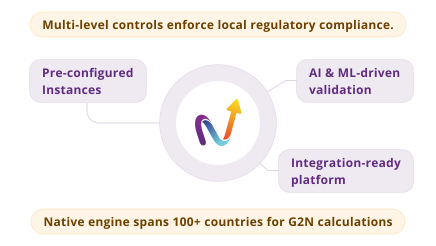
  • HR Blizz Platform: The proprietary HR Blizz platform is a global payroll and talent management SaaS suite that streamlines payroll processes while ensuring compliance with Oman’s regulations. With over 1,000 local experts, it provides in-depth knowledge of employment laws and business practices.
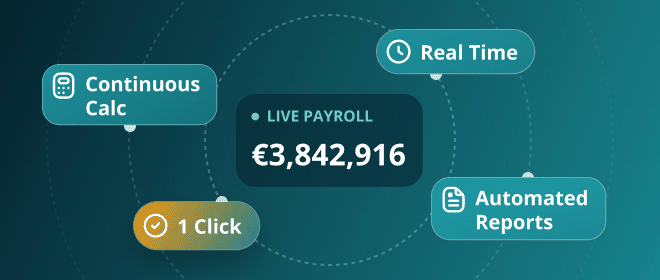
  • G2N Nova Payroll Engine: G2N Nova offers global gross-to-net payroll processing across more than 100 countries, making it one of the most advanced payroll engines available. It can be deployed as a SaaS solution or integrated seamlessly with major Human Capital Management and Workforce Management systems.

Conclusion

Enter the Omani market confidently with Mercans’ efficient EOR solution, ensuring full adherence to the country’s labor laws. Seamlessly manage the intricacies of business expansion, fostering a profitable global presence. Consult Mercans’ in-country experts in Oman to gain comprehensive insights into every facet of expanding your business in the Sultanate.

This document was prepared for informational purposes only. As local laws & regulations keeps on changing. Please consult your tax & legal advisors as well.
Contact Sales
Let's get this conversation started. Tell us a bit about your requirement, and we'll get in touch a soon as we can.

    Sample message

    1. We want to expand in $country

    2. We want you to employ 'X' number of employees on our behalf

    3. Contract duration – 3/6/9/12/18/24 months

    4. Number of legal entities (if any exist today)

    5. Employment type: EOR employee or contractor?

    6. Any benefits requirement or “standard statutory only”?

    FAQs

    What is an Employer of Record in Oman?

    An Employer of Record in Oman is a third-party service provider that legally employs workers on behalf of another company. The EOR manages all employment-related responsibilities, including contracts, payroll, taxes, benefits, and compliance with Omani labor laws, enabling businesses to hire employees without establishing a local entity.

    How can foreign companies hire employees in Oman without setting up a local entity?

    Foreign companies can engage an EOR to hire employees in Oman. The EOR assumes the legal employer role, handling all statutory obligations, while the client company manages the employee’s daily tasks. This approach allows businesses to operate in Oman without the need for a local branch or subsidiary.

    What compliance and HR responsibilities does an EOR in Oman manage?

    An EOR in Oman ensures compliance with local labor laws by managing employment contracts, processing payroll, withholding and remitting taxes, making social security contributions, administering mandatory benefits, and completing statutory filings. They also handle work permits and visa sponsorship for expatriate employees.

    What are the benefits of using EOR services in Oman?

    Utilizing an EOR in Oman offers several advantages: it simplifies market entry by eliminating the need for a local entity, ensures compliance with complex labor laws, reduces administrative burdens, mitigates legal risks, and accelerates the hiring process.

    How much does it cost to hire employees through an EOR in Oman?

    The cost of hiring through an EOR in Oman varies depending on the provider and the services included. Generally, fees can range from $500 to $2,000 per employee per month. It’s advisable to consult with the EOR provider for a detailed pricing structure.

    Is an EOR the best option for business expansion into Oman?

    An EOR is an effective solution for businesses looking to expand into Oman without the complexities of setting up a local entity. It provides a compliant and efficient way to hire employees, allowing companies to focus on their core operations while the EOR manages employment-related tasks.

    Ready to hire in Oman?

    No local entity needed. Our experts handle payroll, compliance, and onboarding.

    Talk to an expert
    Proven expertise in global payroll.