Global Minimum Tax (Pillar Two): What Employers Need to Know

The Global Minimum Tax, commonly referred to as Pillar Two, is an international tax framework developed through the OECD/G20 Inclusive Framework on Base Erosion and Profit Shifting (BEPS).

At its core, Pillar Two establishes a 15% minimum effective tax rate for large multinational enterprise (MNE) groups within its scope. Where the applicable effective tax rate in a jurisdiction falls below the minimum, the GloBE Rules can result in an additional top-up tax.

The rules are designed to operate on a jurisdiction-by-jurisdiction basis, rather than simply applying a 15% tax rate to every company or every country.

For employers, Pillar Two is primarily a corporate tax issue, but its implementation can also affect payroll data, workforce costs, employee-related tax information, financial reporting, HR systems, and global payroll processes.

Why Was Pillar Two Introduced?

Pillar Two forms part of the international effort to address tax challenges associated with globalisation and the digitalisation of the economy.

Large multinational businesses can operate through entities in multiple jurisdictions, each with different corporate tax systems and incentives. Pillar Two establishes a coordinated framework intended to reduce situations where qualifying multinational groups have very low effective tax rates in particular jurisdictions.

The OECD states that the GloBE Rules are intended to ensure that large MNE groups pay a minimum level of tax on income arising in each jurisdiction where they operate.

Who Is Subject to Pillar Two?

Pillar Two is primarily aimed at large multinational enterprise groups.

The commonly referenced scope threshold is €750 million in consolidated annual revenue, although determining whether a group is actually within scope requires analysis of the applicable rules, group structure, accounting information, exclusions, and relevant domestic legislation.

This means that the Global Minimum Tax should not be interpreted as a new 15% tax that applies to every employer.

A business may have employees in multiple countries but still fall outside the Pillar Two rules if the wider group does not meet the applicable requirements.

How Does the Global Minimum Tax Work?

The GloBE framework is based on calculating an effective tax rate for each relevant jurisdiction.

In simplified terms, the process involves:

Identify the MNE group → determine jurisdictional income and covered taxes → calculate the effective tax rate → compare it with the 15% minimum → determine whether a top-up tax applies.

The calculation is significantly more detailed than simply comparing a country’s headline corporate tax rate with 15%.

The GloBE Rules establish specific definitions, adjustments, exclusions, and calculation mechanisms for determining the relevant effective tax rate and any resulting top-up tax.

What Is GloBE?

GloBE stands for Global Anti-Base Erosion.

The GloBE Rules are the central mechanism used to implement Pillar Two’s global minimum tax.

They establish a coordinated system under which a top-up tax can arise where the effective tax rate of an in-scope MNE group in a particular jurisdiction is below the minimum rate.

The OECD describes the GloBE framework as consisting of detailed rules, commentary, administrative guidance, safe harbours, and information-reporting requirements.

What Is Top-Up Tax?

A top-up tax is an additional tax amount that can apply when an in-scope multinational group’s effective tax rate in a jurisdiction is below the Pillar Two minimum.

For example, if the applicable GloBE calculation produces an effective tax rate below 15%, the rules can require an additional amount of tax to bring the relevant taxation closer to the minimum level.

The actual calculation involves several adjustments and cannot be determined simply by subtracting a country’s headline tax rate from 15%.

The Main Pillar Two Rules Employers Should Know

Pillar Two is built around several interconnected mechanisms.

Income Inclusion Rule (IIR)

The Income Inclusion Rule, or IIR, generally allows a top-up tax to be imposed at the level of a parent entity in relation to low-taxed income of relevant subsidiaries.

The IIR began forming part of the implementation of the Global Minimum Tax from 2024 in jurisdictions that introduced the rules.

Qualified Domestic Minimum Top-Up Tax (QDMTT)

A Qualified Domestic Minimum Top-Up Tax, or QDMTT, allows a jurisdiction to impose a domestic minimum top-up tax on qualifying low-taxed income arising within that jurisdiction.

This mechanism can allow the jurisdiction where the income arises to collect the relevant top-up tax under a qualified domestic framework.

Undertaxed Profits Rule (UTPR)

The Undertaxed Profits Rule, or UTPR, acts as a backstop mechanism within the Pillar Two framework.

Its operation depends on the applicable rules, implementation status, and circumstances of the MNE group.

Because countries implement Pillar Two through domestic legislation, employers should assess the actual rules applicable in each relevant jurisdiction rather than relying only on the OECD model framework.

Does Pillar Two Affect Payroll?

Pillar Two is not a payroll tax and does not mean that employees suddenly have to pay an additional 15% tax on their salaries.

However, payroll can become an important source of information for multinational groups performing Pillar Two calculations.

Employee-related information can contribute to calculations and reporting involving:

  • Employee compensation
  • Payroll taxes
  • Employer social contributions
  • Workforce location
  • Employee headcount
  • Labour costs
  • Benefits
  • Equity compensation
  • Cross-border assignments

The exact information required depends on the group’s Pillar Two processes and applicable accounting and tax rules.

This creates a practical connection between tax, finance, HR, and payroll teams.

Why Payroll Data Matters for Pillar Two

Multinational organizations often operate separate payroll systems across countries.

Finance and tax teams may therefore need consistent information from multiple payroll environments to support group-level tax calculations and reporting.

For example, an organization could have employees in ten countries, with payroll managed through several different providers.

If workforce information is inconsistent across those systems, the organization may spend additional time reconciling:

  • Employee compensation
  • Employer contributions
  • Payroll taxes
  • Benefits
  • Workforce numbers
  • Country-level payroll costs

This is one reason centralized global payroll technology can become increasingly valuable for multinational organizations managing complex international operations.

Pillar Two and Global Payroll Technology

Pillar Two increases the importance of having reliable and accessible workforce and payroll information.

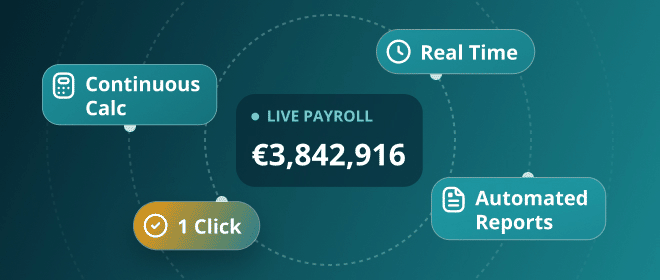
A global payroll platform can help organizations establish a more consistent source of payroll data across jurisdictions.

Technology can support areas such as:

Data collection: Bringing payroll information together from multiple countries.

Standardization: Structuring information consistently across payroll environments.

Validation: Identifying missing or inconsistent data.

Reporting: Providing payroll information to finance and tax teams.

Audit trails: Maintaining records of payroll calculations and adjustments.

However, payroll technology does not itself determine a company’s Pillar Two liability. Tax calculations should be performed using the applicable rules and appropriate tax/accounting processes.

Pillar Two and Employers With International Employees

For international employers, the relationship between workforce structure and tax can become more important under Pillar Two.

A multinational may have employees across countries with different:

  • Corporate tax rates
  • Payroll taxes
  • Social security systems
  • Employment costs
  • Tax incentives
  • Payroll reporting requirements

Pillar Two does not eliminate these differences. Instead, the GloBE framework can affect how the overall tax position of an in-scope MNE group is assessed.

This makes accurate country-level financial and payroll information increasingly important for multinational organizations.

Does the Global Minimum Tax Change Employee Income Tax?

Generally, no.

Pillar Two is primarily a framework concerning the taxation of large multinational enterprise groups and their effective tax rates.

It is not a rule requiring every employee to pay a minimum 15% income tax.

Employee income tax, payroll withholding, social security, and other employment-related deductions continue to be governed by the applicable domestic rules.

Employers should therefore distinguish between:

Corporate taxation under Pillar Two

and

Employee taxation and payroll withholding under local employment and tax legislation.

Pillar Two and Tax Incentives

Pillar Two can also affect how multinational businesses evaluate tax incentives.

A jurisdiction may offer a company a tax incentive that reduces its effective tax burden. Depending on the circumstances and the design of the incentive, the resulting effective tax rate may be relevant to the GloBE calculation.

The OECD’s 2026 Side-by-Side package introduced, among other measures, a Substance-Based Tax Incentive Safe Harbour for certain tax incentives.

This illustrates why businesses should not assess Pillar Two simply by looking at statutory corporate tax rates.

Pillar Two Compliance and Reporting

Pillar Two introduces additional information and reporting requirements for MNE groups within scope.

One important component is the GloBE Information Return (GIR).

The GIR contains information required for the administration of the GloBE Rules and can be centrally filed in certain circumstances, with information exchanged with relevant jurisdictions.

In May 2026, the OECD reported that jurisdictions implementing the GMT from 2024 had agreed on a common understanding designed to preserve the administrative benefits of central filing where the relevant conditions are met.

The OECD also released updated administrative guidance and GIR-related materials during 2026.

Pillar Two in 2026: What Has Changed?

Pillar Two is no longer simply a future international tax proposal. Its implementation is already underway across many jurisdictions.

The OECD reports that the Global Minimum Tax began applying from the beginning of 2024, while jurisdictions have continued introducing domestic rules and refining their implementation.

In January 2026, the OECD/G20 Inclusive Framework agreed on a Side-by-Side package containing simplification measures and new safe harbours intended to support coordinated implementation.

In September 2026, the Inclusive Framework released another package covering the full legislative review process, updates to the GloBE Information Return, and additional guidance on applying the GloBE Model Rules.

This means multinational employers should monitor both domestic legislation and continuing OECD guidance.

What Should Employers Do About Pillar Two?

For employers within, or potentially within, the scope of Pillar Two, preparation should involve more than the tax department.

A cross-functional approach can bring together:

  • Tax
  • Finance
  • Payroll
  • HR
  • Legal
  • Accounting
  • IT
  • Data and reporting teams

The first step is determining whether the wider corporate group falls within the scope of the rules.

The next step is understanding where the group operates, which jurisdictions have implemented Pillar Two rules, what information is available, and whether payroll and HR systems can provide reliable data to support the required processes.

Pillar Two and Data Quality

Data quality is an increasingly important consideration for multinational employers.

A tax team may need information originating from payroll, HR, accounting, finance, and local entities.

If different systems use different country codes, employee classifications, reporting periods, or definitions, reconciliation can become more difficult.

A structured global payroll environment can therefore support the broader information-management requirements of multinational organizations.

How Mercans Can Support Global Payroll Data Management

Mercans provides global payroll technology and services for multinational organizations managing payroll across multiple jurisdictions.

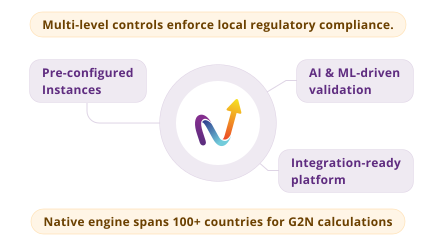
Its global payroll solutions are designed to centralize payroll operations while supporting country-specific payroll requirements.

For organizations preparing information for international tax and finance processes, having consistent payroll data across countries can help reduce manual reconciliation and improve visibility into workforce-related costs.

Mercans also provides Global Payroll solutions and Global Payroll SaaS for businesses managing international payroll operations.

Pillar Two calculations remain a tax and accounting responsibility, but accurate payroll data can form part of the broader information ecosystem required by multinational businesses.

Global Minimum Tax: Key Takeaway

The Global Minimum Tax under Pillar Two establishes a coordinated framework intended to ensure that large multinational enterprise groups are subject to a minimum effective tax rate of 15% on a jurisdictional basis.

It is not a 15% payroll tax and does not directly impose a 15% tax on employee salaries.

For employers, however, Pillar Two can increase the importance of accurate and accessible payroll, workforce, tax, accounting, and financial data.

As implementation continues in 2026, multinational businesses should monitor domestic legislation, OECD guidance, reporting requirements, and applicable safe harbours.

For global employers, the practical challenge is therefore not only understanding the tax rules but also ensuring that the underlying business and payroll data can support accurate compliance processes.

Frequently Asked Questions About the Global Minimum Tax

What is Pillar Two in simple terms?

Pillar Two is an international tax framework that establishes a 15% minimum effective tax rate for large multinational enterprise groups within its scope. Where the relevant effective tax rate is below the minimum, the GloBE Rules can result in a top-up tax.

Does the Global Minimum Tax apply to all companies?

No. Pillar Two is primarily designed for large multinational enterprise groups meeting the applicable scope requirements. The commonly referenced revenue threshold is €750 million in consolidated annual revenue, subject to the detailed rules and applicable exclusions.

Is Pillar Two a payroll tax?

No. Pillar Two is a corporate tax framework and should not be confused with employee income tax, payroll tax, or social security contributions. However, payroll data can be relevant to the broader calculations and reporting processes of an in-scope multinational group.

Does Pillar Two affect employee salaries?

Pillar Two does not impose a 15% minimum tax directly on employee salaries. Employee income tax and payroll deductions continue to be determined under applicable domestic tax and employment rules.

What is the GloBE Information Return?

The GloBE Information Return (GIR) is a reporting mechanism used to provide information required for the administration of the Global Minimum Tax. The OECD has continued updating the GIR framework and related filing and exchange guidance during 2026.

What are IIR, UTPR and QDMTT?

The Income Inclusion Rule (IIR) is a primary mechanism for applying top-up tax at the parent level. The Undertaxed Profits Rule (UTPR) acts as a backstop mechanism, while a Qualified Domestic Minimum Top-Up Tax (QDMTT) allows a jurisdiction to impose a qualified domestic top-up tax on relevant low-taxed income arising locally.

Why is payroll data relevant to Pillar Two?

Payroll systems contain information about employee compensation, employer contributions, workforce location, benefits, and other employment costs. Depending on the organization’s reporting and calculation processes, this information can contribute to the data required for international tax and financial reporting.

Does Mercans provide Pillar Two tax advice?

Mercans provides global payroll technology and international payroll services rather than replacing specialist corporate tax advice. Its global payroll solutions can help organizations manage consistent payroll data across jurisdictions, which may support broader finance and tax processes.